
Whispers Beneath the Tree
Handcrafted by KalaKraft Original · India
₹399 · SKU KKOG-039 · In stock
Available sizes
- A5 — Digital print on canvas ₹638 · Digital print on paper ₹399
- A4 — Digital print on canvas ₹798 · Digital print on paper ₹499
- A3 — Digital print on canvas ₹958 · Digital print on paper ₹599
Description
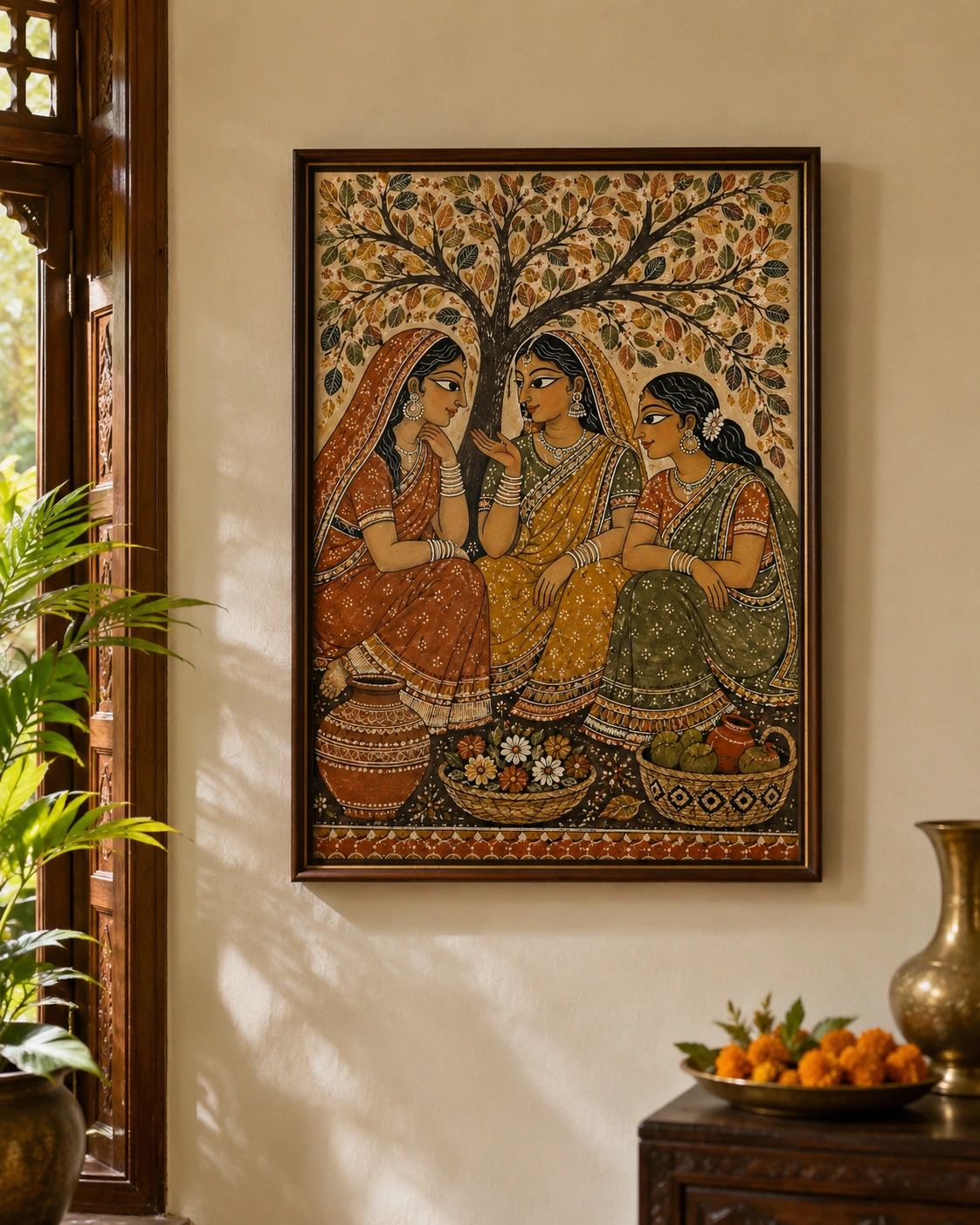
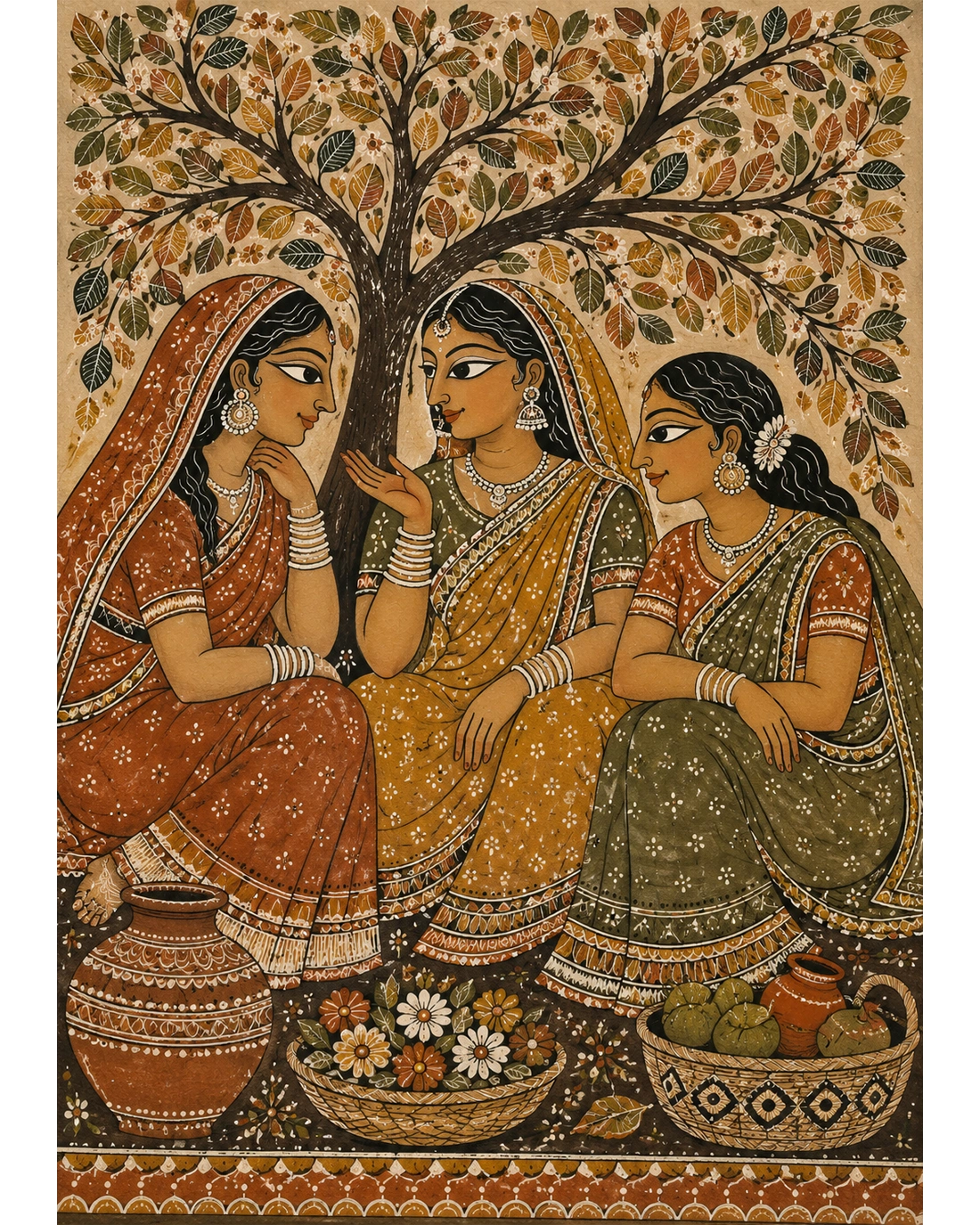
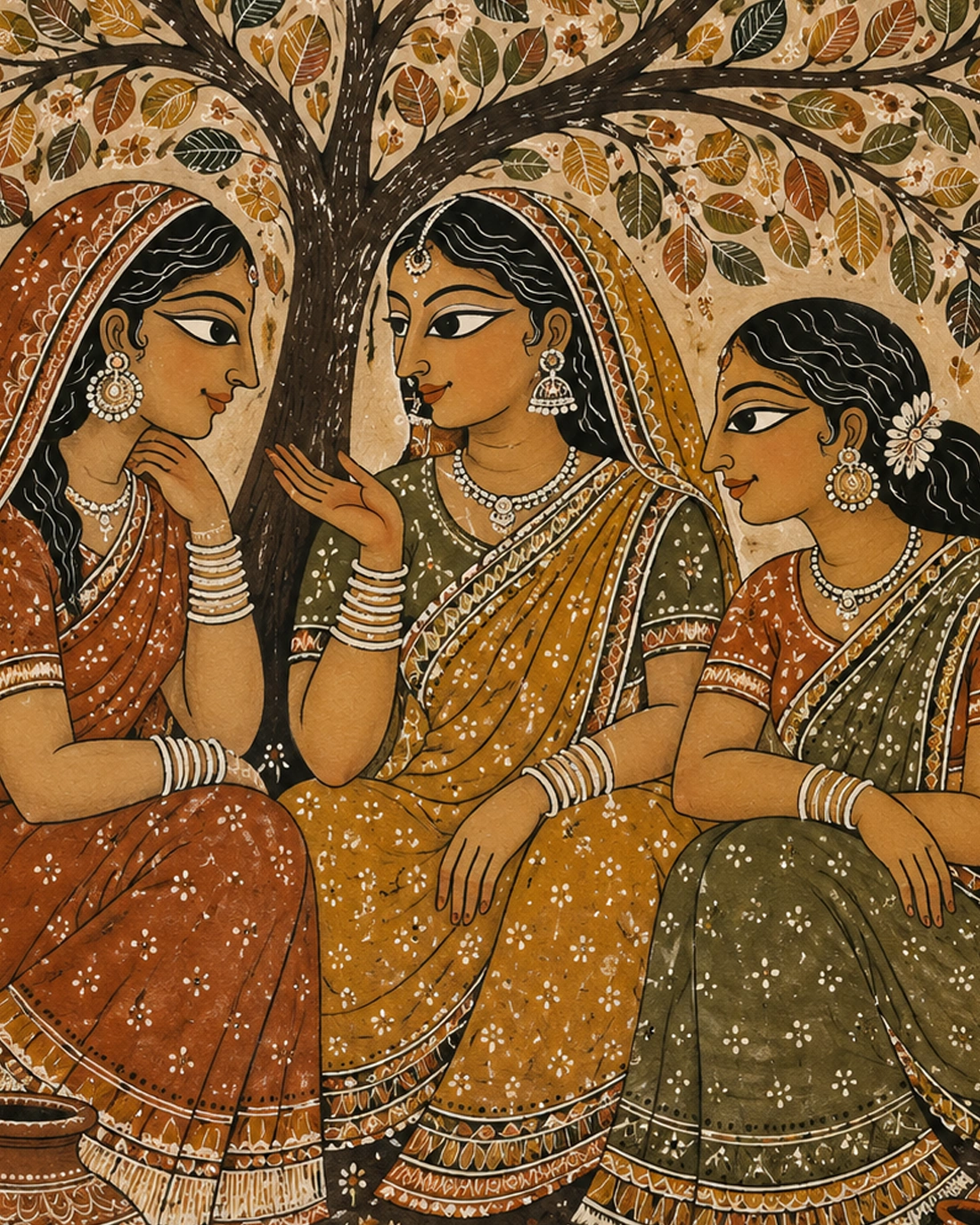
Painted in the Indian folk tradition - bold black contour, flat unmodelled colour, and the exaggerated almond eye that defines figurative work across the Kalighat and Pattachitra lineages. The faces are stylised on purpose. Expression here lives in the hands and the angle of a body, not in the face.
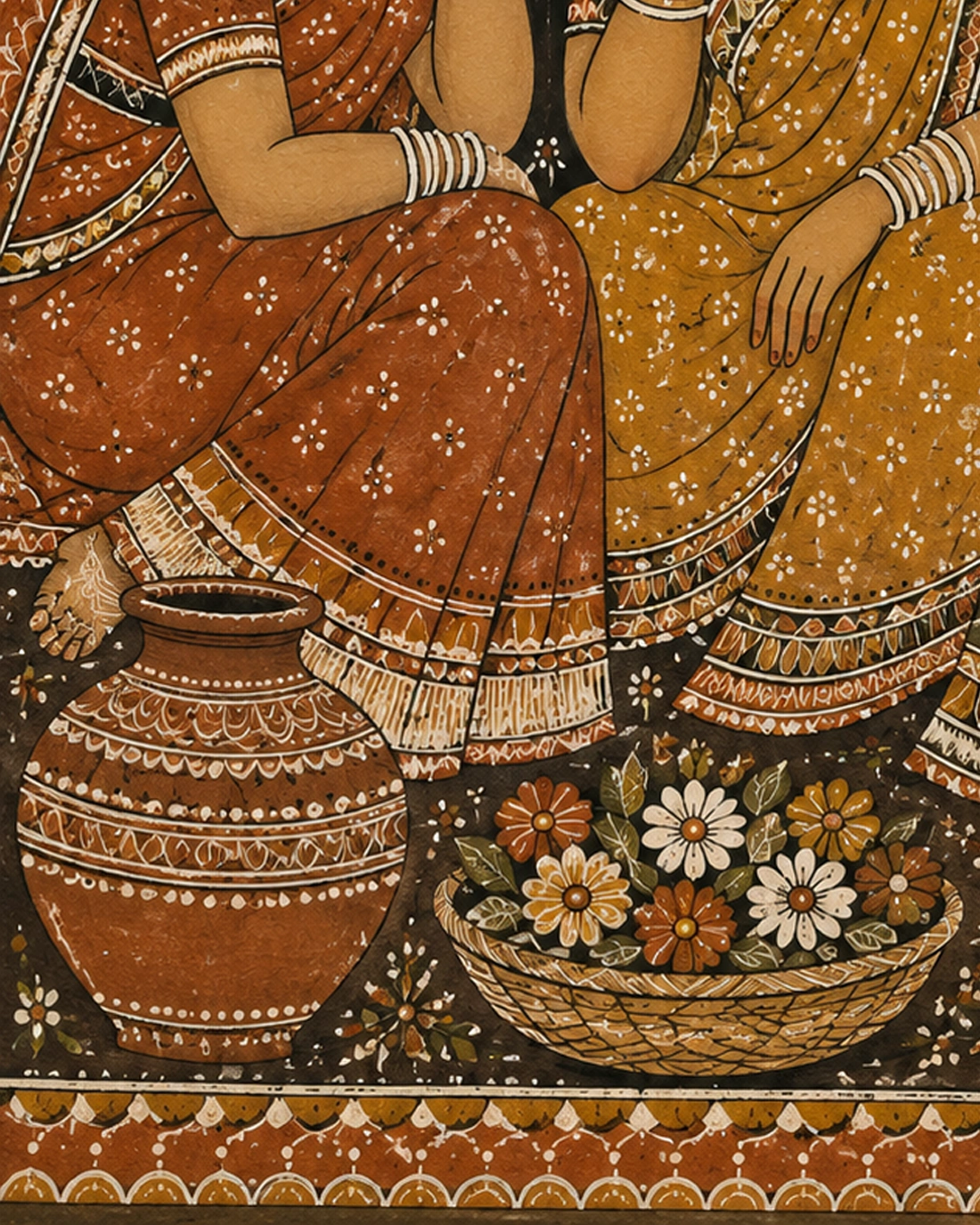
The detail sits in the textiles, which is where these painters have always spent their time. Every sari carries its own pattern - scattered white florets, dotted grounds, and bordered hems worked in fine repeating motifs. No two are alike. The bangles are stacked and individually drawn, the jhumkas rendered ring by ring, and the pot at the left is banded in the same dotted work as the borders.
The palette is entirely earth: terracotta red, turmeric ochre, olive green and deep brown on an aged, sun-warmed parchment ground. No blues, no bright whites. A painting the colour of the soil it came from. A patterned border runs along the base, framing the scene the way a wall painting would.
Printed on premium archival stock with pigment inks that hold their depth for decades - fine white linework on dark cloth is the first thing to blur in cheap printing, and it's most of the artwork here. For the people who left a joint family and still miss the noise of it - housewarmings, weddings, a mother's room, anyone whose home in the city is quieter than the one they grew up in. One frame, three women, and a conversation that has been going on for five hundred years.
Story behind the artwork
Look at the hand in the middle. She's mid-sentence - and whatever she's saying, it isn't for the rest of us.
This is the oldest scene in an Indian village. The tree gives them the shade. What they do with it is the painting. Three women have stopped on the way back - the pots are set down, the flowers are gathered, the fruit is picked. The work is done. The talking has started.
Watch how the painter has arranged them. The woman on the left has her chin in her hand: she's the one listening. The one in the centre is turned toward her, palm open, mid-explanation: she's the one telling. The third leans in from the right with her eyes cut sideways, close enough to hear but not quite in it yet: she's the one who just walked up.
Anyone who has grown up around a courtyard, a well, or a neighbour's doorstep knows this exact configuration. You could put this scene in any decade of the last five hundred years, and nothing about it would need to change.
The tree above them is doing something specific. In village life, the shade tree was the only unclaimed space - not a house, not a field, not anyone's property. It's where women sat when the household was finally behind them for an hour. The tree isn't the setting. It's the permission.
And at their feet: the earthen pot, the basket of flowers, the basket of fruit. The whole day's labour, put down for a moment so something more important could happen.
Materials & dimensions
Care
Handle with clean, dry hands.
Avoid touching the printed surface.
Frame behind glass or acrylic.
Keep away from sunlight, heat, and moisture.
Dust gently with a soft cloth.
Never fold or tightly roll.
Store flat between acid-free sheets.
Avoid water, sprays, adhesives, and harsh chemicals.
More from this craft
-
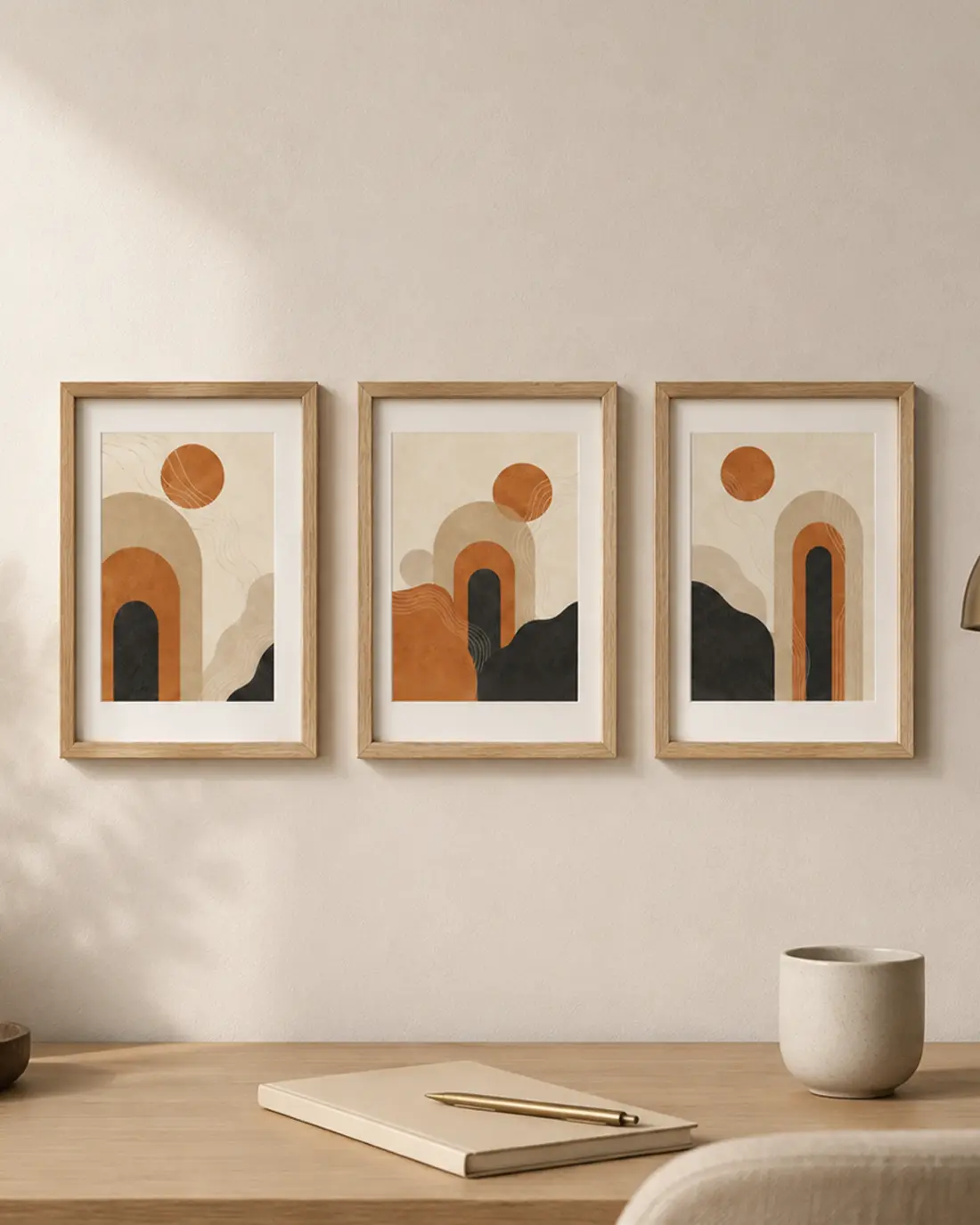 Desert Balance - Triptych Set
₹899
Rated 4.2/5 · 30 reviews
-
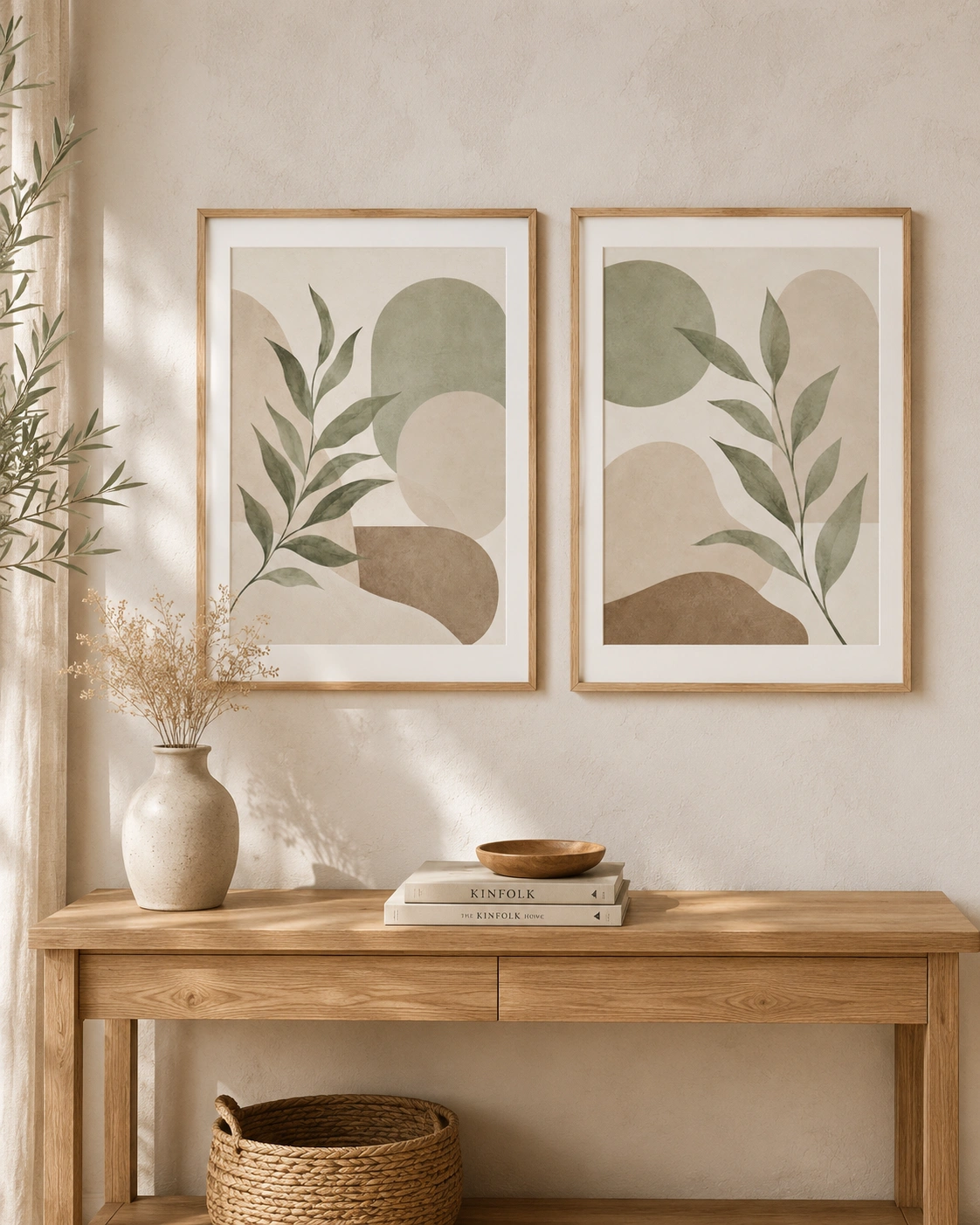 Quiet Botanicals - Triptych Set
₹899
-
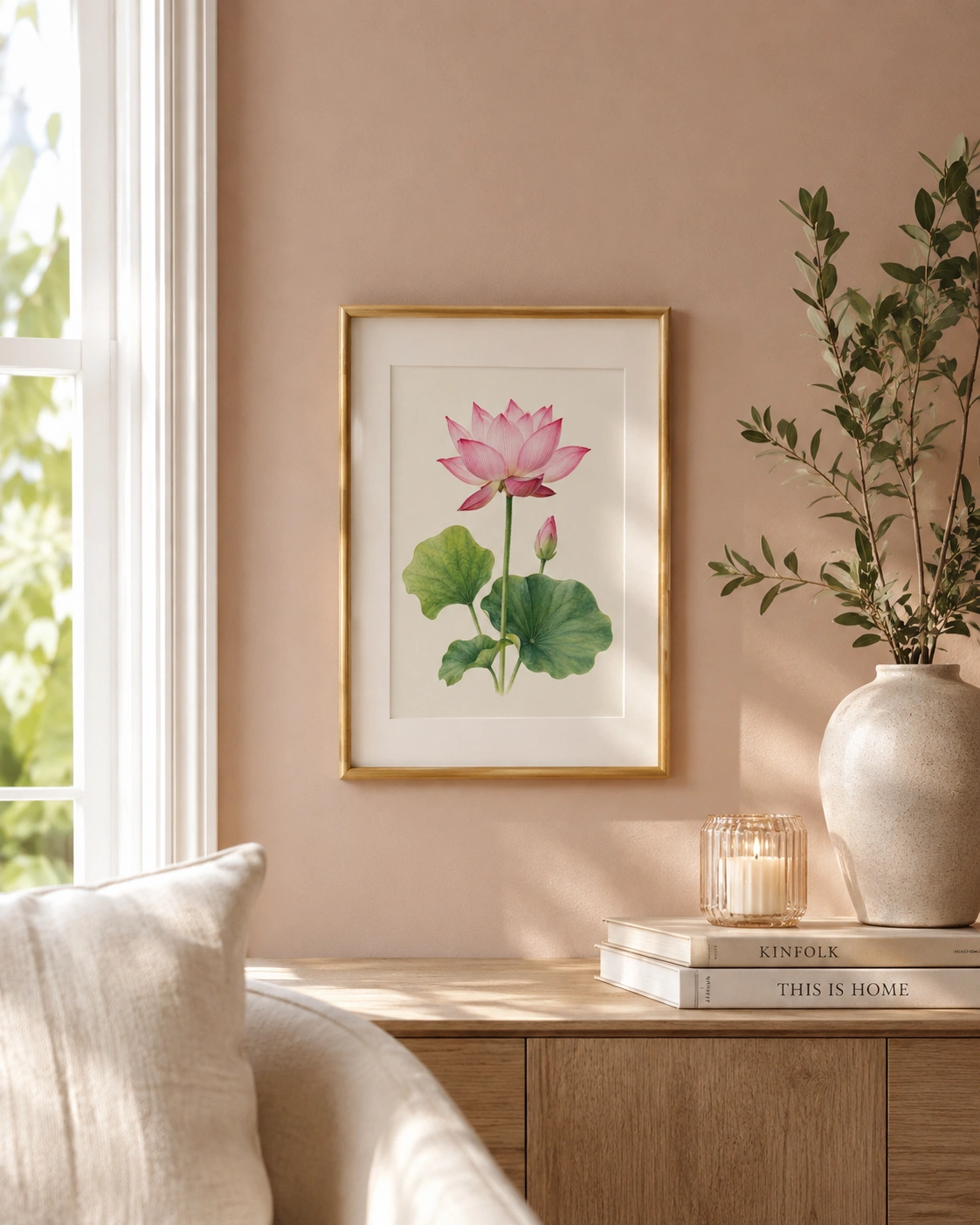 Lotus in Bloom – Botanical Study
₹499
-
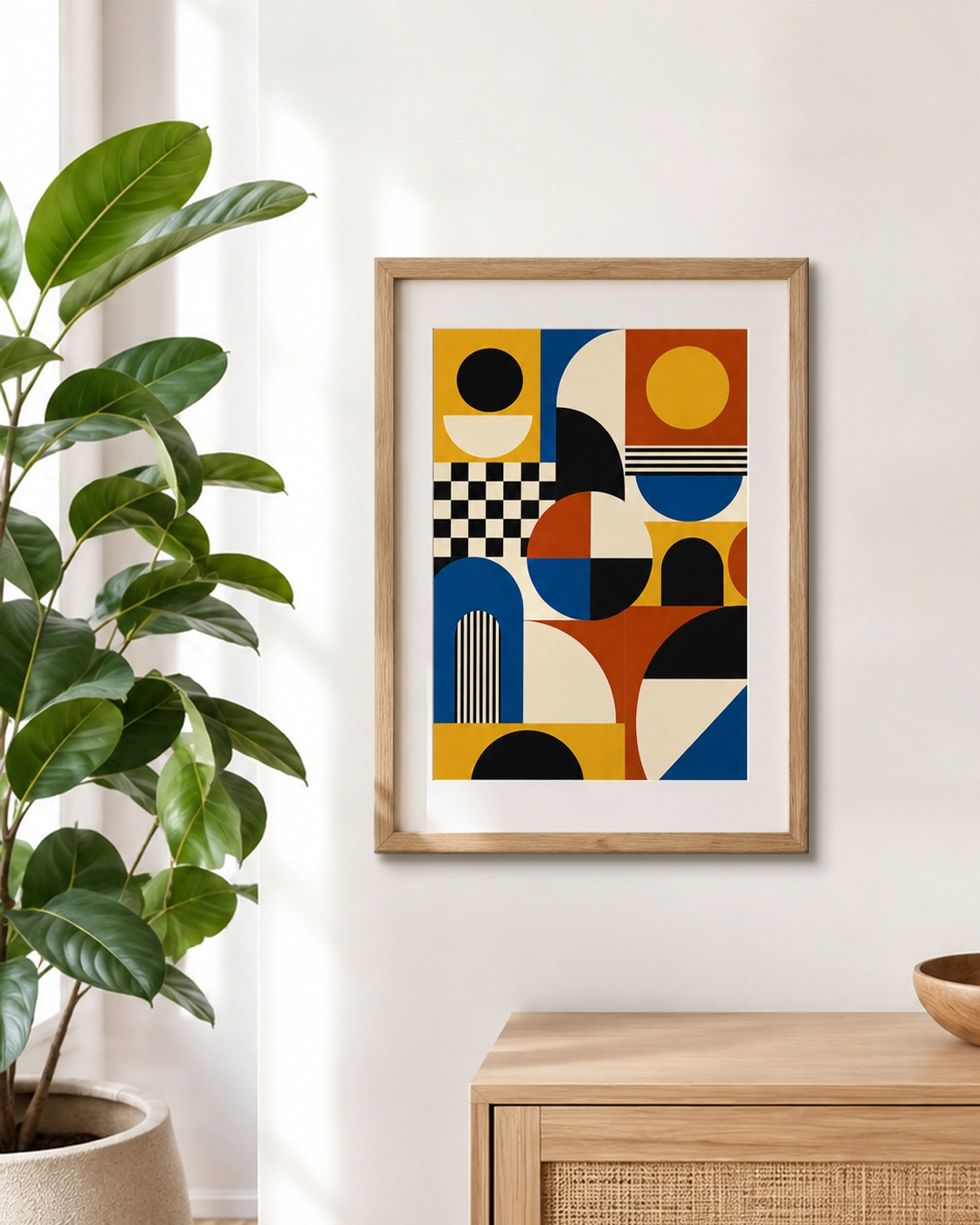 Rhythm in Form
₹499