
Abstract Art for the Living Room: Ideas and Placement Tips
25 November 2026
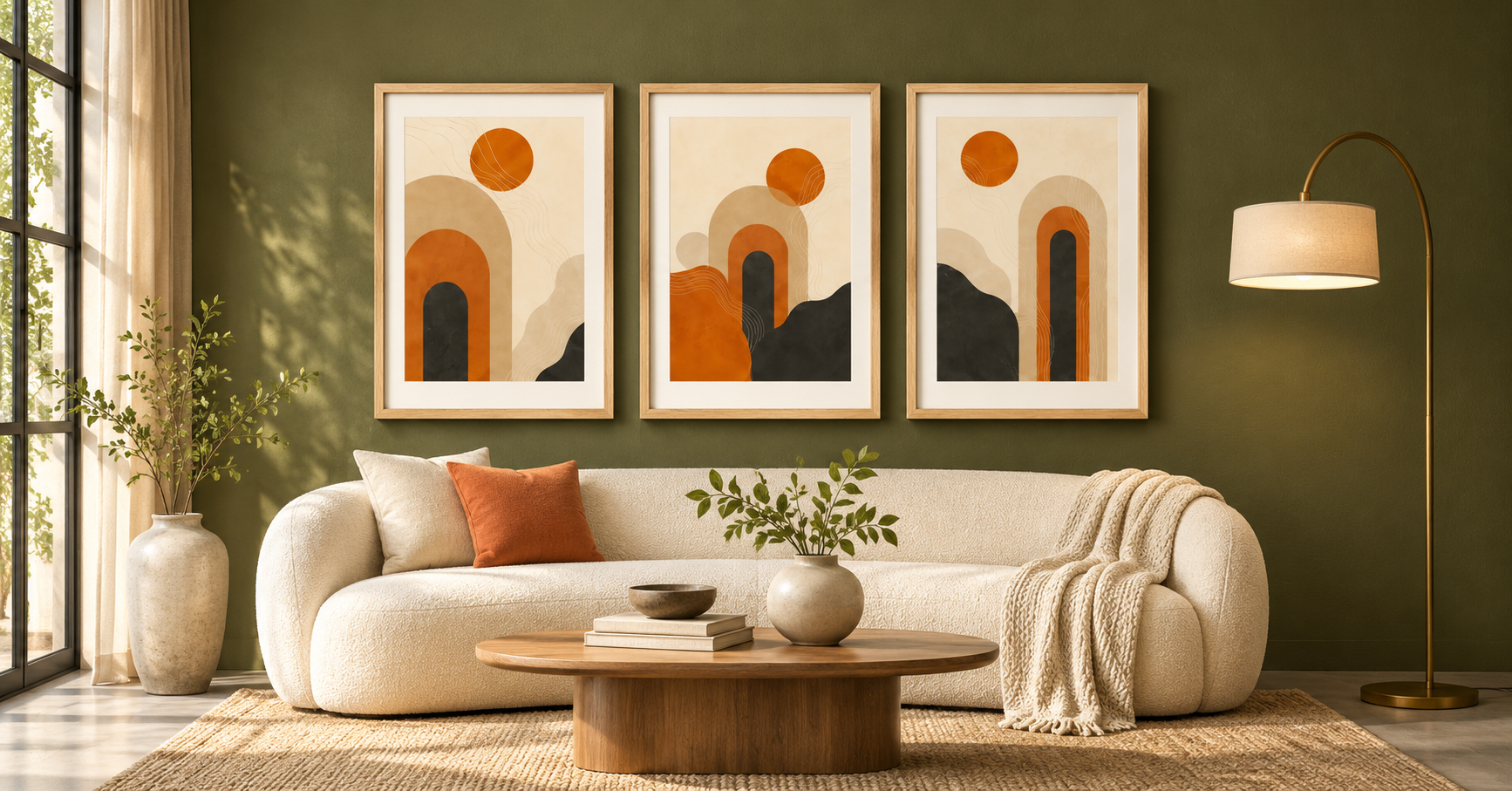
The living room is one of the most visible spaces in a home, making it an ideal place to display artwork that reflects your personal style. Choosing the right abstract art for the living room can help create a focal point, introduce colour and bring character to an otherwise simple wall.
From a single geometric composition above the sofa to a coordinated triptych across a wide wall, abstract paintings offer different ways to arrange and personalise your living space. The best choice depends on the artwork's design, the available wall area and how you want it to complement your furniture.
5 Abstract Art Ideas for Different Living Room Walls
1. A Statement Abstract Painting Above the Sofa
The wall behind the sofa is a natural location for a prominent artwork. A single abstract painting can establish a focal point without requiring several decorative elements.
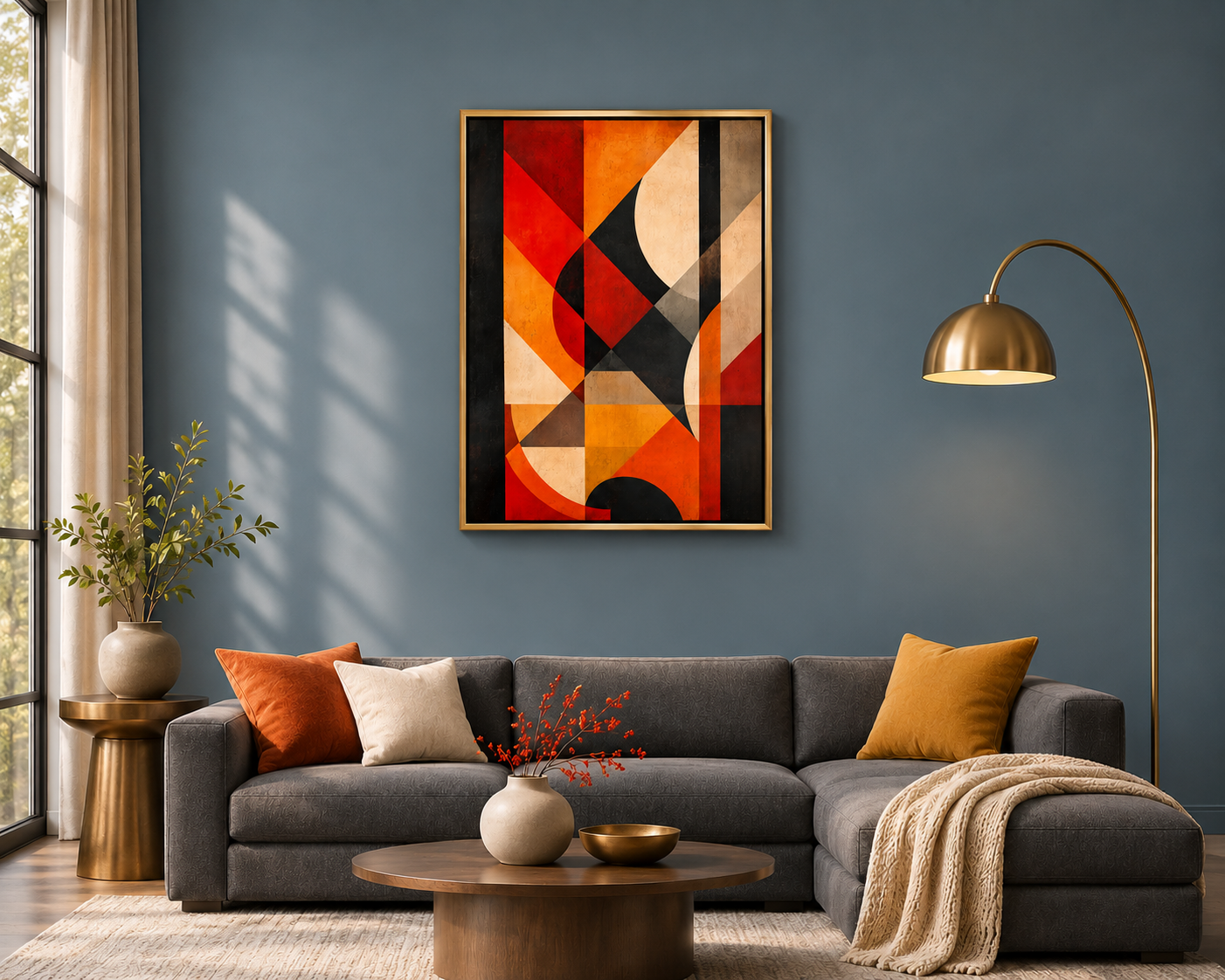
For this arrangement, consider a composition with distinctive shapes, contrasting colours or an interesting combination of lines and forms. The artwork should relate visually to the sofa without disappearing against the wall or overwhelming the seating area.
Ember Geometry is an example of bold geometric abstract art. Its intersecting circles, arcs, rectangles and vertical bands combine burnt orange, crimson red, ochre, black and cream. The composition can bring warmth and visual energy to a living room with understated furnishings.
2. A Coordinated Triptych for a Wide Wall
If your living room has a wide wall behind a three-seater or L-shaped sofa, a triptych can create a connected display across the available space.
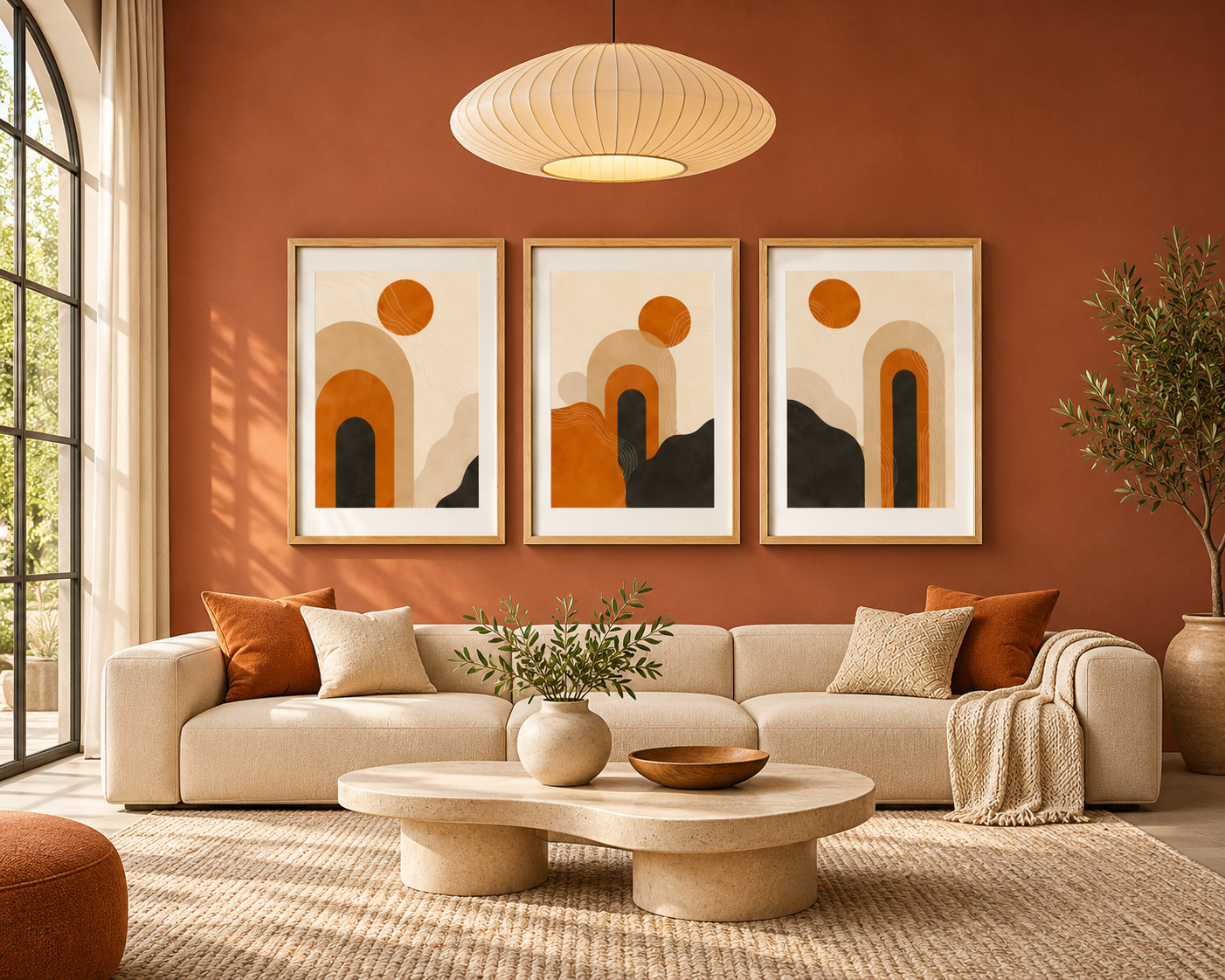
Unlike a single painting, a triptych distributes its composition across three panels. The panels should be displayed in their intended order, with consistent spacing so that they read as one complete artwork.
Desert Balance – Triptych Set features soft arches, circles and layered organic forms in burnt terracotta, charcoal, sand and cream. Its three-panel arrangement offers a balanced option for a wide living-room wall.
3. Geometric Abstract Art for a Contemporary Living Room
Geometric abstract artwork uses circles, rectangles, arcs, lines and other structured forms. These designs can complement interiors with clean furniture lines, modern lighting and simple architectural details.
For a more distinctive display, consider artwork that combines geometric patterns with a recognisable subject rather than relying entirely on shapes.
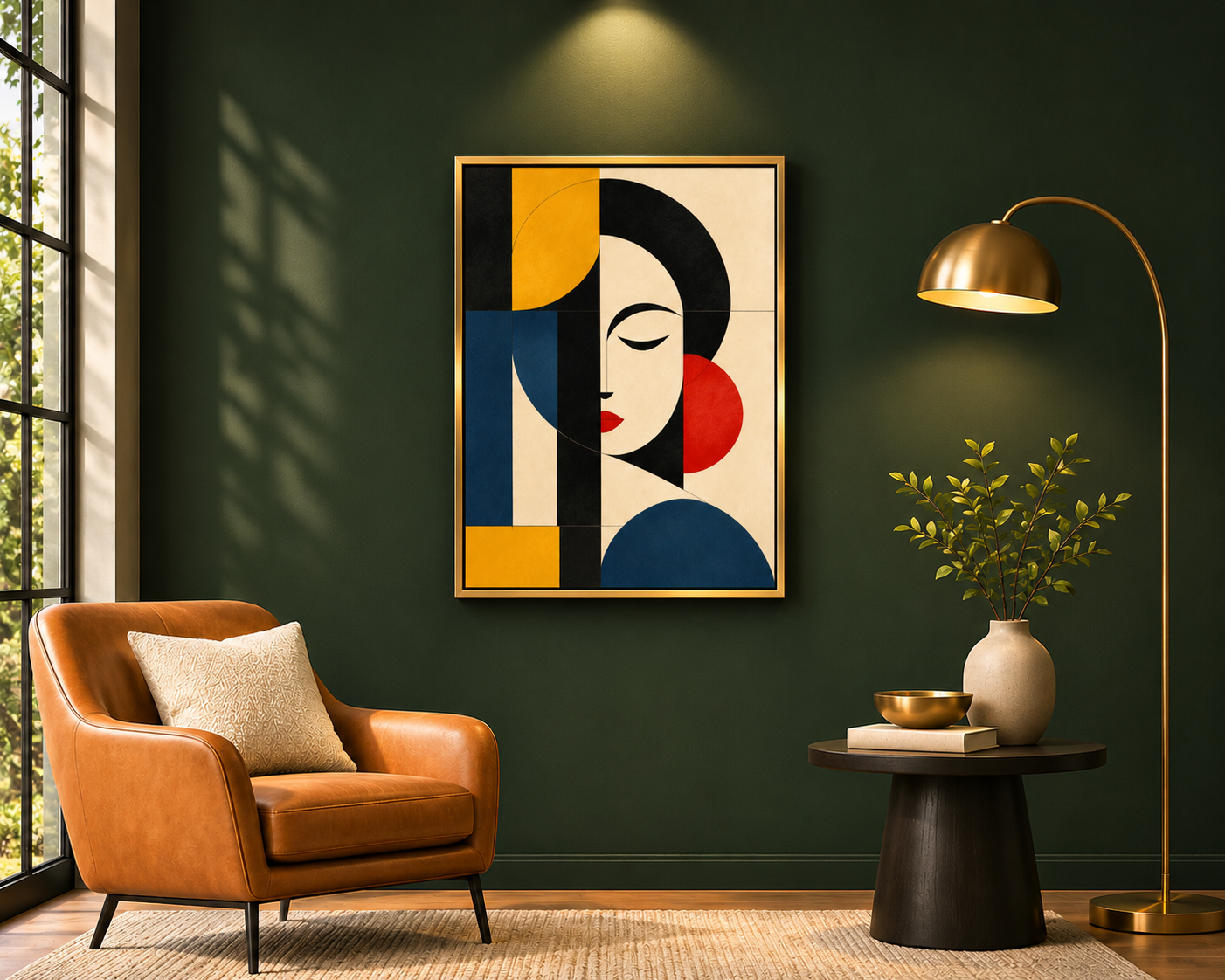
Poise in Geometry brings together a woman's face and geometric elements, including circles, arcs, rectangles and vertical lines. Its navy, black, cream and red palette creates a striking composition that can work as an individual focal point or as part of a curated gallery wall.
4. Abstract Landscape Art for a Relaxed Seating Area
A living room does not always need bold, high-contrast artwork. Abstract landscapes can offer a softer visual experience, particularly around a reading chair, a secondary seating area or a quieter section of the room.
Look for artwork inspired by mountains, lakes, distant horizons and natural surroundings. These compositions can introduce a sense of depth without making the wall feel overly busy.
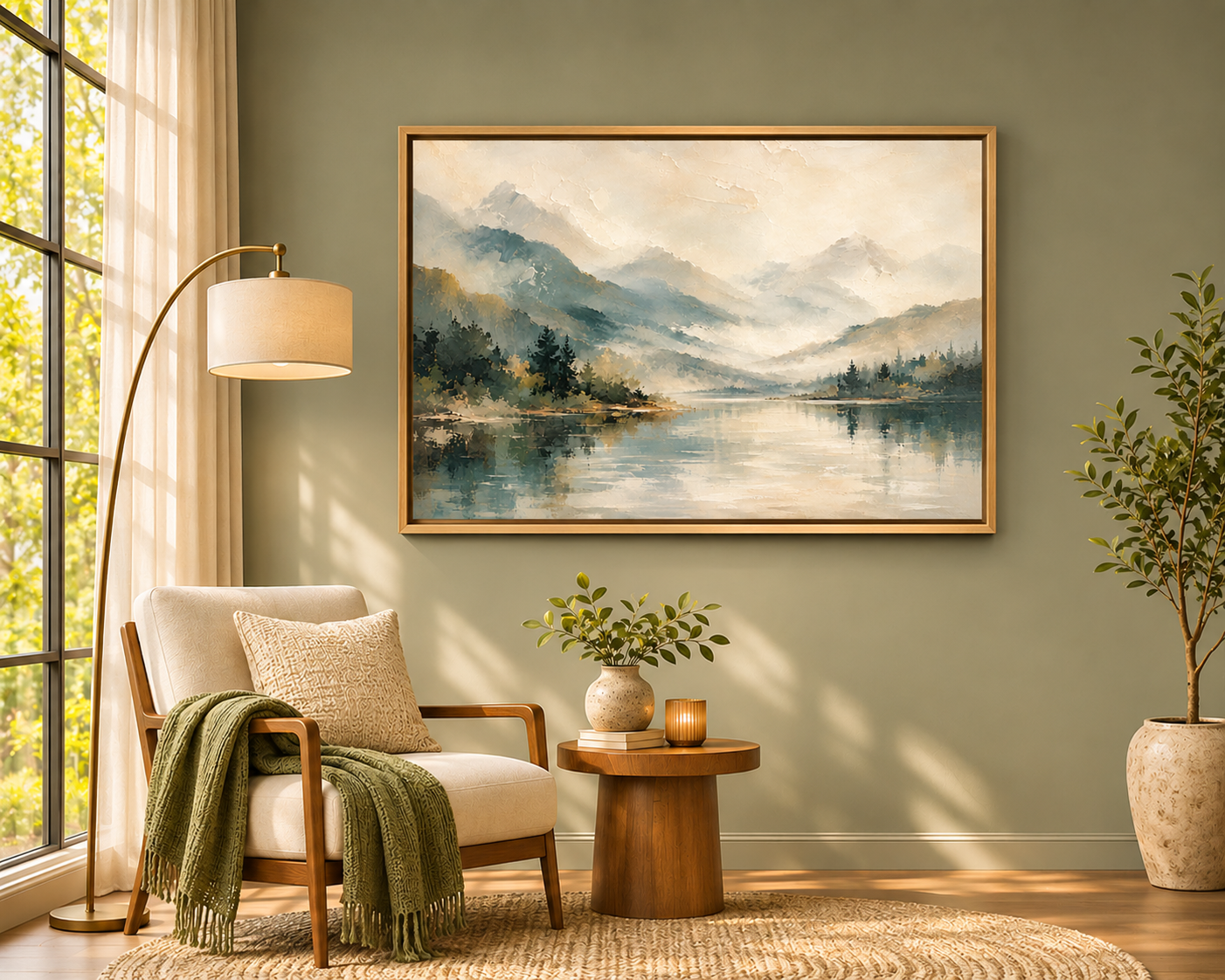
Whispers Across the Lake features mist-covered mountains, evergreen trees and reflections on a calm lake. Its blue-grey, sage, charcoal and warm neutral shades create a subdued landscape composition.
5. A Multi-Panel Display for an Open-Plan Living Space
In an open-plan home, artwork can help visually distinguish the living area from nearby dining or other shared spaces.
A coordinated set of abstract paintings can create a visual anchor behind the main seating arrangement. Choose a connected colour palette or a consistent artistic style so that the display feels intentional rather than like a collection of unrelated frames.
Before hanging multiple panels, arrange them together on the floor to check their order, spacing and overall proportions. This helps you understand how the complete display will look in relation to the furniture.
Single Abstract Painting or Triptych: Which Should You Choose?
Both arrangements can work in a living room, but they create different visual effects.
A single abstract painting creates one central focal point. It can be a good choice when you want a simpler display, have a smaller wall section or prefer one composition to stand out.
A triptych spreads the artwork across three panels. It can suit a wider wall and create a more connected arrangement above a sofa or along a large seating area.
Consider the available wall width and the dimensions of the complete arrangement rather than looking at the size of each panel separately. The spacing between frames also contributes to the final display.
How to Position Abstract Art in Your Living Room
Once you have selected the artwork, its placement can influence how the entire arrangement looks.
Above a Sofa
Keep the artwork visually connected to the sofa rather than placing it too high. The bottom edge should generally sit around 15–20 cm above the sofa back, depending on the furniture and frame.
Above a Console Table
A medium-sized or vertical abstract painting can work well above a console. Keep enough space between the artwork and objects on the table so that neither feels crowded.
Near a Television Unit
If you have an empty wall beside the television, an abstract painting can introduce visual interest without competing with the screen. Consider the artwork's colours and visual complexity when choosing a design.
In a Separate Seating Area
A painting near an armchair or reading corner can help distinguish that area within a larger living room. A smaller composition or a landscape-inspired artwork can work particularly well here.
For more detailed measurements, refer to KalaKraft's Wall Art Size Guide, which explains artwork proportions, framed dimensions and placement above sofas.
Choosing Abstract Artwork for Small and Large Living Rooms
The available wall space should influence the scale and arrangement of your artwork.
For smaller living rooms: A single, well-proportioned composition can create a clear focal point without making the wall feel crowded. Avoid arranging too many unrelated frames in a limited space.
For larger living rooms: A wider composition, a triptych or a coordinated display can help establish a stronger visual connection with the seating arrangement. Consider the complete width of the artwork when planning the layout.
In both cases, measure the wall and furniture before selecting a product. Also check the actual print and framed dimensions listed on the product page.
Explore Abstract Art for the Living Room at KalaKraft
The right artwork can give your living room a distinctive visual identity. Whether you prefer bold geometric compositions, warm abstract designs, multi-panel artwork or soft landscape-inspired paintings, there are different ways to make abstract art part of your home.
Explore the abstract and decorative designs available at KalaKraft and find artwork that complements your living-room arrangement.
Browse the KalaKraft Wall Art & Prints collection to discover artwork for your walls.