
Wall Art & Designer Paintings for Home Décor
12 November 2026
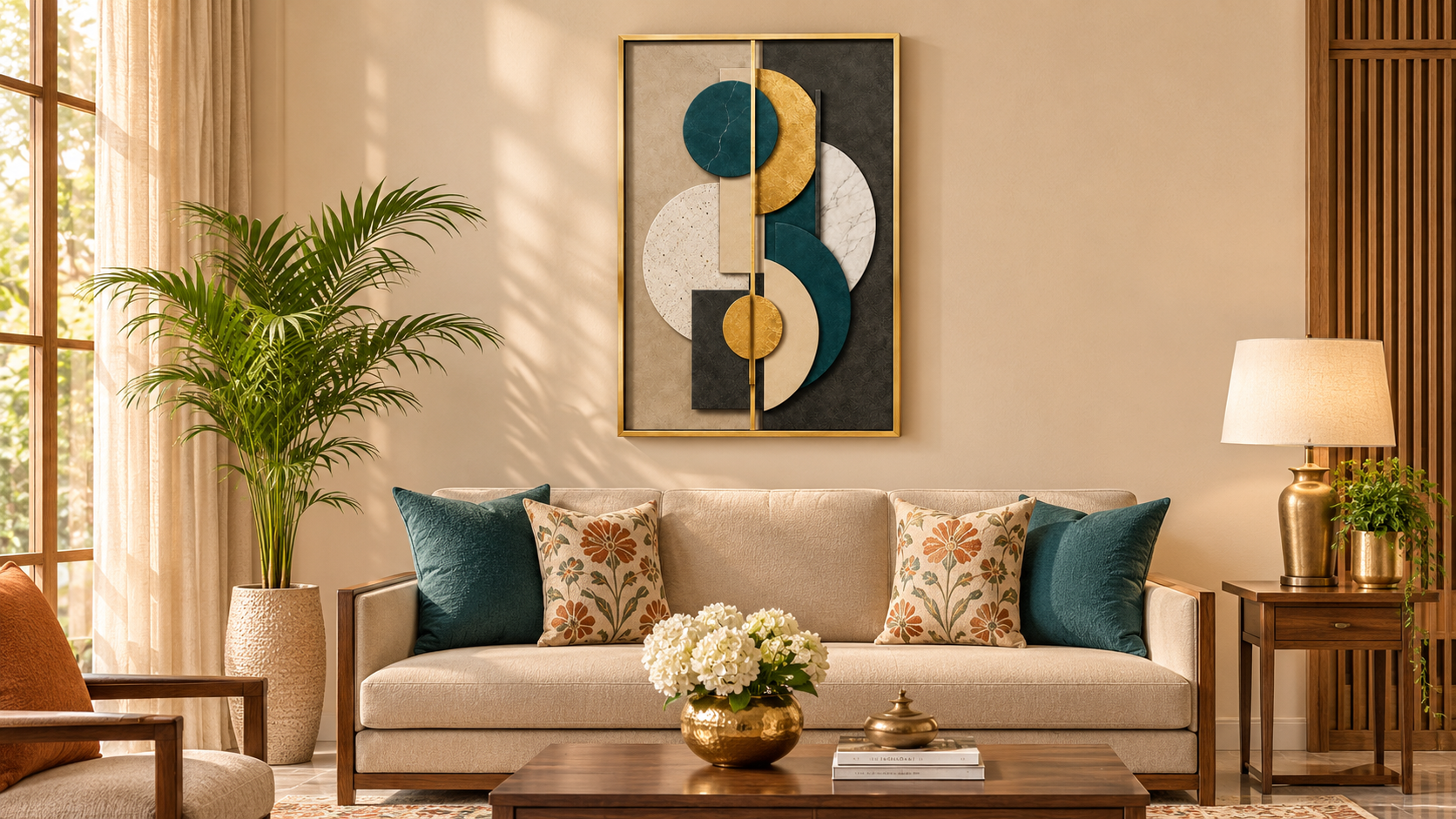
The right wall art for home décor can transform a room's look and feel without a complete makeover. It can bring colour to a plain wall, add personality to a neutral interior or create a focal point around which the rest of the décor comes together. Whether you prefer contemporary designs or traditional Indian artwork, choosing paintings that complement your space can make your interiors feel more complete.
From abstract compositions and geometric patterns to detailed Indian folk art and nature-inspired designs, there are many ways to bring artwork into your home. The key is to find pieces that connect with your furniture, colour palette and personal taste.
Explore KalaKraft's wall art collection for inspiration across different artistic styles.
Explore Different Styles of Wall Art for Home Décor
The artwork you choose can influence the overall character of your interiors. Some designs introduce subtle visual interest, while others bring colour, intricate details and movement to an otherwise simple space.
Abstract and Geometric Wall Art
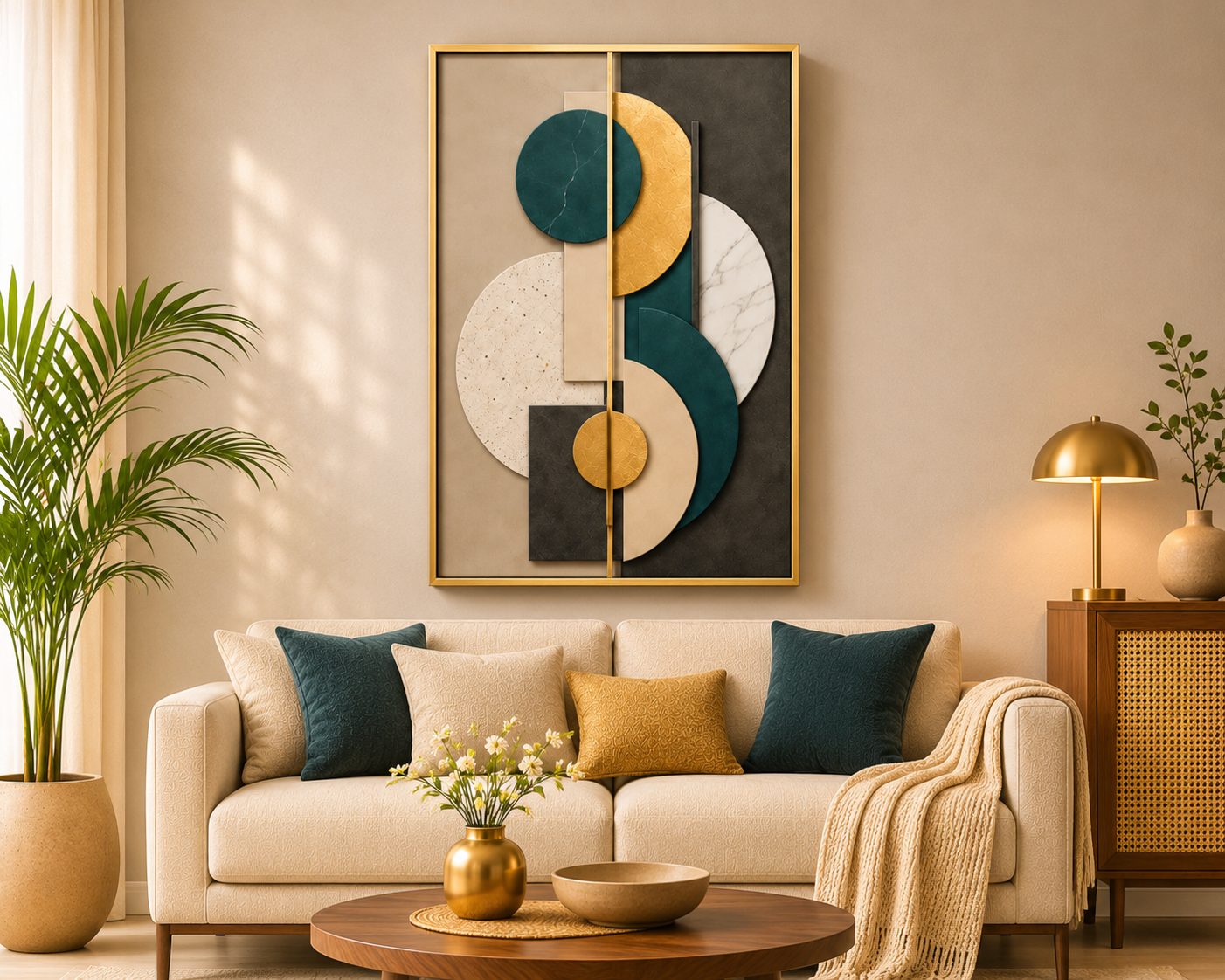
Abstract and geometric paintings are well suited to contemporary interiors. Clean shapes, curved forms, structured patterns and contrasting colours can add visual interest without relying on a recognisable subject.
Earthy geometric compositions can complement neutral walls and wooden furniture, while expressive abstract designs can introduce stronger colours into rooms with simpler furnishings.
These styles work particularly well above a sofa, console table or on a large empty wall where the artwork can become a focal point.
Traditional Indian Folk Art
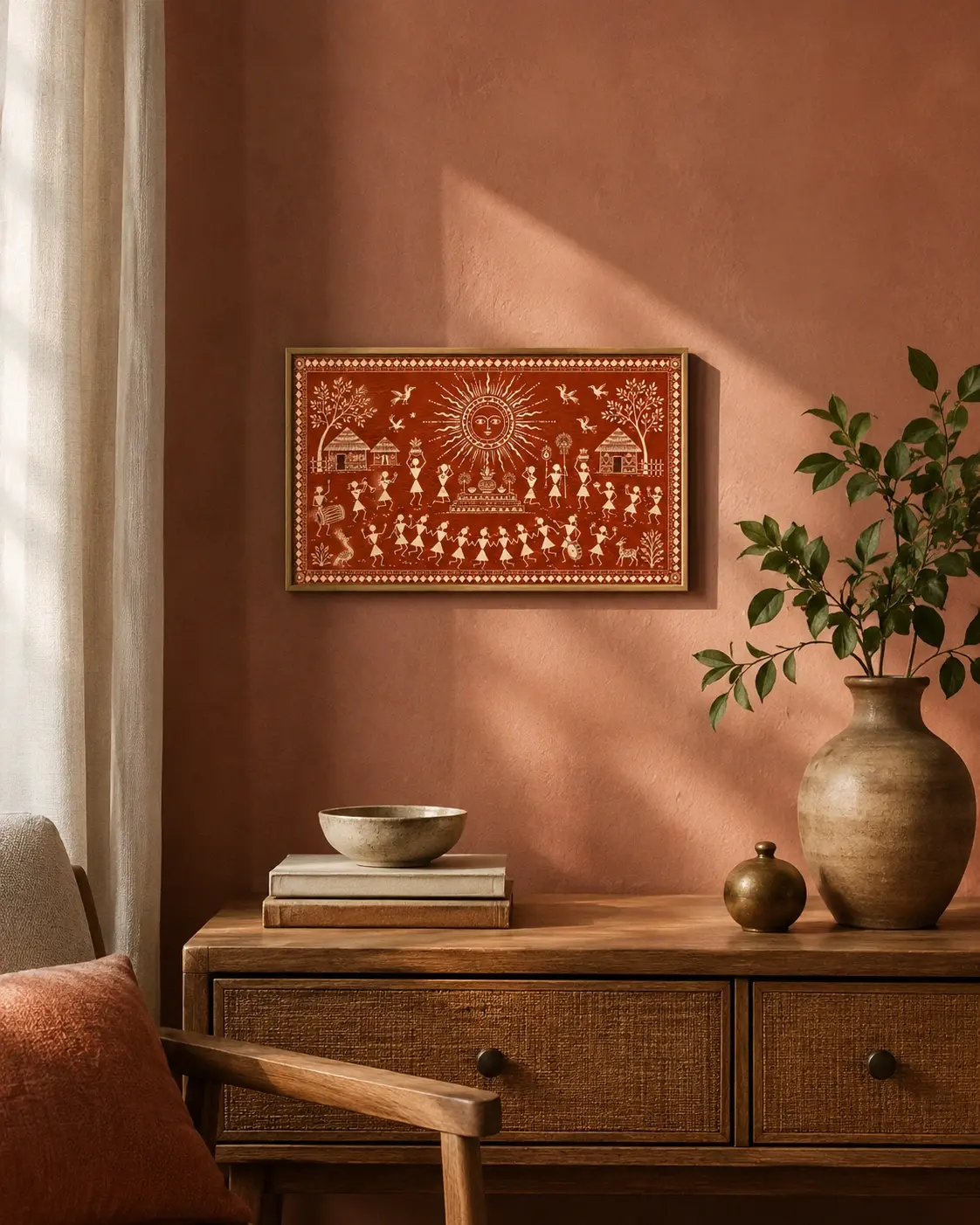
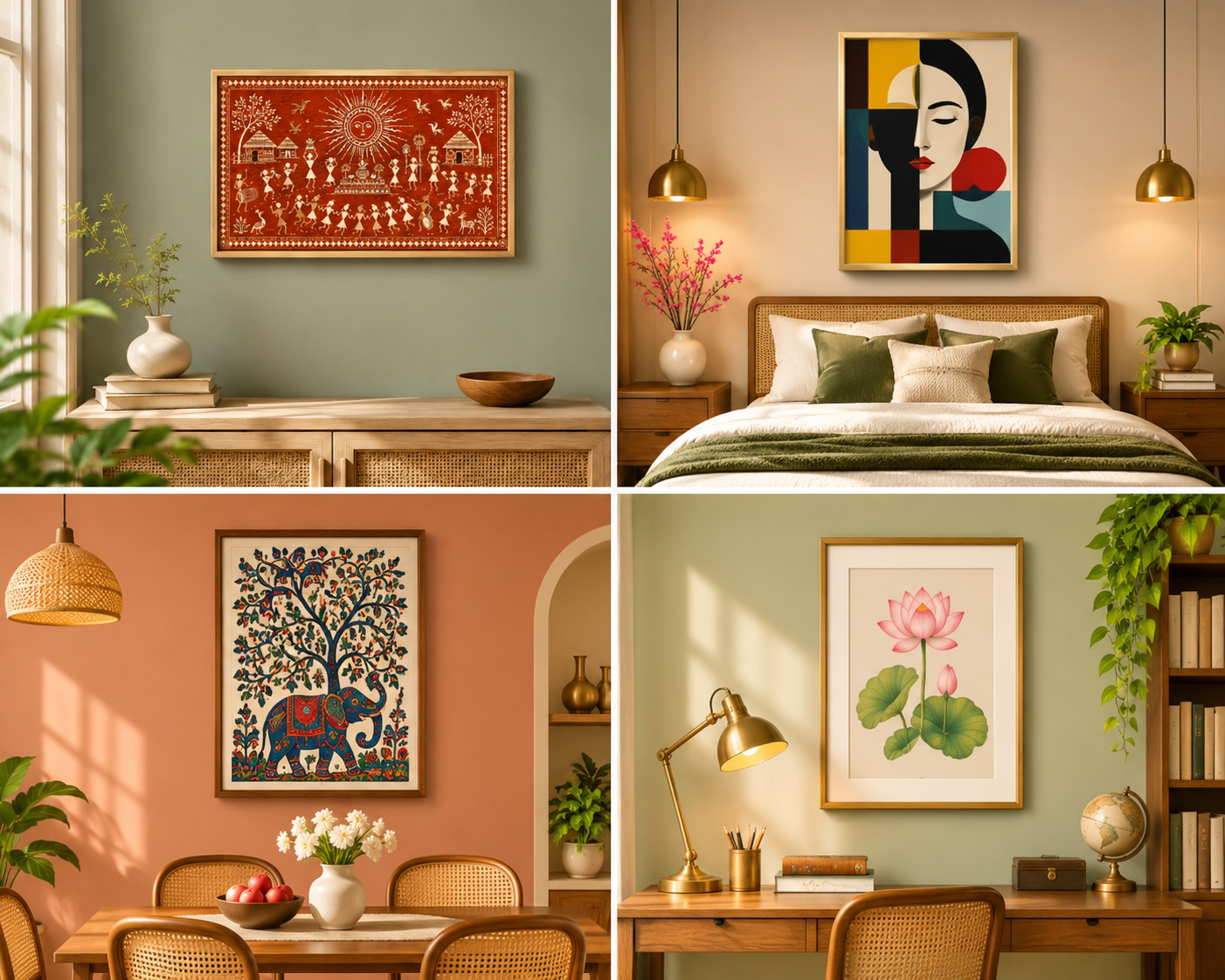
Indian folk art brings cultural expression, storytelling and distinctive patterns into home interiors. Art forms such as Madhubani, Warli, Gond and Pattachitra each have their own visual character, motifs and artistic traditions.
These paintings can complement both traditional and contemporary homes. Their detailed patterns and narrative elements create visual interest, particularly when displayed against simple walls and understated furniture.
For a distinctive look, consider placing traditional artwork in a living room, entryway or dining area where its details can be appreciated.
Nature-Inspired and Botanical Artwork
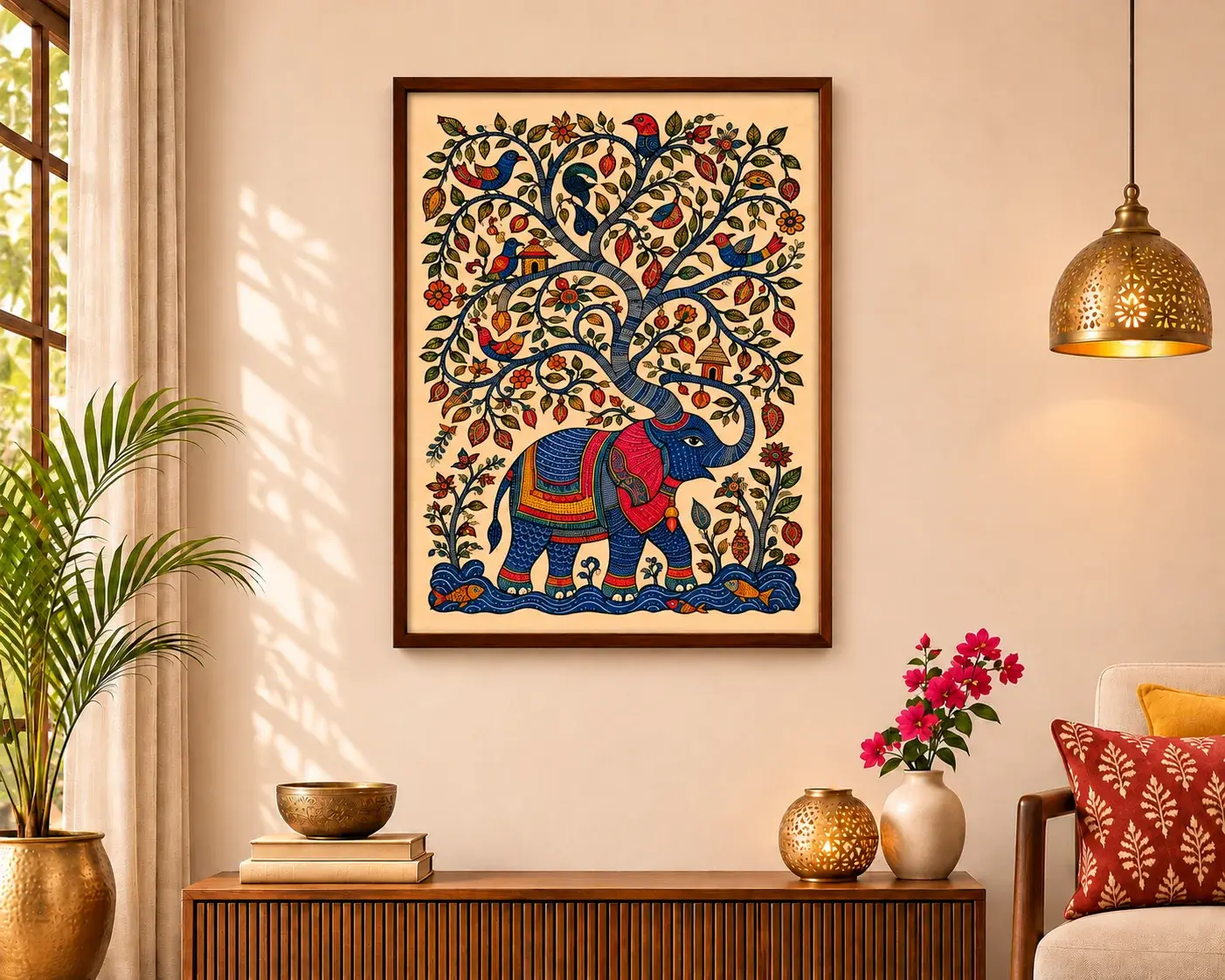
Birds, trees, flowers and botanical motifs can introduce a natural element to your décor. These designs work well in spaces with wooden furniture, indoor plants, natural textures and softer colour palettes.
Floral compositions can add colour to a neutral room, while paintings featuring trees and birds can create a detailed decorative feature. Depending on the design, nature-inspired artwork can suit living rooms, bedrooms and reading corners.
Landscape and Scenic Paintings
Landscape artwork can introduce a sense of openness and visual depth into your home. Paintings featuring rivers, mountains, forests and natural surroundings can complement relaxed interiors and spaces with neutral furnishings.
Choose a composition that connects with the atmosphere of the room rather than simply following a particular trend.
Choose Designer Wall Paintings for Different Rooms
The same painting can create a different impression depending on where you display it. Consider the room's purpose, available wall space and surrounding furniture before selecting artwork.
Living Room
The living room is often the most visible space in a home, making it a natural place for statement artwork. A large painting above the sofa, a colourful folk-art composition or a coordinated set can help establish a focal point.
Consider the furniture arrangement and wall width before choosing a design. The artwork should feel connected to the seating area without making the wall look overcrowded.
Bedroom
For bedrooms, consider paintings that complement the colours and atmosphere of the space. Botanical artwork, balanced abstract compositions and gentle landscape designs can work well with softer furnishings.
A painting above the bed or on an empty side wall can add character without requiring several decorative elements.
Dining Area
The dining area offers an opportunity to introduce more colour and personality. Floral compositions, nature-inspired paintings and traditional Indian artwork can make the space feel more inviting.
Choose a design that relates to the dining furniture and available wall area so the arrangement feels balanced.
Entryway and Study
Entryways and hallways are often overlooked when decorating a home. A thoughtfully placed painting can make these transitional spaces feel more welcoming.
For a study or reading corner, choose artwork featuring a subject, artistic style or colour palette that reflects your interests. A compact print can add personality without taking up too much visual space.
Match Wall Paintings with Your Interior Style
Your artwork does not have to match every cushion, curtain or piece of furniture. Instead, look for one or two elements that connect it to the room.
Neutral interiors: Explore artwork with earthy shades, muted greens, black-and-white details or a restrained colour palette.
Modern interiors: Geometric compositions, abstract designs and coordinated multi-panel sets can complement clean-lined furniture.
Traditional interiors: Indian folk-art styles, intricate borders and narrative paintings can add cultural character.
Eclectic interiors: Combine different artistic styles, colours and subjects while maintaining some visual connection between the pieces.
Also consider the textures and patterns already present in the room. If your furniture and furnishings have bold patterns, a simpler painting may create a better balance. In a mostly neutral space, a colourful or detailed artwork can become the focal point.
The aim is not to make everything look identical, but to create a natural connection between the artwork and its surroundings.
Create an Interesting Gallery Wall
A gallery wall allows you to display multiple paintings together instead of relying on a single artwork. It can bring different subjects, colours and artistic styles into one arrangement.
For a coordinated look, choose paintings that share a common colour palette, theme or visual style. You can also combine different subjects while maintaining a consistent frame style or spacing.
Here are a few ideas to consider:
A collection of botanical and floral prints.
A combination of abstract and geometric artwork.
A selection of traditional Indian folk-art paintings.
A mix of different artwork sizes arranged around one central piece.
Before hanging the frames, plan the arrangement on the floor. This helps you understand how the pieces relate to one another and make adjustments before fixing them to the wall.
Balance Artwork with Furniture and Wall Colours
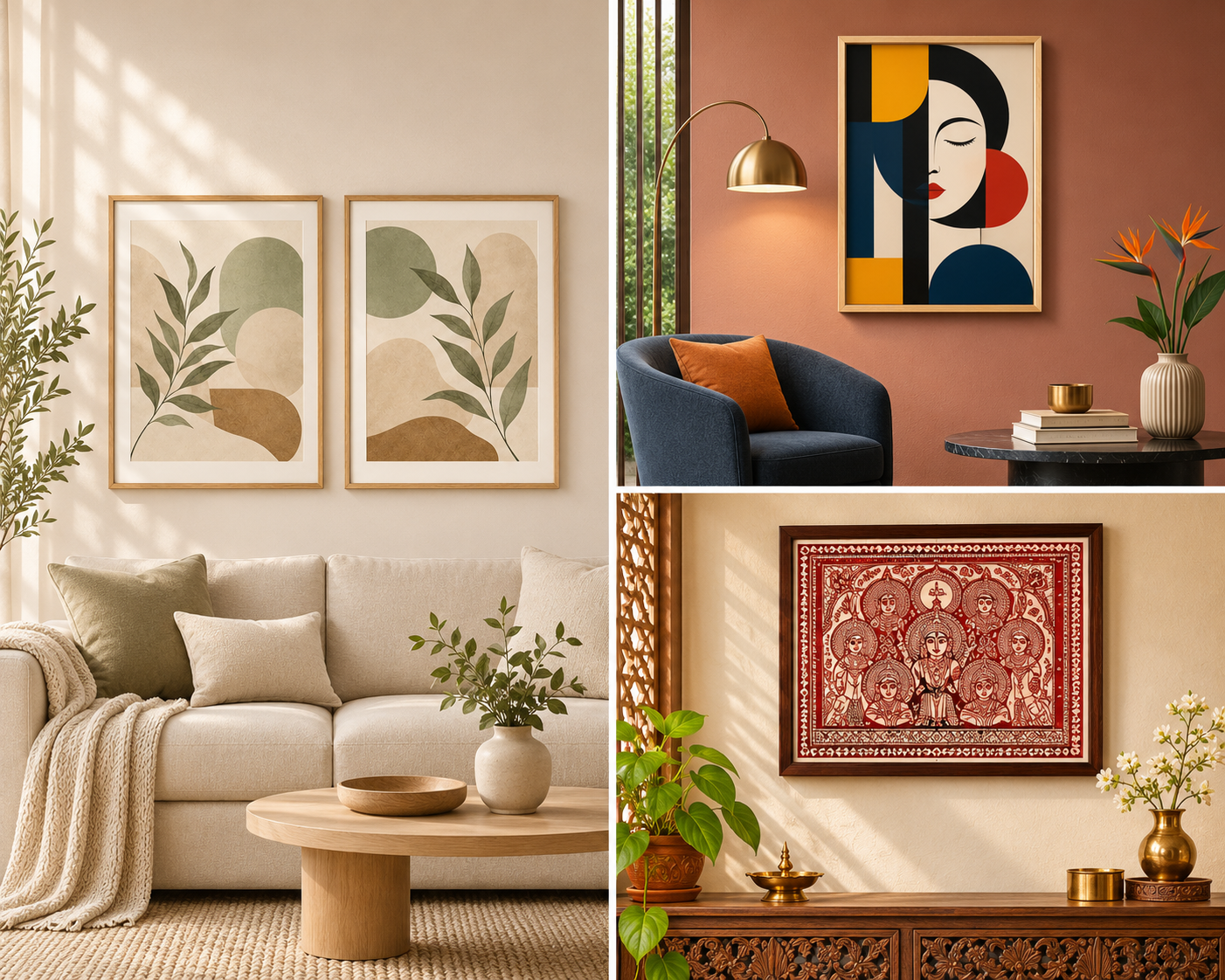
Wall art should feel connected to the furniture and finishes around it. A painting displayed above a wooden console, for example, can create a different impression from the same artwork placed against a textured feature wall.
Consider these combinations:
Wooden furniture with earthy or nature-inspired artwork.
Minimal furniture with expressive abstract compositions.
Traditional furnishings with detailed Indian folk art.
Textured walls with simpler artwork that does not compete with the surface.
Colour is another useful consideration. You can choose paintings that repeat shades already present in your furnishings or introduce a complementary colour to create contrast.
A thoughtful connection between the artwork and the room is usually enough. Matching every shade exactly is not necessary.
Choose the Right Artwork Size and Format
Even a beautiful painting can look out of place if its proportions do not suit the wall. Before ordering, consider the available wall space and the furniture beneath it.
A useful starting point is to choose an arrangement that covers around two-thirds to three-quarters of the width of the furniture below it. For larger walls, multiple coordinated prints or a triptych can create a wider display.
For smaller spaces, a single compact artwork may be enough. Avoid filling every available wall; leaving some open space helps the existing paintings stand out.
Also check whether the artwork is available as a paper print, canvas print or framed piece. These formats can differ in appearance and price. Read the product description carefully to understand what is included and whether framing needs to be arranged separately.
For more detailed measurements and placement advice, read our guide to choosing the right wall art size for your space.
Find Wall Art That Feels Right for Your Home
Good home décor is not only about following the latest interior trends. It is about choosing pieces that make your space feel considered and personal. The best wall art for home décor complements your interiors while reflecting what you enjoy looking at every day.
At KalaKraft, explore designer wall paintings inspired by contemporary styles, nature and traditional Indian folk art. Compare different compositions and available formats to find artwork that suits your walls and personal taste.
A well-chosen painting does more than decorate an empty wall. It becomes part of the way your home looks and feels.