
How to Match Wall Art With Furniture and Wall Colour
20 August 2026
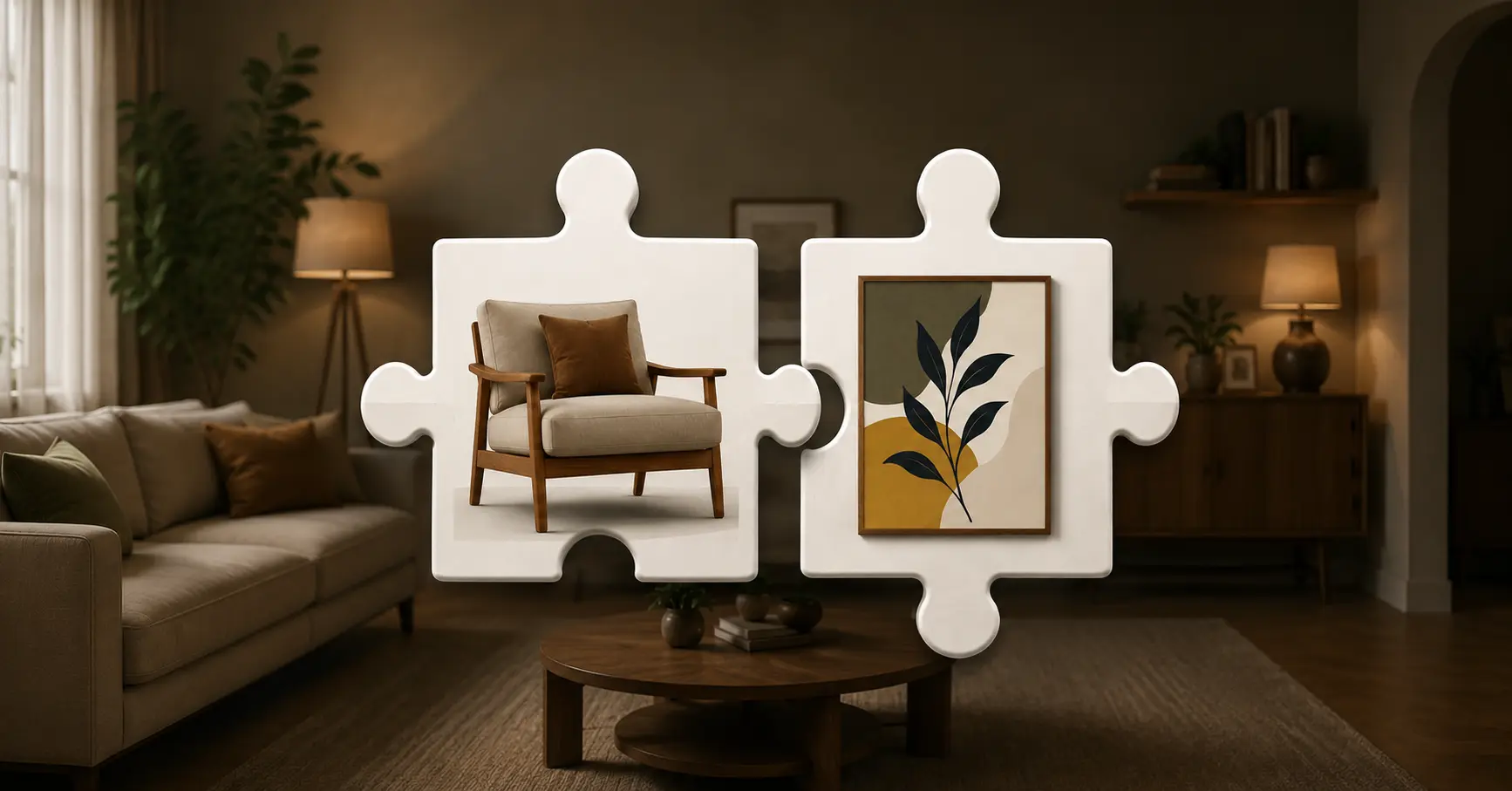
Choosing wall art becomes much easier when you look at the room as a whole. The artwork doesn't have to match every piece of furniture or exactly repeat the colour of your walls. Instead, it should create a sense of connection with the colours, textures, and style already present in the space.
If you're wondering how to match wall art with furniture and wall colour, a few simple principles can help you create a balanced and intentional interior.
Start With Your Room's Existing Colours
Before choosing artwork, take a look at the colours already present in the room.
Consider your walls, sofa, curtains, rugs, cushions, flooring, and other larger elements. These create the foundation of your interior.
Your artwork can either complement these colours or introduce a controlled contrast.
For example, a neutral room can benefit from colourful wall art, while a room that already has several strong colours may look better with a more restrained composition.
Match the Mood, Not Every Colour
Your artwork doesn't need to repeat the exact shade of your sofa or wall.
Instead, understanding how to match wall art with your existing colours can help you create a more cohesive look.
If your room has warm beige and brown tones, artwork with earthy colours can create a naturally connected look. A cool-toned interior can work well with blues, greys, greens, or other cooler shades.
You can also choose one small colour from the artwork and repeat it somewhere else in the room through a cushion, vase, rug, or decorative object.
This creates coordination without making the room look overly matched.
How to Match Wall Art With Neutral Walls
Neutral walls give you plenty of freedom.
White, cream, beige, grey, and other subtle shades can act as a clean background for almost any style of artwork.
For white walls
You can introduce stronger colours, bold abstract compositions, botanical artwork, or geometric pieces.
For beige or cream walls
Earthy tones, botanical artwork, warm abstracts, and Indian-inspired art can create a soft and welcoming atmosphere.
For grey walls
Consider artwork with deeper blues, greens, muted neutrals, or carefully chosen warm tones to create contrast.
The key is to decide whether you want the artwork to blend with the room or become its focal point.
Match Artwork With Your Furniture Style
Colour isn't the only thing that matters. Knowing how to match wall art with your furniture style can also help you choose artwork that feels natural in the room
Modern Furniture
Clean-lined sofas, glass tables, and minimalist furniture can pair well with abstract, geometric, or contemporary wall artwork.
Poise in Geometry and Ember Geometry, for example, can complement interiors that already have structured forms and modern lines.
Minimalist Furniture
If your furniture is simple and understated, you can use artwork to introduce more colour or visual interest.
A botanical artwork or carefully chosen statement piece can become the main focal point without making the room feel cluttered.
Wooden or Earthy Furniture
Natural wood, cane, rattan, and earthy materials pair naturally with botanical, landscape, and Indian-inspired artwork.
Pieces such as Tree of Life - Guardian of the Forest or Lotus in Bloom- Botanical Study can reinforce that connection with nature.
Mid-Century or Retro-Inspired Furniture
Geometric artwork and bold abstract compositions can work particularly well with mid-century interiors.
Look for structured forms, balanced compositions, and colours that complement the furniture rather than competing with it.
Should Wall Art Match the Sofa?
Not exactly.
Matching your artwork directly to your sofa can sometimes make the room feel too coordinated.
Instead, consider the relationship between the two.
For a neutral sofa, artwork can introduce colour and become a focal point. If your sofa already has a strong colour or pattern, a more balanced artwork can prevent the room from feeling visually overwhelming.
The artwork should feel connected to the sofa without looking like it was chosen as a matching set.
Use Contrast to Create a Focal Point
Sometimes the best artwork is the one that doesn't perfectly blend in.
A bold artwork against a neutral wall can immediately attract attention. Similarly, softer artwork can provide balance in a room with strong furniture or dramatic colours.
Contrast works particularly well when the rest of the room is relatively controlled.
The goal is not to make everything identical. It's to create enough difference for the artwork to be noticed while keeping the overall room harmonious.
Consider the Artwork's Style and Texture
Colours are important, but don't forget about visual texture.
A detailed botanical composition can soften a room filled with straight lines. Geometric artwork can add structure to an interior with softer furniture and organic materials.
Think about what your room is missing.
If everything feels very structured, try something with curves or natural forms. If the room already has many organic shapes, a geometric artwork can introduce balance.
How to Choose Wall Art for Different Interiors
Your overall interior style can also guide how to match wall art with the rest of your décor.
Modern: Abstract and geometric artwork with clean compositions.
Minimalist: Simple artwork with restrained colours and plenty of visual breathing room.
Bohemian: Botanical, colourful, or Indian-inspired artwork with expressive patterns.
Contemporary: Abstract compositions, statement artwork, and modern wall décor.
Nature-inspired: Botanical, landscape, and tree-of-life artwork.
You don't have to follow these categories strictly. Mixing styles can actually make a room feel more personal.
Common Mistakes to Avoid
Matching Everything Too Closely
Your artwork doesn't need to copy your furniture colours exactly.
Ignoring the Wall Colour
A beautiful artwork can lose its impact if its colours are too similar to the wall behind it.
Choosing Style Over Space
An artwork may look great on its own but feel wrong if its size or orientation doesn't suit the wall.
Adding Too Many Colours
If the room already has several strong colours, introducing another completely unrelated palette can make the space feel disconnected.
Forgetting the Bigger Picture
Always look at the artwork together with the furniture, wall, lighting, and surrounding décor.
Create a Connected Look With Wall Art
The best wall art doesn't necessarily match everything in the room. It connects different elements through colour, style, texture, or mood.
At Kalakraft, you can explore different types of artwork, from geometric and abstract compositions to botanical and Indian-inspired wall art.
Whether you want to add colour to a neutral room, soften modern furniture with natural forms, or create a bold focal point, the right artwork can bring the different elements of your interior together.
So before choosing your next piece, look around the room first.
Find what the space already has-and choose artwork that adds what it needs.