Canvas vs Paper Prints: Which Is Better for Your Wall?
31 October 2026
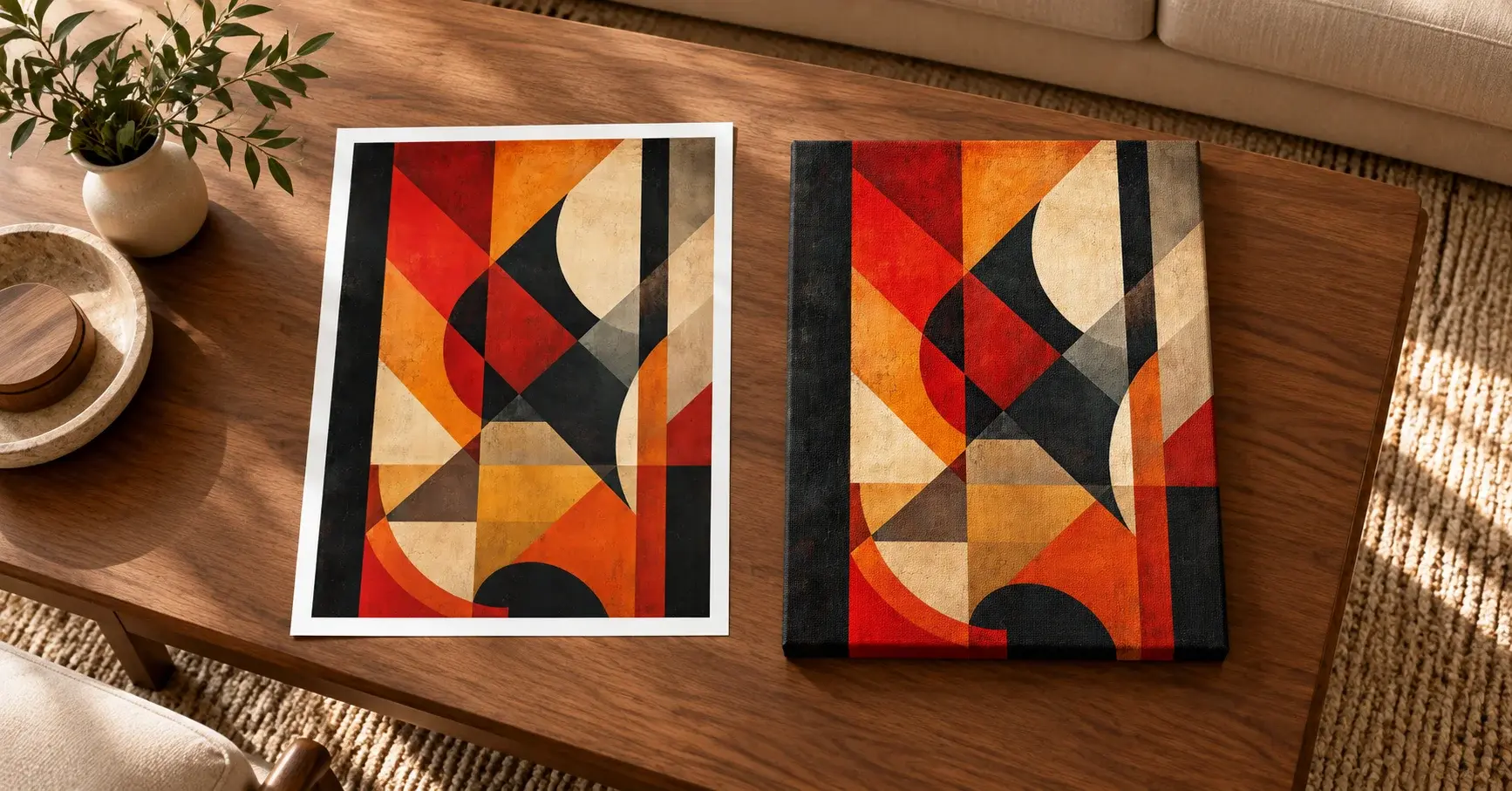
Choosing between canvas vs paper prints involves more than finding a design you love. The print format affects how the artwork looks, how you display it and how it fits into your space. So, which option works best for your wall?
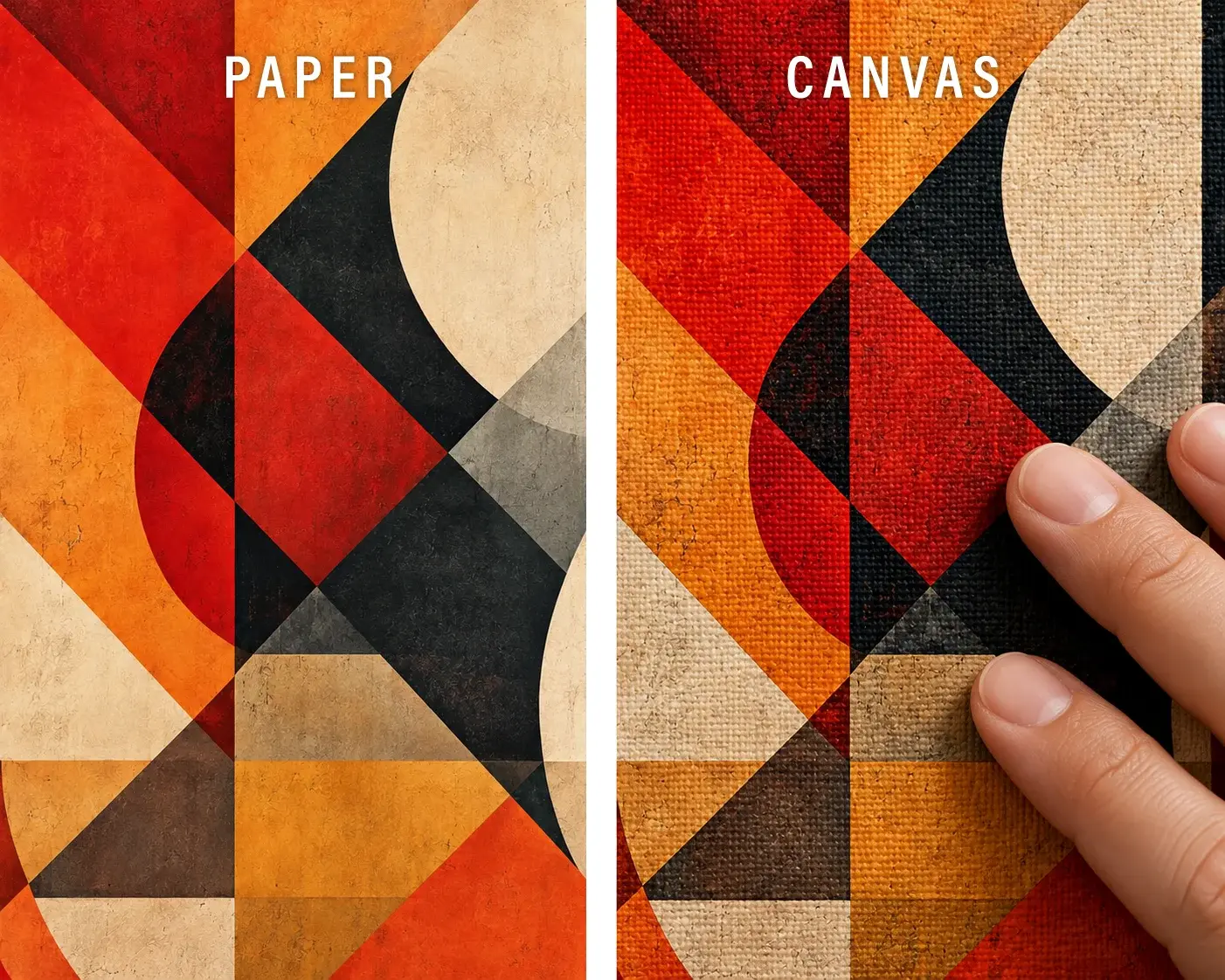
Paper generally offers a smooth, crisp appearance, while canvas has a woven texture that can make the same design look softer and more painterly. Each format has its own appeal, and the better choice depends on the artwork and how you want it to look in your home.
Neither is automatically better. Since the same artwork may be available in both formats, the right choice comes down to the details of the design, your preferred finish and how you plan to display it.
Here's how to compare canvas vs paper prints and choose the right option for your home.
Canvas vs Paper Prints: What's the Difference?
The easiest way to understand the difference is to look at the surface of each print.
Paper prints have a relatively smooth finish. This can help fine lines, small motifs and subtle colour changes appear clear, making paper a natural option for intricate designs and framed artwork.
Canvas prints have a woven surface with visible texture. That texture becomes part of the artwork's appearance, giving it a more tactile, painterly quality. It can work particularly well with expressive compositions, broad colour areas and designs where the surface itself adds visual interest.
Neither format is automatically more premium than the other. A detailed painting may benefit from the clean appearance of paper, while another design may look more appealing with canvas texture. Think about the effect you want rather than choosing one material simply because it sounds more expensive.
Paper Prints: When Are They the Better Choice?
Paper prints are worth considering when you want the details of an artwork to stand out. Their smooth surface can help intricate patterns, delicate outlines and smaller design elements remain visually distinct.
This is especially relevant to Indian folk art, where repeated motifs and fine linework often contribute to the character of a composition. Paper can also be a practical choice when you want to frame your artwork and coordinate it with your furniture, wall colour or other prints.
Choose paper prints if you:
Prefer a smooth, clean finish.
Want intricate motifs and fine lines to remain visually clear.
Plan to display the artwork in a frame.
Are putting together a coordinated gallery wall.
Like the traditional appearance of a framed art print.
For example, an intricate folk-art composition may be easier to appreciate when its smaller details remain prominent. If you enjoy the stories and symbolism behind these art forms, read our guide to Madhubani Painting: Where It Comes From and How to Read It.
Paper is not limited to traditional artwork, of course. Geometric designs, botanical illustrations and contemporary prints can also look crisp and well-defined on a smooth surface.
Canvas Prints: When Are They the Better Choice?
Canvas prints offer a different kind of visual appeal. The woven texture adds depth to the surface, which can complement broad colour areas, expressive shapes and compositions with a painterly quality.
Consider canvas if you want one artwork to take centre stage rather than creating a display of several framed prints. The texture can give a piece a distinct presence, although the final look will depend on the artwork and the canvas product itself.
Depending on the specific product and its finish, canvas may be displayed with or without a traditional frame. Check the product details before deciding how you plan to hang it.
Choose canvas prints if you:
Prefer a visibly textured surface.
Like a softer, more painterly appearance.
Want a statement artwork for a prominent wall.
Feel that texture would complement the design.
Prefer a display that does not rely on a conventional frame, where the product allows it.
Canvas is not just for abstract paintings, and paper is not just for traditional art. Both can work across different subjects. What matters is how the surface interacts with the particular artwork and the finish you prefer.
Canvas vs Paper Prints: A Simple Comparison
Factor | Paper Prints | Canvas Prints |
Surface | Generally smooth | Woven and visibly textured |
Fine details | Well suited to intricate lines and motifs | Texture may affect how very fine details appear |
Overall appearance | Crisp and clean | Softer and more painterly |
Framed displays | A natural choice for framed artwork | Can also be framed, depending on the product |
Gallery walls | Easy to coordinate through frames | Can be included as selected statement pieces |
Large artwork | Works well, especially in a planned framed display | Can create a textured focal point |
Folk art | Often suits intricate compositions | Depends on the design and preferred finish |
Abstract and floral art | Keeps shapes and colours visually clean | Texture can complement expressive forms |
Use this table as a starting point, not a strict set of rules. Paper and canvas can both work well across different subjects, sizes and interior styles. The best choice comes down to the artwork, its details and the look you want to achieve.
Which Format Works Best for Different Types of Artwork?
The subject of a painting can help you narrow down your options, but it should not be the only factor. Pay attention to the level of detail, the shapes and colours in the composition, and whether you want a smooth or textured finish.
Indian Folk Art and Intricate Patterns
Indian folk-art styles such as Madhubani and Warli often feature repeated patterns, fine outlines and numerous small elements. A paper print can help these details remain visually distinct, making it a good starting point if you want to appreciate the intricacy of the design.
Canvas can still be a suitable choice for folk art, especially if you prefer a textured finish. The decision depends on what you want to emphasise: the finer details of the artwork or the texture of its overall presentation.
Abstract and Geometric Art
Abstract and geometric designs offer plenty of flexibility because their visual impact often comes from the relationship between shapes, colours and composition.
Paper can work well when you want clean edges and clearly defined geometric forms. Canvas, on the other hand, can complement expressive shapes and larger areas of colour by adding visible texture to the surface.
For these styles, consider whether you want the artwork to look crisp and structured or softer and more tactile.
Floral Artwork
Both formats can suit floral paintings. Paper can keep delicate outlines, individual petals and smaller botanical details clear. Canvas may complement larger blooms and more expressive floral compositions, where the texture contributes to the overall look.
If the artwork features intricate leaves and fine details, paper is worth considering. If you prefer a bolder floral piece with a softer finish, canvas may be more appealing.
Landscapes
A landscape with fine lines, detailed scenery or small visual elements can benefit from the clarity of paper. This can be useful when you want to take in the different details of the scene.
Canvas may suit atmospheric landscapes and larger compositions when you prefer a softer, more textured presence on the wall. Neither format is inherently better for landscapes; the choice depends on the painting and the effect you want.
Ultimately, choose the print format that complements the artwork rather than following a fixed rule based on its subject.
Canvas or Paper: Which Works Better in Different Rooms?
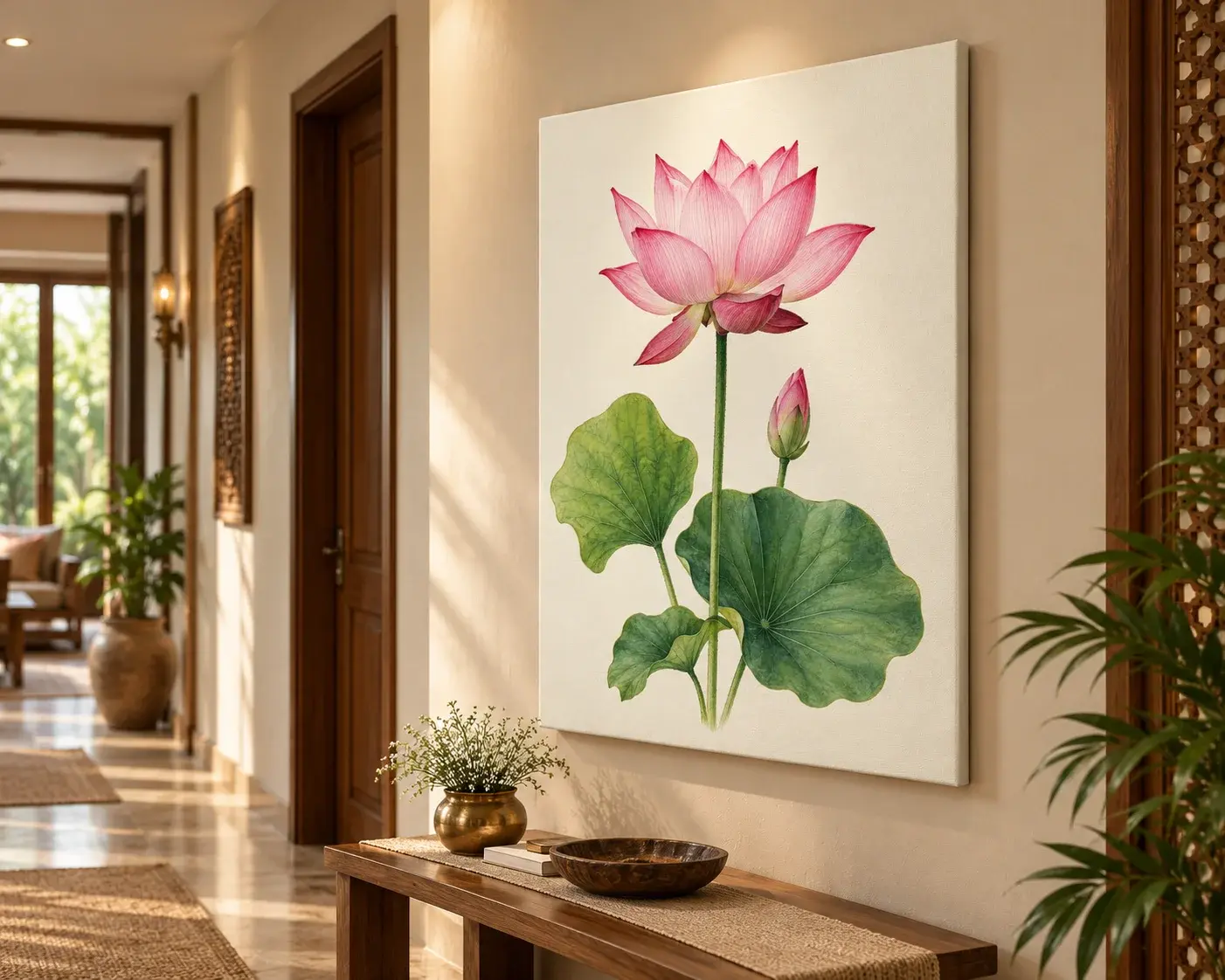
The room itself does not determine whether canvas or paper is the better choice. Think about how the artwork will sit alongside your furniture, how much wall space you have, and whether you want one focal piece or a coordinated arrangement.
Living room: If you are planning a gallery wall or want several artworks to look connected, framed paper prints can make coordination easier. Canvas may be a good option for a single prominent piece that you want to draw attention to. Both can work in the same room if their colours and compositions complement each other.
Bedroom: Paper prints can suit a carefully arranged display of framed artwork. Canvas may work well when you prefer a simpler arrangement built around one or two statement pieces. Consider the mood you want the room to have and choose artwork that fits the overall look.
Study or home office: Paper can be useful when you want framed artwork to fit into a planned arrangement. A canvas print may suit a larger piece that adds visual interest without requiring several separate frames.
Before choosing either format, measure the available wall space and check the artwork's dimensions. A print that is too small can get lost on a large wall, while an oversized piece may overwhelm a compact area. Our wall art size guide can help you plan the proportions.
How Does Lighting Affect Canvas and Paper Prints?
Lighting can change how artwork looks once it is on the wall. Reflections, the direction of the light and the print's surface can all affect what you see.
With paper prints, consider whether the frame and any glazing might create reflections under your room's lighting. Canvas has a visible surface texture, which can influence how light falls across the artwork.
If you are planning to hang a print near a bright window or directly beneath a strong light source, consider the placement before making your decision. Neither format is automatically reflection-free or ideal for every lighting condition.
It is also worth thinking about direct sunlight and the conditions in which the artwork will be displayed, as these can affect a print over time.
Which Lasts Longer: Canvas or Paper Prints?
It is tempting to assume that canvas always lasts longer than paper, but there is no universal rule that applies to every print. Longevity depends on several factors, including the printing process, inks, surface quality, protective measures and display conditions.
Both formats can be affected by direct sunlight, humidity and unsuitable care. Framing or other protection may also influence how a print is exposed to its surroundings.
Rather than choosing a material based on assumptions about durability, check the specifications for the particular product and follow its care instructions. The quality of the print and the conditions in which you display it matter alongside the material itself.
How to Choose Between Canvas and Paper Prints
If you are still unsure, these four questions can help you narrow down the options:
How detailed is the artwork? If fine lines and intricate motifs are central to the design, paper may be a good starting point because of its smooth surface.
Which finish do you prefer? Choose paper if you like a clean, smooth presentation. If you enjoy visible texture and a softer, painterly appearance, consider canvas.
How do you plan to display it? Paper is a natural fit for framed arrangements and coordinated gallery walls. Canvas can work well as a standalone focal point, depending on the product and finish.
What suits the particular artwork? Consider its colours, composition, and level of detail. The subject alone does not determine which format will look best.
At KalaKraft, the same artwork may be available in both paper and canvas formats. This lets you compare finishes while keeping the design you already love. Check the options listed for your chosen artwork before making your final decision.
So, Canvas or Paper?
There is no single winner in the canvas vs paper prints debate. Paper is often a strong choice when you want intricate details, a smooth finish or a coordinated arrangement of framed artwork. Canvas may be the better fit if you prefer visible texture and a softer, more painterly presentation.
Start with the artwork you love. Think about the details you want to see, the finish you prefer and how the print will fit into your space. Then compare the available formats before deciding.