
Indian Folk Art for Modern Homes: Warli, Madhubani & More
21 August 2026
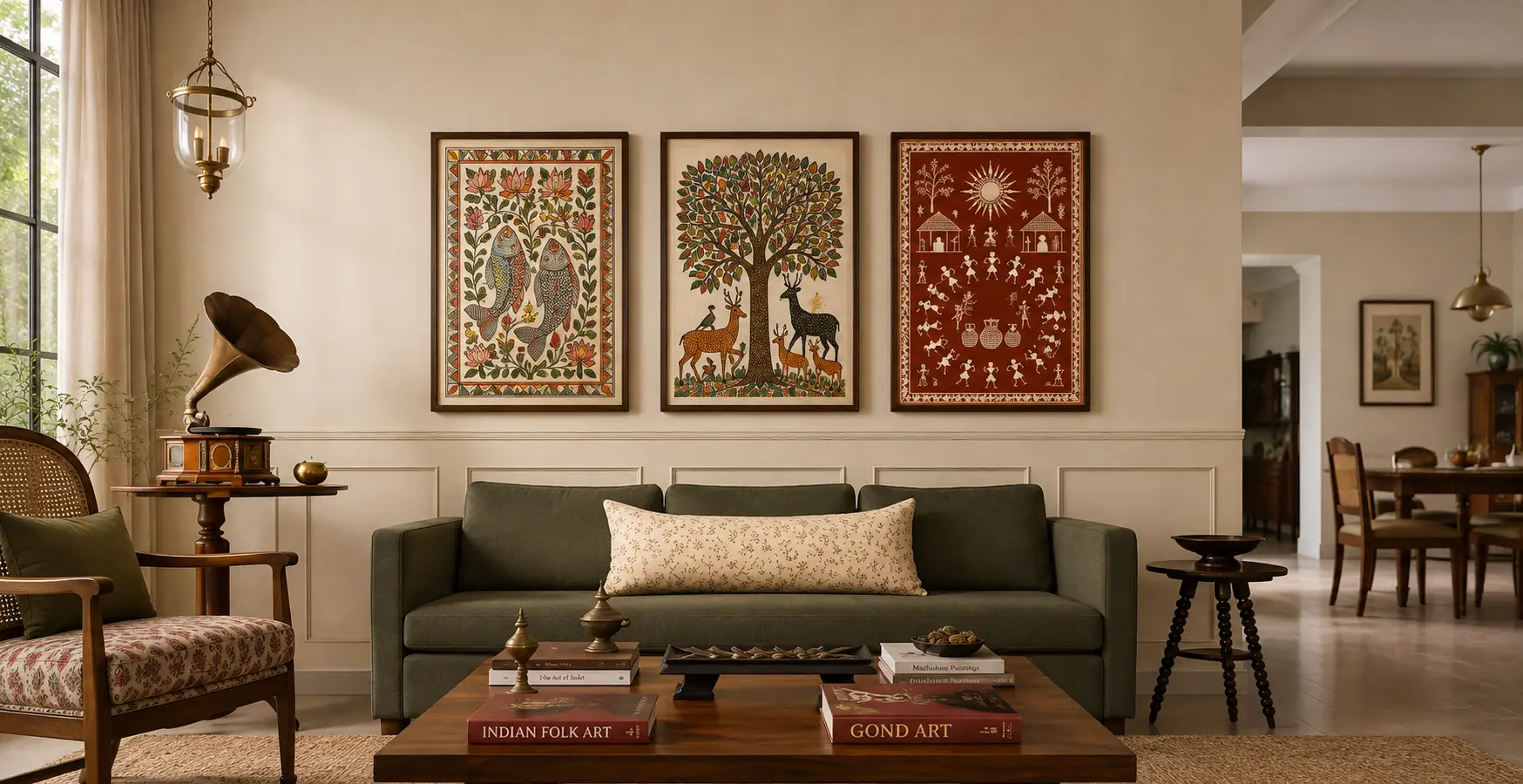
Indian homes have always had a connection with art. From painted walls and floors to handmade textiles and decorative traditions, art has long been part of everyday living.
Today, that tradition is finding a place in contemporary interiors. Indian folk art for modern homes can add colour, culture, pattern, and personality without making a space feel traditionally decorated from top to bottom.From Warli and Madhubani to Gond-inspired artwork, these styles can work beautifully with modern furniture, neutral walls, and contemporary decor.
The key is knowing how to combine the character of traditional art with the simplicity of modern interiors.
Why Indian Folk Art for Modern Homes Works So Well
Modern interiors often use neutral colours, clean furniture, and uncluttered spaces. While this creates a calm look, the room can sometimes need something more personal.
This is where Indian wall art can make a difference.
A folk-inspired painting can introduce colour and storytelling while becoming a focal point against a simple wall. You don't need several traditional pieces either. Sometimes, one carefully chosen artwork is enough.
The contrast between old and new can actually make both elements stand out.
Indian Folk Art Styles to Know for Modern Homes
India has many regional folk and traditional art forms. Each has its own visual language, subjects, colours, and cultural background.
Here are a few styles that can inspire your choice of traditional Indian wall art.
1. Warli Art: Simple Forms With Meaning
It is recognised for its simple geometric figures and scenes connected with nature, community, rituals, and everyday life.The simplicity of the forms is one of the reasons Warli can work particularly well with contemporary interiors.
Circle of Life in Warli Village by Kalakraft takes inspiration from this visual language, bringing together village life, dancing figures, animals, nature, and community.
The simplicity of these forms is one reason Warli wall art can work particularly well with contemporary interiors.
2. Madhubani Art: Colour and Intricate Patterns
Madhubani, also known as Mithila painting, comes from the Mithila region of Bihar. Traditionally associated with wall and floor decoration, the art form later developed across materials including paper and canvas.
Its detailed patterns and vibrant colours make Madhubani wall art a strong choice for modern interiors that need a distinctive focal point.
If your furniture and walls are relatively simple, a colourful Madhubani-inspired artwork can become the main visual element.
3. Gond Art: Nature Through Patterns
Gond painting is associated with the Gond communities of Madhya Pradesh. Nature, folklore, storytelling, and community traditions are important themes, while detailed patterns often fill the forms of animals, birds, trees, and other natural subjects.
This makes Gond-inspired wall art an interesting option for homes that want to combine nature, storytelling, and traditional Indian aesthetics.
It can be a good choice when you want Indian art for walls that feels detailed but still connected to nature.
How to Use Indian Folk Art in a Modern Home
If you're exploring Indian folk art for modern homes, you don't need to completely change your decor to include traditional artwork.
You don't have to completely change your decor to include traditional artwork. A few simple choices can help the painting feel naturally connected to the room.
If you're looking for Indian folk art for modern homes, start with a piece that complements your existing furniture, colours, and available wall space rather than trying to change the entire room around it
Start With One Statement Piece
If you're new to folk art, begin with one artwork rather than decorating every wall.
A detailed painting above a sofa, console, or bed can create a focal point while the rest of the room remains relatively simple.
This works particularly well when you want the artwork to be noticed without making the space feel crowded.
Use Neutral Walls as a Background
White, cream, beige, taupe, and other neutral shades can provide a clean background for colourful Indian folk art.
The artwork becomes the main source of colour and pattern, while the rest of the room maintains a calmer appearance.
Mix Traditional Art With Modern Furniture
Traditional artwork doesn't require traditional furniture.
In fact, placing a folk-inspired painting beside a modern sofa, clean-lined console, or contemporary wooden furniture can create an appealing contrast.
The traditional and modern elements can complement each other rather than compete with one another.
Indian Folk Art for Different Rooms in the Home
When choosing Indian folk art for modern homes, the right artwork can also depend on where you plan to display it.
Living Room
The living room is one of the easiest places to experiment with folk art for living room décor.
A larger statement piece above the sofa can become the main focal point. Warli, Gond, Madhubani-inspired, or other colourful compositions can work particularly well when the surrounding furniture is simple.
Circle of Life in Warli Village is an example of artwork that combines nature, people, animals, and community into one visual story.
Bedroom
Bedrooms usually benefit from a calmer visual atmosphere.
Instead of choosing the most detailed or colourful artwork, consider pieces with softer colours, natural subjects, or simpler compositions.
Entryway or Lobby
Your entryway creates the first impression of your home, making it a good place for artwork with personality.
A folk-inspired piece can introduce colour and cultural character without requiring additional decoration.
A smaller artwork above a console can work particularly well in a narrow entryway.
Study or Creative Space
A study, reading corner, or creative workspace gives you more freedom to experiment.
Artwork featuring nature, patterns, storytelling, or cultural themes can add visual interest to an otherwise functional room.
Detailed folk-inspired art can also give the eye something to explore during breaks.
How to Choose Indian Folk Art for Your Modern Home
Choosing Indian folk art for modern homes becomes easier when you consider the actual character of your space instead of simply following a decorating trend.
Consider Your Colour Palette
A neutral room can benefit from colourful folk art, while a room that already has several strong colours may need a more balanced composition.
Look at the Story
Many Indian folk traditions are closely connected with nature, mythology, festivals, communities, and everyday life.
Choose a piece whose subject or visual language genuinely interests you. A meaningful artwork is more likely to remain appealing long after a trend has passed.
Consider the Level of Detail
Highly detailed artwork needs enough space to be appreciated.
If the wall is small or already decorated, a simpler composition may work better.
Think About the Frame
The frame also affects how artwork feels.
A simple frame can give a traditional painting a cleaner, contemporary appearance, while an ornate frame can emphasise its traditional character.
Choose What Feels Personal
Trends can help you discover new styles, but they don't need to decide what belongs on your wall.
The best artwork is something you can imagine living with for years.
Bringing Indian Folk Art Into Contemporary Homes
Indian folk art carries stories of nature, festivals, communities, beliefs, and everyday life.
That storytelling quality is what makes it more than decoration.
At Kalakraft, artworks such as Circle of Life in Warli Village, Birdsong in the Tree of Life, Rang Utsav by the Lotus Lake, and Divine Durga Darbar explore different aspects of Indian-inspired visual storytelling.
Each approaches the idea differently, from village life and nature to celebration and devotional imagery.
Indian folk art for modern homes doesn't mean choosing between contemporary décor and traditional art.
A clean contemporary room can give a detailed folk-inspired artwork enough space to stand out. At the same time, that artwork can bring the room something furniture alone cannot- a sense of culture, story, and personality.
The result doesn't have to look traditionally decorated.
It can simply feel more personal.