
Indian Mythological Paintings: Explore Stories of Gods, Goddesses and Epics
18 November 2026

Indian mythology is filled with stories of divine figures, legendary events and timeless teachings that have shaped the country's cultural traditions. From the wisdom of Lord Krishna to the strength of Goddess Durga, these stories have inspired artists for generations. Indian mythological paintings bring these narratives to life through expressive figures, intricate patterns, vibrant colours and traditional storytelling techniques.
Across different regions of India, artists interpret mythological subjects through distinctive art forms such as Madhubani and Pattachitra. These paintings offer a way to appreciate India's artistic heritage while exploring the stories and symbolism associated with its deities and epics.
Explore Different Themes in Indian Mythological Paintings
Indian mythology includes a wide range of characters and narratives. Each subject carries its own symbolism, making mythological artwork diverse in both meaning and visual expression.
1. Lord Krishna and His Divine Stories

Lord Krishna is one of the most frequently represented figures in Indian devotional and mythological art. His stories include childhood moments in Vrindavan, his bond with Radha, the lifting of Govardhan Hill and his teachings in the Bhagavad Gita.
Krishna paintings often feature peacocks, flute motifs, cows, lotus flowers and decorative landscapes. These elements help artists create compositions that reflect love, wisdom, joy and devotion.
Explore Eternal Union – Radha Krishna in Bloom, a KalaKraft artwork celebrating the divine connection between Radha and Krishna.
2. Stories from the Ramayana
The Ramayana offers numerous subjects for Indian mythological artwork. Its characters and events have been represented through paintings, murals and traditional folk-art compositions.
Popular subjects include:
Lord Rama's forest journey with Sita and Lakshmana
Hanuman's devotion to Lord Rama
The meeting of Hanuman and Sita in Ashok Vatika
The battle between Rama and Ravana
These scenes communicate values such as courage, loyalty, devotion and the importance of righteousness.
3. Lord Shiva and Goddess Shakti
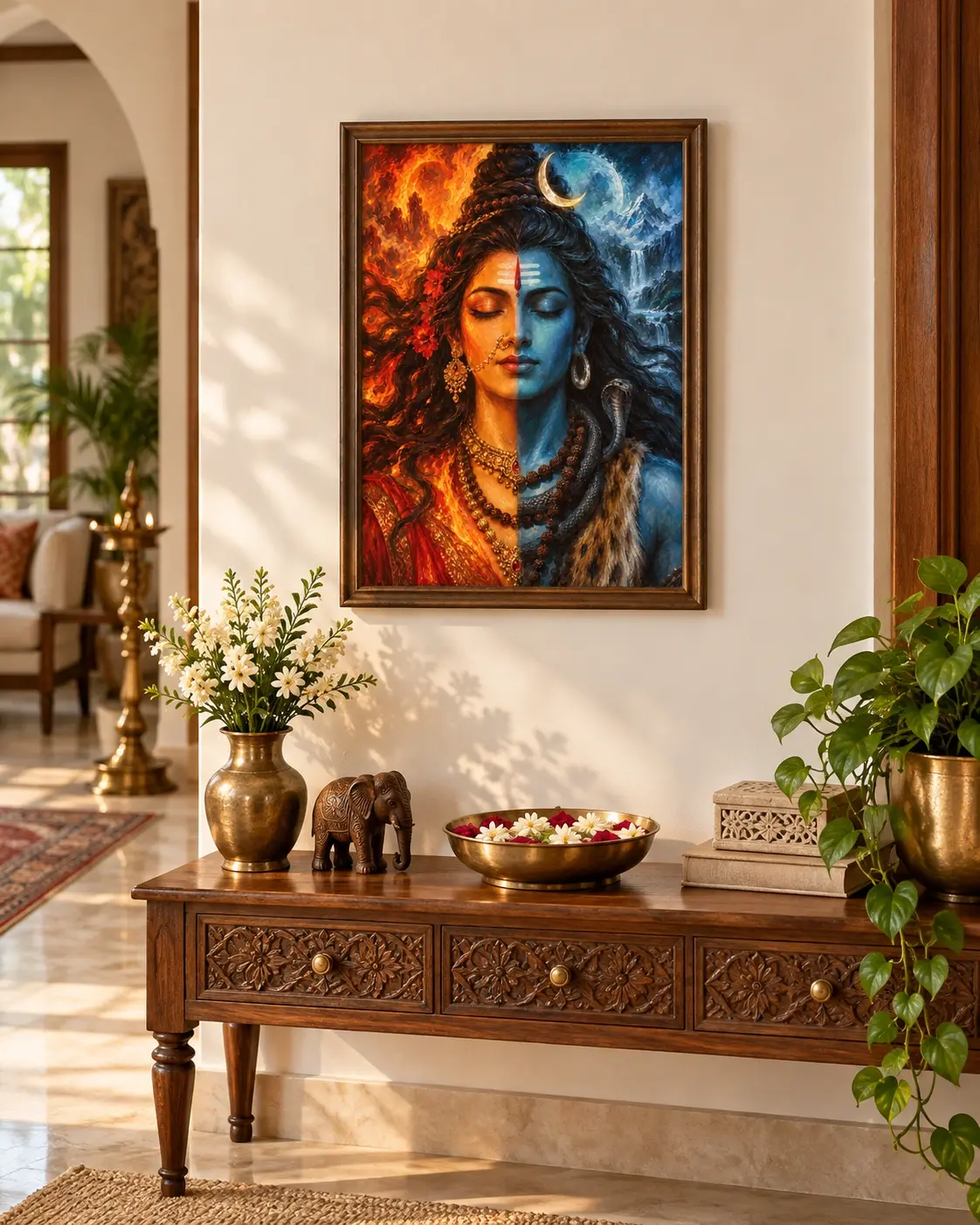
Lord Shiva and Goddess Shakti represent important aspects of Hindu philosophy and mythology. Their depictions range from Shiva's meditative form to the powerful imagery of Goddess Durga and the cosmic dance of Nataraja.
One distinctive representation is Ardhanarishvara, in which Shiva and Shakti appear as two halves of a single form. It symbolises the complementary nature of masculine and feminine principles and their inseparable relationship.
KalaKraft's Ardhanarishvara: Union of Shiva and Shakti explores this symbolic representation through devotional artwork.
4. Goddess Durga and Her Divine Power
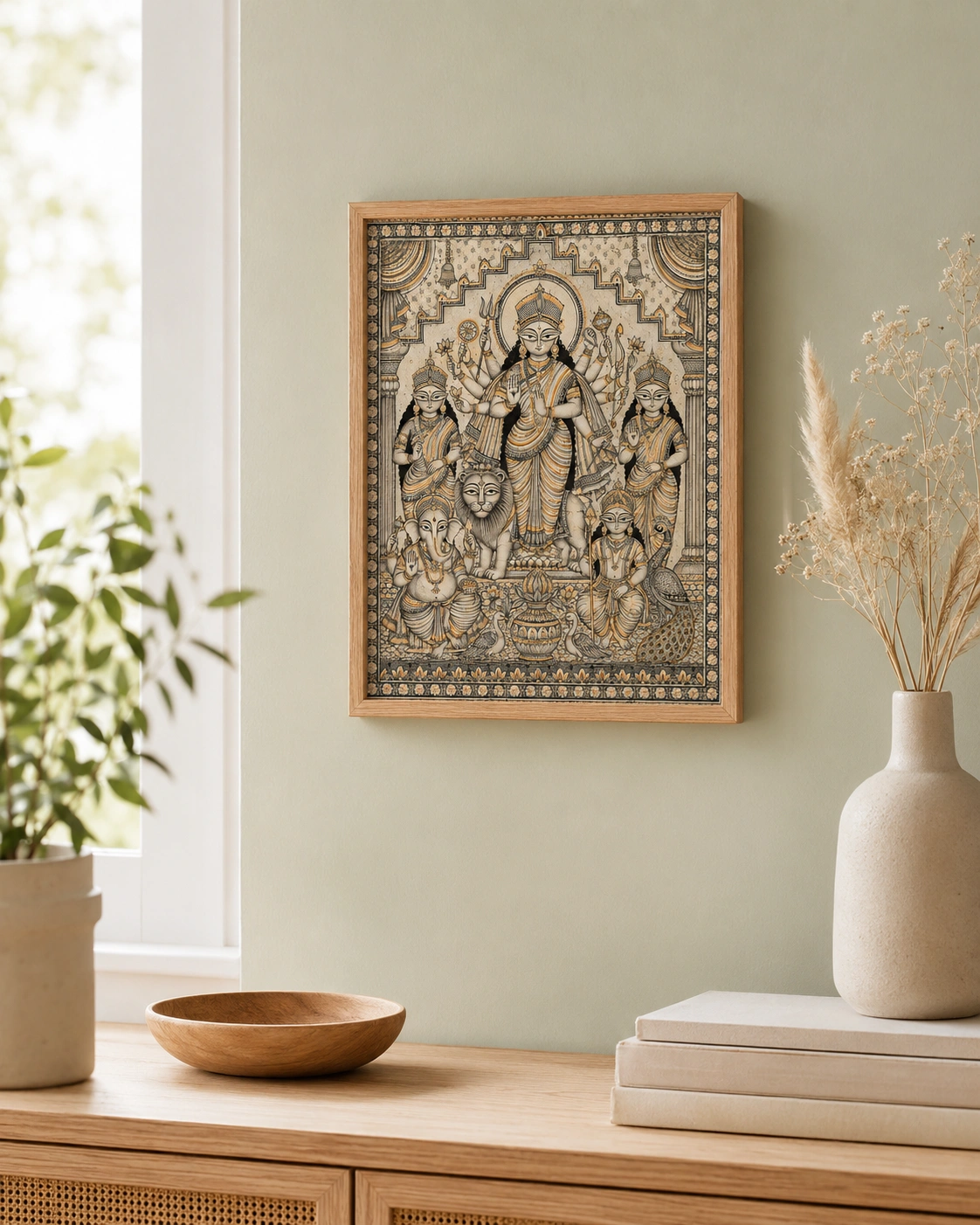
Goddess Durga is widely associated with strength, protection and the victory of good over evil. Her depictions often include multiple arms carrying divine weapons, a lion or tiger, and detailed decorative elements.
Durga paintings are especially recognised for their expressive compositions and rich colours. KalaKraft's Divine Durga Darbar presents the goddess through traditional Indian artistic expression.
5. Stories from the Mahabharata
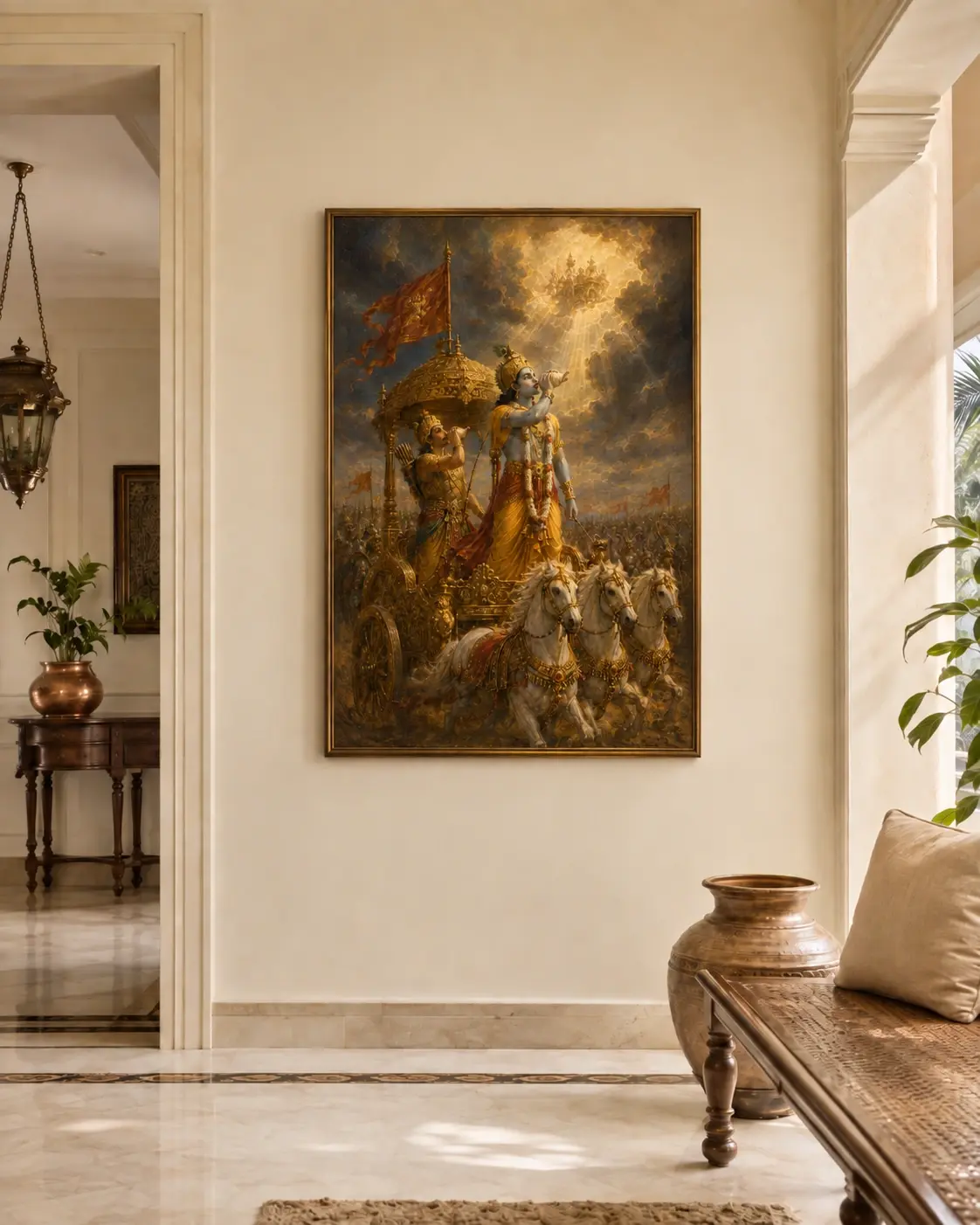
The Mahabharata is another major source of inspiration for Indian mythological paintings. Its narratives explore duty, responsibility, relationships, conflict and the choices that shape human life.
One of its most significant moments is the conversation between Lord Krishna and Arjuna on the battlefield of Kurukshetra. This moment forms the foundation of the Bhagavad Gita, where Krishna shares teachings about duty, action and spiritual understanding.
Divine Call of Kurukshetra at KalaKraft draws inspiration from this important episode.
Traditional Indian Art Forms That Depict Mythological Stories
Different Indian art traditions have developed their own visual languages for presenting religious and mythological narratives. Their distinctive techniques make each painting style recognisable.
Madhubani Art
Originating in the Mithila region, Madhubani painting is known for its intricate lines, decorative patterns, bold colours and detailed compositions. Mythological subjects often include Rama, Krishna, Shiva, Durga and other divine figures.
Artists use elements such as lotus flowers, fish, birds and geometric patterns to enrich the visual storytelling.
Pattachitra Art
Pattachitra is a traditional painting style associated with Odisha and parts of eastern India. It is recognised for its detailed figures, decorative borders, strong outlines and narrative compositions.
Mythological themes, particularly stories associated with Lord Jagannath, Krishna and other Hindu deities, are important subjects in this tradition.
Other Regional Storytelling Traditions
Across India, several other folk and classical art traditions portray mythological subjects. From the intricate detailing of miniature paintings to the expressive figures found in various regional styles, each tradition reflects the cultural influences and artistic practices of its region.
Together, these art forms preserve stories and visual traditions that have been passed down through generations.
Symbolism and Meaning Behind Indian Mythological Artwork

Mythological paintings often communicate ideas through symbols, colours, objects and the arrangement of figures. Understanding these elements can make an artwork more meaningful.
Some commonly represented symbols include:
Lotus: Often associated with purity, spiritual growth and divine beauty.
Peacock: Frequently connected with Lord Krishna and associated with beauty and grace.
Conch shell: Represents sacred sound and is associated with several Hindu deities.
Trishul: The trident associated with Lord Shiva, representing divine power.
Bow and arrow: Associated with Lord Rama and his commitment to righteousness.
Divine weapons: Often represent protection and the restoration of balance.
The meaning of a symbol can vary according to the deity, story and artistic tradition in which it appears.
How to Choose Indian Mythological Paintings for Your Home
Mythological paintings can bring cultural character and devotional significance to different spaces. The right artwork depends on your preferences, the available wall space and the atmosphere you want to create.
Here are a few points to consider:
Choose a meaningful subject: Select a deity or mythological story that holds personal or cultural significance for you.
Consider the artistic style: Madhubani, Pattachitra and other traditional styles offer different visual details and colour combinations.
Think about the room: Consider whether the artwork is intended for a prayer room, living room, hallway or another space.
Check the artwork dimensions: Choose a size that suits the available wall area and surrounding furniture.
Balance colours and patterns: Detailed mythological compositions can become focal points, so consider the existing colours and décor of the room.
Explore Indian Mythological Paintings at KalaKraft
From the divine bond of Radha and Krishna to the strength of Goddess Durga and the teachings of the Mahabharata, Indian mythology offers countless stories that continue to inspire artistic expression.
Explore KalaKraft's devotional and traditional artwork to discover paintings inspired by Indian mythology, cultural traditions and stories of the divine. Each composition offers a different way to appreciate the richness of India's artistic heritage.