
Ramayana Paintings for Pooja Room: Devotional Art for Your Sacred Space
20 November 2026

A pooja room is a space dedicated to prayer, reflection and devotion. Adding traditional artwork can make it feel more personal while bringing stories and symbols from Indian mythology into the surroundings. Ramayana paintings for pooja room décor are a meaningful choice for devotees who feel connected to the stories of Lord Rama, Goddess Sita, Lakshmana and Lord Hanuman.

From the divine presence of Ram Darbar to Hanuman's devotion and scenes from Rama's journey, Ramayana artwork offers several ways to express faith through traditional Indian art. Choosing the right painting depends on the subject you connect with, the available space and the visual style of your prayer area.
Which Ramayana Paintings Are Suitable for a Pooja Room?
Different episodes and characters from the Ramayana represent values such as devotion, righteousness, courage, compassion and faith. Here are some meaningful themes to consider when choosing artwork for your sacred space.
Ram Darbar – A Symbol of Devotion and Harmony
Ram Darbar paintings depict Lord Rama and Goddess Sita, accompanied by Lakshmana and Lord Hanuman. These compositions bring together the central characters of the Ramayana in a devotional setting.
The presence of all four figures makes Ram Darbar a popular choice for devotees looking for a traditional painting for their mandir or prayer room. The composition also represents values associated with Rama, Sita, Lakshmana and Hanuman, including righteousness, loyalty, compassion and devotion.
Explore the KalaKraft Ramayan Collection to discover Ram Darbar artwork and other devotional compositions.
Rama and Sita – Divine Companionship
Paintings of Rama and Sita together reflect their companionship, faith and devotion. Their depictions can bring a peaceful devotional character to a pooja room, especially for those who feel connected to their story.
Rama Sita Painting – Divine Devotion features Rama and Sita together with Hanuman in a devotional composition. The traditional colours and expressive figures make it a meaningful representation of the divine couple.
Explore Rama Sita Painting – Divine Devotion
Hanuman – The Embodiment of Devotion and Service
Lord Hanuman holds a special place in the Ramayana for his unwavering devotion to Lord Rama, his courage and his dedication to service. Paintings depicting Hanuman can be meaningful for devotees who admire these qualities.
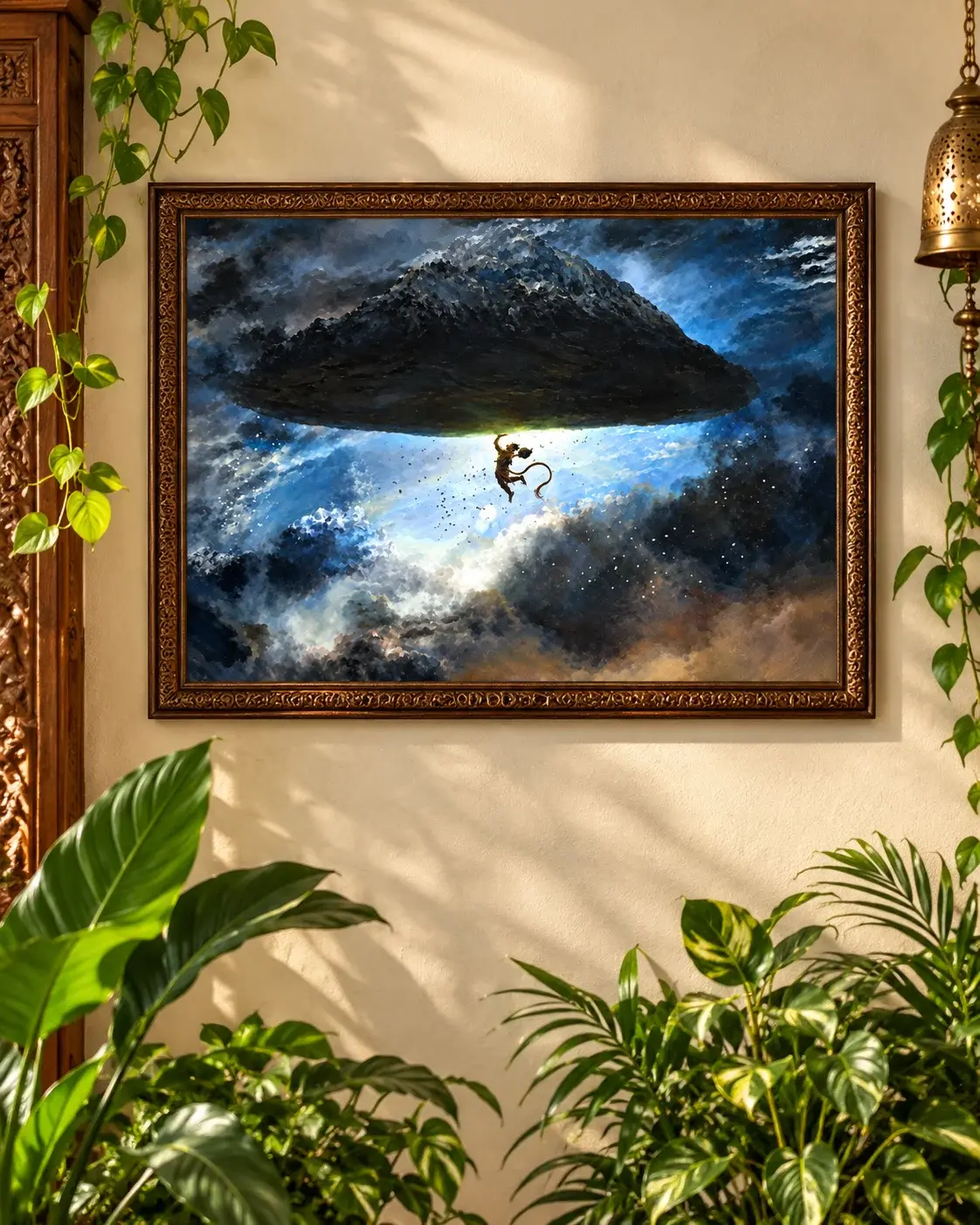
One memorable episode is Hanuman carrying the Sanjeevani mountain to save Lakshmana. It represents determination, selfless service and the willingness to go beyond one's limits for a greater purpose.
A Mission of Hope – Hanuman Carrying Sanjeevani Mountain captures this dramatic episode through a striking composition featuring Hanuman and the mountain against a dynamic sky.
Sita Swayamvar – A Story of Faith and Destiny

Sita Swayamvar depicts the moment Rama lifts and breaks Lord Shiva's bow, fulfilling the challenge and winning Sita's hand in marriage.
This episode celebrates courage, faith and the beginning of Rama and Sita's journey together. A traditional Sita Swayamvar painting can be a meaningful choice for those who appreciate the storytelling and artistic details of the Ramayana.
Sita Swayamvar – Madhubani Artwork presents the occasion through vibrant colours, decorative motifs and intricate Madhubani-inspired detailing.
Traditional Indian Art Styles for a Pooja Room
Ramayana stories have been portrayed through various Indian artistic traditions. Their distinctive patterns, colours and storytelling techniques give devotional paintings a unique character.

Madhubani Art
Madhubani painting is known for fine patterns, decorative borders, vibrant colours and detailed figures. Floral motifs, geometric patterns and natural elements often fill the composition, creating a rich visual appearance.
For a pooja room, Madhubani Ramayana paintings can bring a colourful traditional character to the space while celebrating the artistic heritage of Mithila.
Pattachitra Art
Pattachitra is recognised for expressive figures, strong outlines, elaborate borders and intricate detailing. The compositions often depict mythological stories through carefully arranged characters and decorative elements.
Pattachitra-inspired Ramayana paintings can be a beautiful choice for devotees who appreciate traditional storytelling and detailed Indian folk art.
How to Choose the Right Ramayana Painting for Your Pooja Room
When selecting devotional artwork, consider how the painting will fit into your prayer space and the kind of visual presence you want it to create.
1. Consider the Available Wall Space
Measure the wall where you plan to display the painting. A compact artwork may suit a smaller prayer corner, while a larger painting can become the focal point of a spacious mandir area.
Leave enough space around the painting so it remains visually distinct from shelves, idols and other devotional objects.
2. Choose a Composition That You Connect With
You may prefer Ram Darbar, Rama and Sita together, Hanuman or a particular episode from the Ramayana. Choose a depiction that holds personal meaning and reflects the devotional atmosphere you want in your space.
3. Look at the Colours and Details
Traditional Ramayana paintings often feature rich colours, decorative borders and intricate patterns. Consider how the artwork will look alongside your mandir, wall colour and existing décor.
A detailed painting can stand out beautifully against a relatively simple background.
4. Select a Suitable Print Format
KalaKraft offers paper and canvas print options on selected artworks. Paper prints can be framed for a traditional presentation, while canvas prints offer a different surface appearance.
Check the individual product page for available formats, dimensions and pricing before ordering.
Where to Place Ramayana Paintings in Your Pooja Room
The placement of devotional artwork depends on the layout of your prayer space, the available wall area and your personal traditions.
Above or near the mandir: A devotional painting can complement the main prayer arrangement when adequate space is available.
On a dedicated wall: If your pooja room has a separate wall, a Ram Darbar or Rama Sita painting can become the central visual element.
In a prayer corner: A smaller Ramayana painting can help define a dedicated prayer area within a larger room.
Alongside complementary devotional artwork: If you display multiple paintings, maintain adequate spacing and a balanced arrangement rather than crowding the wall.
If you follow Vastu traditions, you may also wish to consider the directional recommendations associated with devotional artwork. These guidelines vary, so choose an arrangement that respects your beliefs and works practically within your home.
Explore Ramayana Paintings at KalaKraft
From Ram Darbar and Rama Sita compositions to Hanuman's inspiring journey and memorable episodes from the epic, Ramayana artwork brings together devotion, cultural heritage and traditional Indian storytelling.
Explore the KalaKraft Ramayan Collection to discover devotional paintings in different artistic styles, compositions and available print formats.
Choose a painting that resonates with your faith and brings a meaningful expression of the Ramayana into your sacred space.