
Ramayana Story Paintings for Walls: Bring the Epic to Life Through Art
19 November 2026

The Ramayana is an epic filled with memorable characters, meaningful events and timeless lessons. From Sita's Swayamvar and Rama's forest journey to Hanuman's devotion and the final battle of Lanka, each episode holds a special place in Indian culture. Ramayana story paintings for walls offer a beautiful way to bring these narratives into your home through traditional Indian artwork.
At KalaKraft, the Ramayana Collection features paintings inspired by important moments from the epic. Displaying selected scenes together can create a visual storytelling experience, allowing you to appreciate the journey through art rather than viewing each painting as an isolated decoration.
Important Ramayana Scenes to Include in a Wall Art Collection
If you want to create a wall display around the Ramayana, consider selecting paintings that represent different stages of the story. A thoughtful sequence can help viewers follow the narrative while appreciating the artistic details of each composition.
1. Sita Swayamvar: The Beginning of Rama and Sita's Story
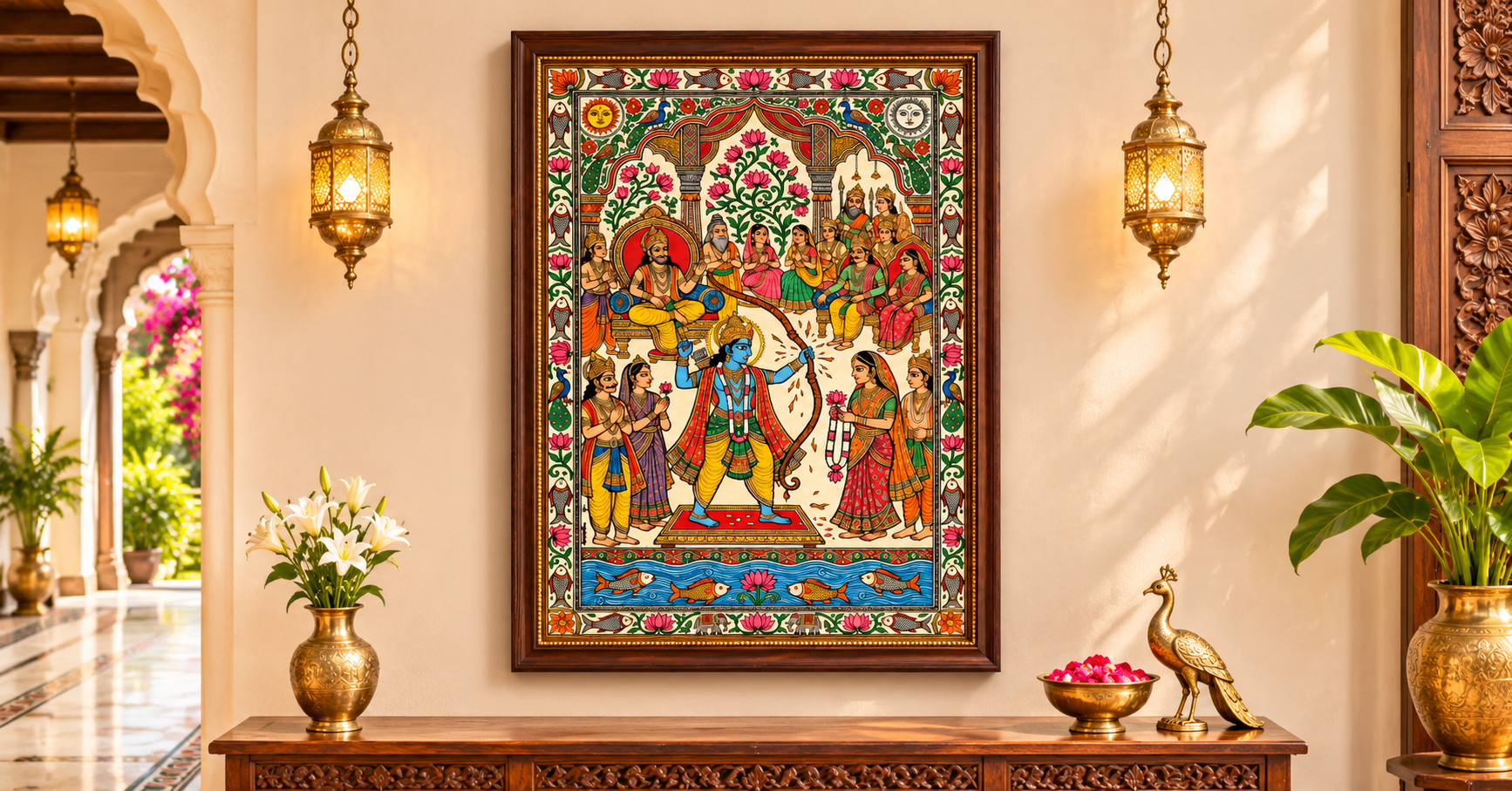
Sita Swayamvar marks an important beginning in the story of Rama and Sita. During the ceremony, Rama lifts and breaks Lord Shiva's bow, fulfilling the challenge and winning Sita's hand in marriage.
Sita Swayamvar – Madhubani Artwork captures this occasion through royal figures, floral motifs, decorative borders and vibrant colours. Its detailed Madhubani composition makes it a meaningful opening scene for a Ramayana-inspired wall display.
2. Rama and Lakshmana's Forest Journey
The years of exile form an important part of the Ramayana. Rama and Lakshmana leave the kingdom and spend their time in the forest, where their journey brings them into contact with sages, devotees and the natural world.

Forest Blessings – Rama and Lakshmana presents the brothers in a detailed forest setting, surrounded by trees, birds, deer and other natural elements. Created in a Pattachitra-inspired style, the painting brings together mythology and traditional Indian storytelling.
3. Shabari's Devotion to Lord Rama
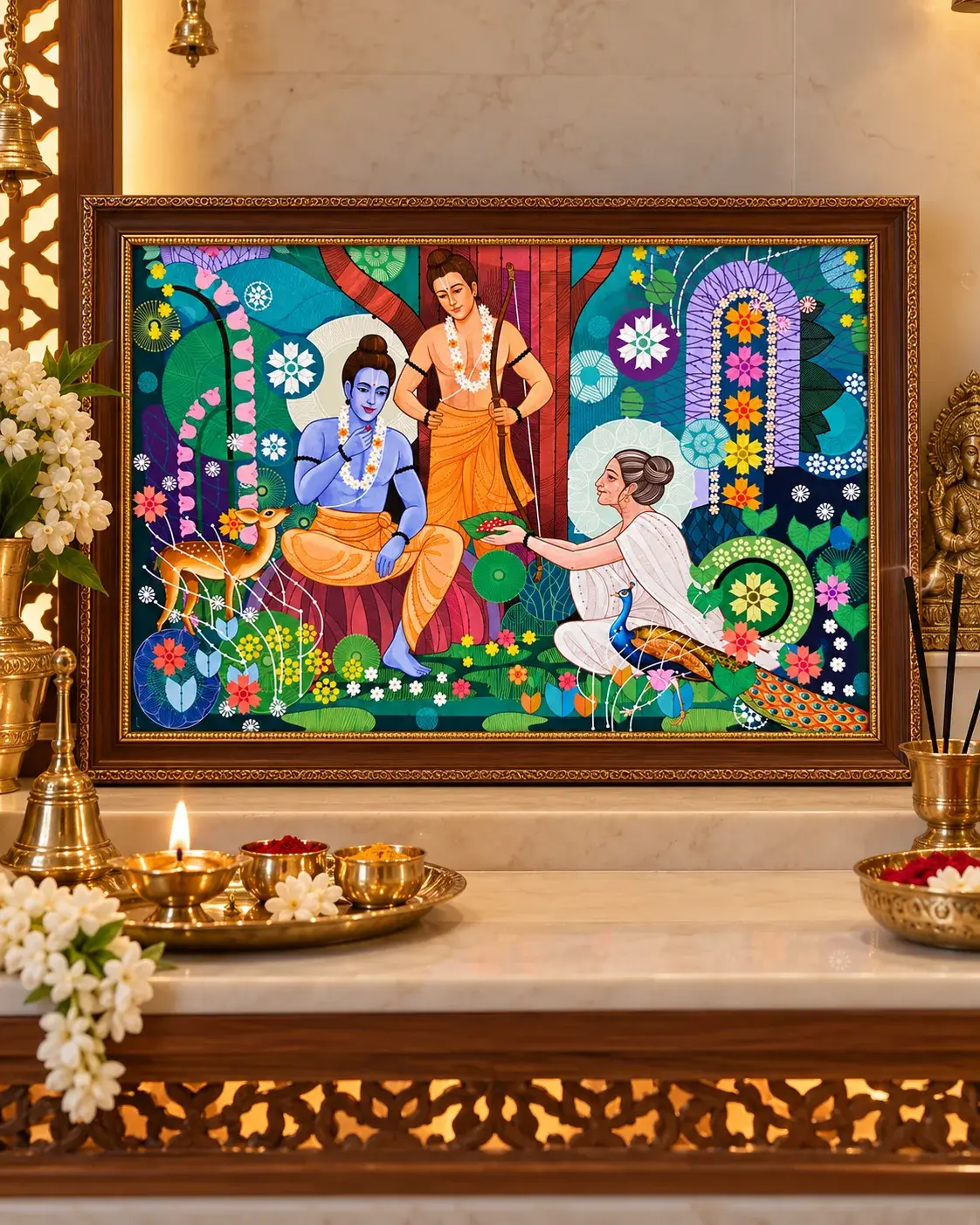
The meeting between Shabari and Lord Rama is remembered for its message of sincere devotion. She welcomes Rama and offers him berries, expressing her faith through a simple yet meaningful gesture.
Shabari and Lord Rama: The Power of True Devotion captures this touching moment. It can add a quieter, devotional scene to a collection featuring the larger events of the epic.
4. Hanuman Meets Sita in Ashok Vatika
One of the most meaningful moments in the Ramayana takes place when Hanuman reaches Lanka and finds Sita in Ashok Vatika. He delivers Rama's message and reassures her that help is on its way.
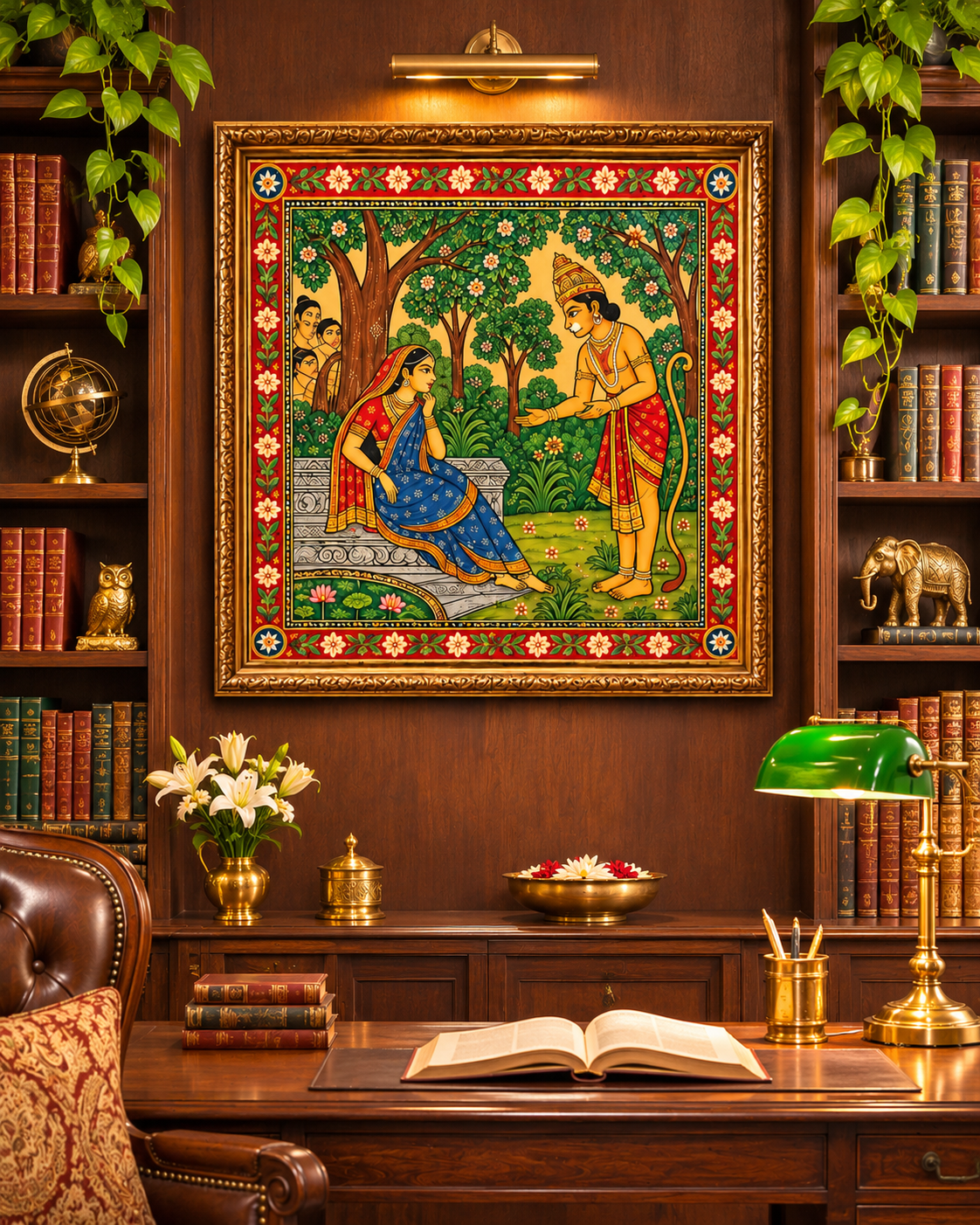
Ashok Vatika Samvaad depicts Hanuman meeting Sita beneath flowering trees. Its intricate floral borders, patterned garments and traditional details bring attention to this important meeting.
5. Angad's Visit to Ravana's Court
Before the battle of Lanka, Angad visits Ravana's court as Rama's messenger. His fearless presence and refusal to step back demonstrate his courage and loyalty.
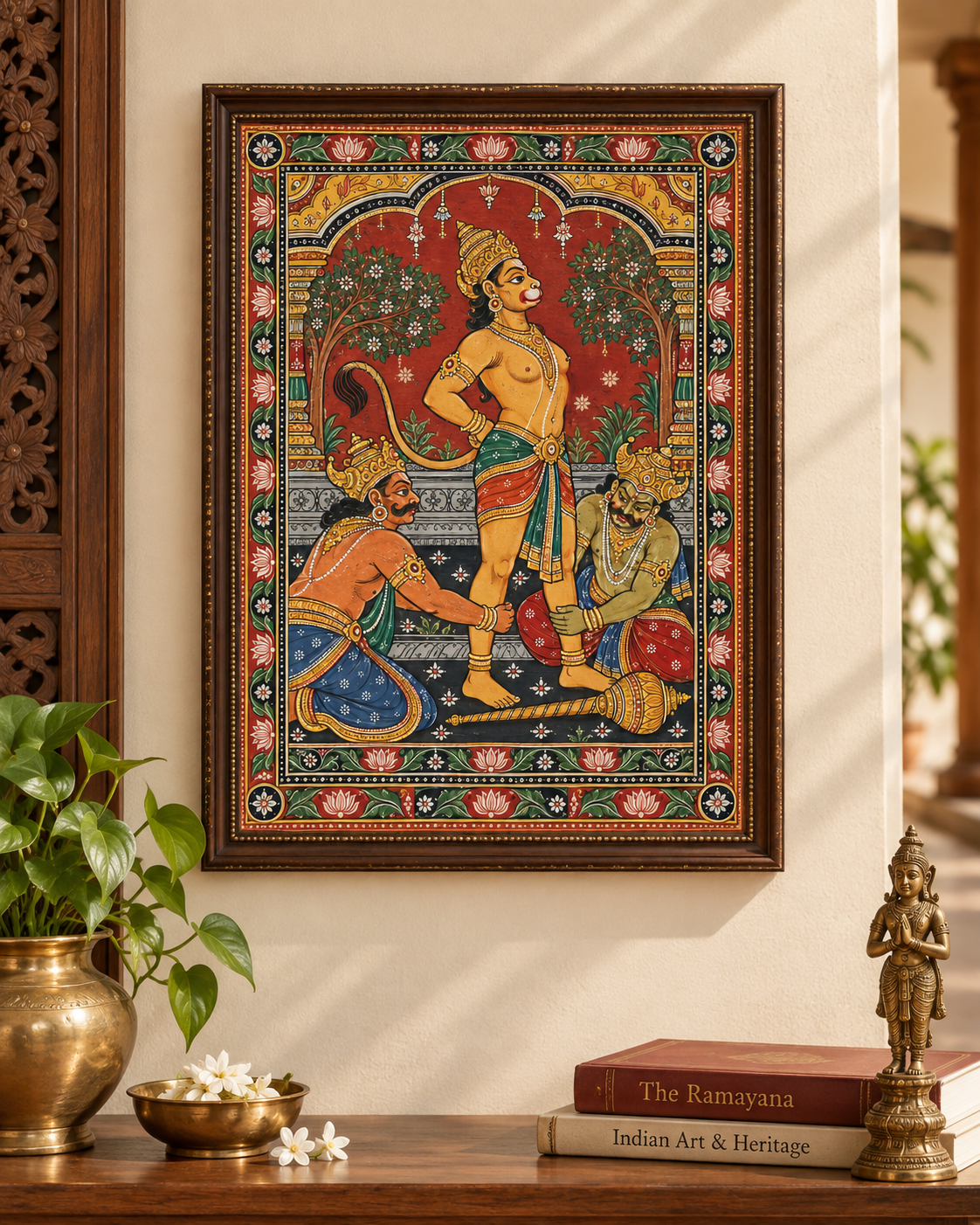
Angad in Ravana's Court portrays this powerful episode through an expressive court composition. It introduces another important character and adds a moment of tension to the visual sequence.
6. Hanuman's Mission to Bring Sanjeevani
During the battle of Lanka, Lakshmana is severely wounded. Hanuman undertakes the mission of bringing the Sanjeevani mountain to help save him.
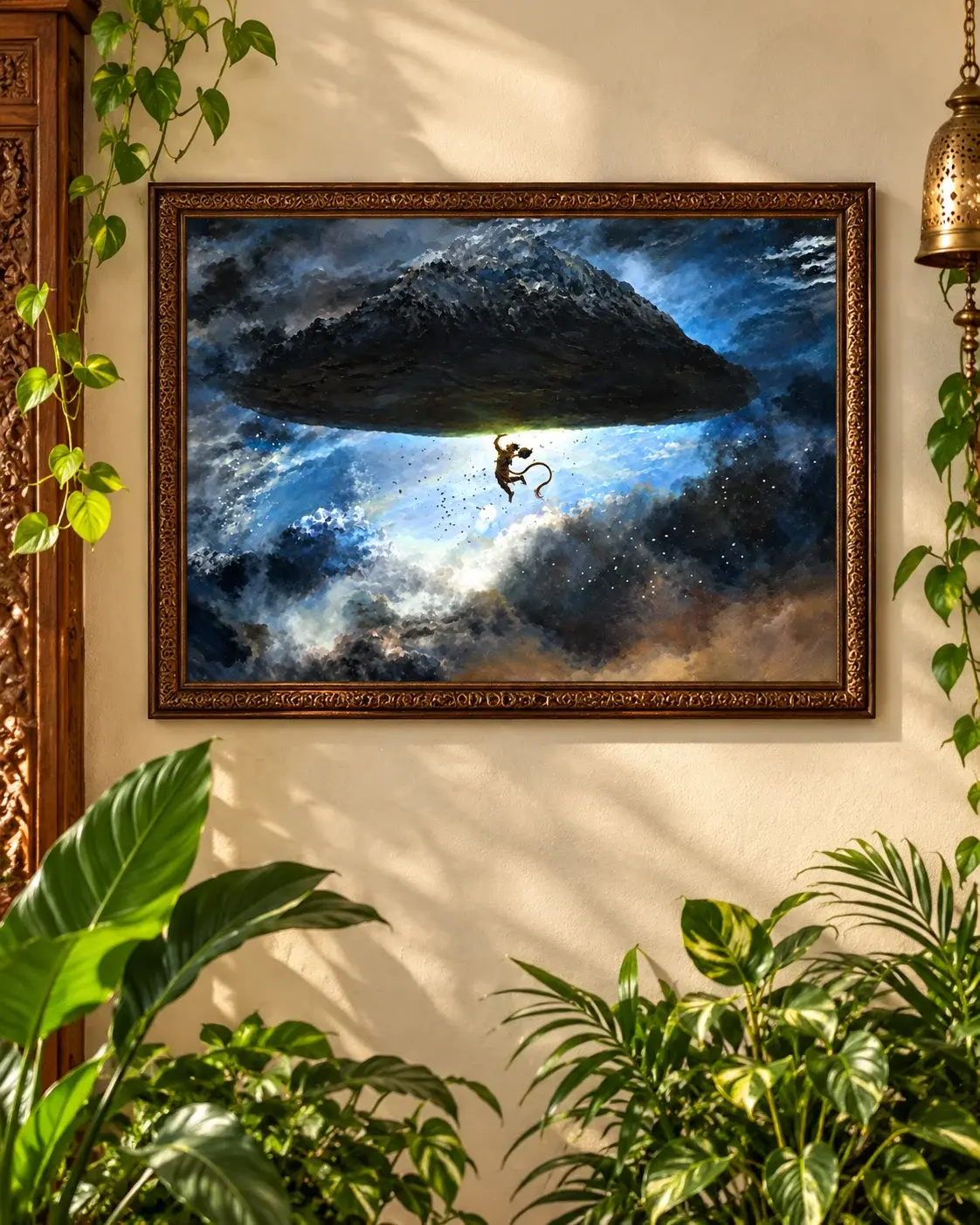
A Mission of Hope – Hanuman Carrying Sanjeevani Mountain captures this memorable act of strength and devotion. The painting represents Hanuman's dedication and his important role in the Ramayana.
7. The Battle of Lanka and Rama's Victory
The battle between Rama and Ravana forms the dramatic conclusion of the epic. It represents the triumph of righteousness over wrongdoing and brings the central conflict to its resolution.

KalaKraft features different artistic interpretations of this episode:
Rama vs Ravana – The Final Battle of Lanka portrays the confrontation between the two figures.
Rama's Divine Arrow – The Fall of Ravana focuses on the decisive moment of Rama's victory.
The Triumph of Lord Rama: The Final Battle with Ravana presents the larger battle scene.
Choosing one of these compositions as the concluding artwork can give your Ramayana wall display a clear narrative ending.
How to Arrange Ramayana Story Paintings on Your Walls
A collection of mythological paintings can become more engaging when the artworks are arranged with a little planning. Instead of placing them randomly, consider how the scenes connect and how viewers will experience the sequence.
Create a Story Sequence
Arrange the paintings in the order of the events they represent. For example, you can begin with Sita Swayamvar, followed by the forest journey, Shabari's meeting, Ashok Vatika, Angad's visit, Hanuman's Sanjeevani mission and the battle of Lanka.
A left-to-right arrangement can make the sequence easier to follow on a long wall.
Use a Gallery Wall Layout
If you have several paintings, a gallery wall can bring them together as a connected display. You can arrange the artworks in two or more rows, keeping the sequence clear while balancing the overall composition.
Maintain consistent spacing between frames and consider similar frame finishes to create a coordinated appearance.
Choose a Focal Painting
You do not always need to display every scene at the same visual scale. A larger or more detailed painting can become the central focus, while smaller artworks around it complete the story.
For example, the battle of Lanka can serve as a focal composition, with earlier episodes arranged around it.
Traditional Indian Art Forms That Bring the Ramayana to Life
The artistic style plays an important role in how a mythological story is presented. Traditional Indian painting forms use distinctive patterns, colours and figures to communicate narratives.
Madhubani art is recognised for intricate linework, decorative borders, floral motifs and detailed compositions. Its expressive visual language makes it well suited to scenes such as Sita Swayamvar.
Pattachitra art is known for strong outlines, detailed figures, ornamental patterns and carefully arranged compositions. Its storytelling approach brings mythological scenes to life through elaborate visual details.
These traditions allow Ramayana wall art to celebrate both the epic's stories and India's diverse artistic heritage.
Choosing the Right Ramayana Paintings for Your Home
Before creating a story-based display, consider the available wall space and the number of paintings you want to include.
Living room: A coordinated series can create a meaningful focal point on a large, open wall.
Hallway: A sequence of smaller paintings can introduce the story gradually as people move through the space.
Staircase wall: Arrange selected scenes along the staircase, following a consistent order and spacing.
Prayer or devotional space: Choose a smaller selection of scenes that hold personal significance.
Also consider the dimensions, print format and framing details of each artwork. For a more balanced arrangement, measure the complete display area before deciding on individual painting sizes.
You can refer to KalaKraft's guide to choosing the right wall art size before planning your layout.
Explore Ramayana Story Paintings for Walls at KalaKraft
From Sita Swayamvar and Rama's forest journey to Hanuman's devotion and the battle of Lanka, the Ramayana offers countless moments that continue to inspire Indian artists.
Explore the KalaKraft Ramayana Collection to discover traditional Indian paintings inspired by the epic. Select meaningful scenes, arrange them in a thoughtful sequence and create a wall display that celebrates the stories, characters and artistic traditions of the Ramayana.