Why Indian Folk Art Has Survived Through Generations
6 November 2026
Indian folk art has survived through generations because it was never just made to be looked at. It was part of everyday life.
Across different regions of India, art became part of homes, festivals, ceremonies, stories and community traditions. Artists developed distinctive ways of using colours, motifs, materials and symbols to express their surroundings, beliefs and experiences.
This connection to everyday life helped artistic knowledge pass from one generation to the next. But tradition alone cannot guarantee that an art form will continue. As lifestyles change, artists and communities also find ways to keep their practices relevant.
So, why has Indian folk art survived for so long, and what will help these traditions continue?
1. Folk Art Was Part of Everyday Life
One reason Indian folk art has endured is its close connection to everyday activities and community life.
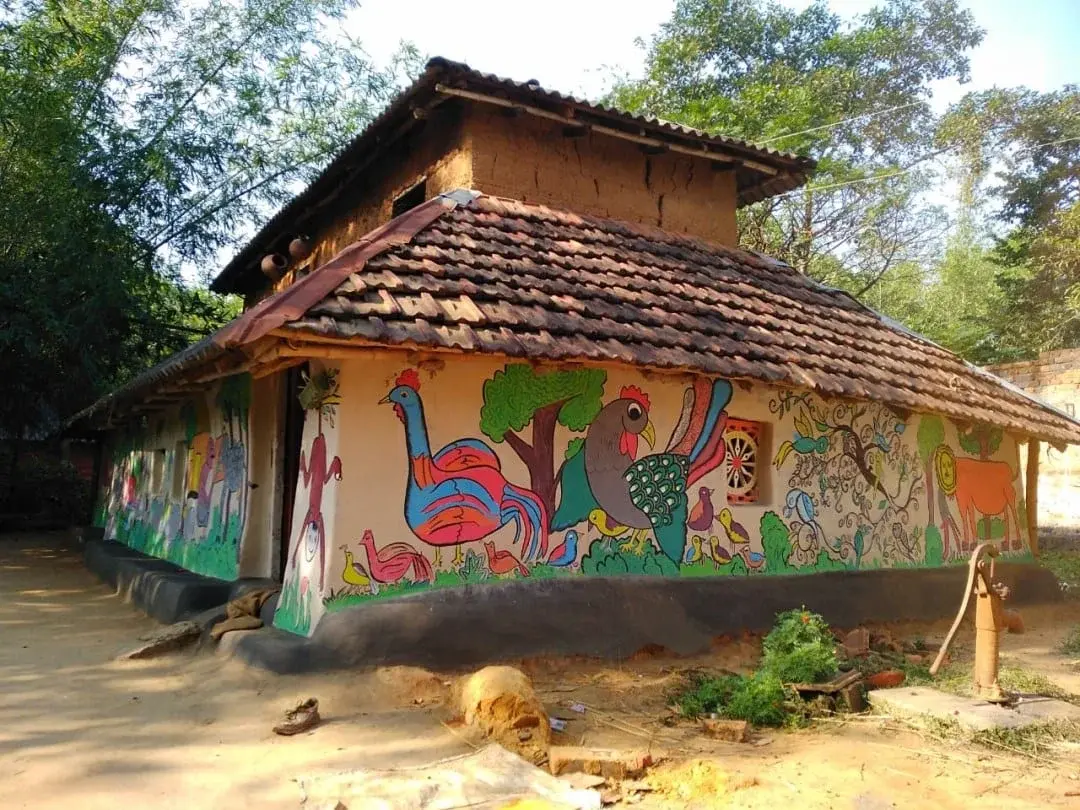
In different parts of India, traditional art has been used to decorate homes, mark important occasions, express beliefs and tell stories. It was not always created for a gallery or a formal exhibition. Depending on the tradition, art could appear on walls, floors, household objects and other surfaces used during daily life or special celebrations.
This meant that people could experience artistic traditions as part of their surroundings rather than encounter them only as finished artworks. Children and younger community members could observe these practices, become familiar with their motifs and gradually understand the meanings associated with them.
The details differ from one tradition to another, but this connection between art and lived experience helps explain why folk art has remained meaningful across generations.
2. Knowledge Was Passed Down Through Families and Communities
Folk art often depends on knowledge that develops through observation and practice. A learner may watch an experienced artist prepare materials, understand how patterns are created and gradually learn the techniques needed to make the artwork independently.
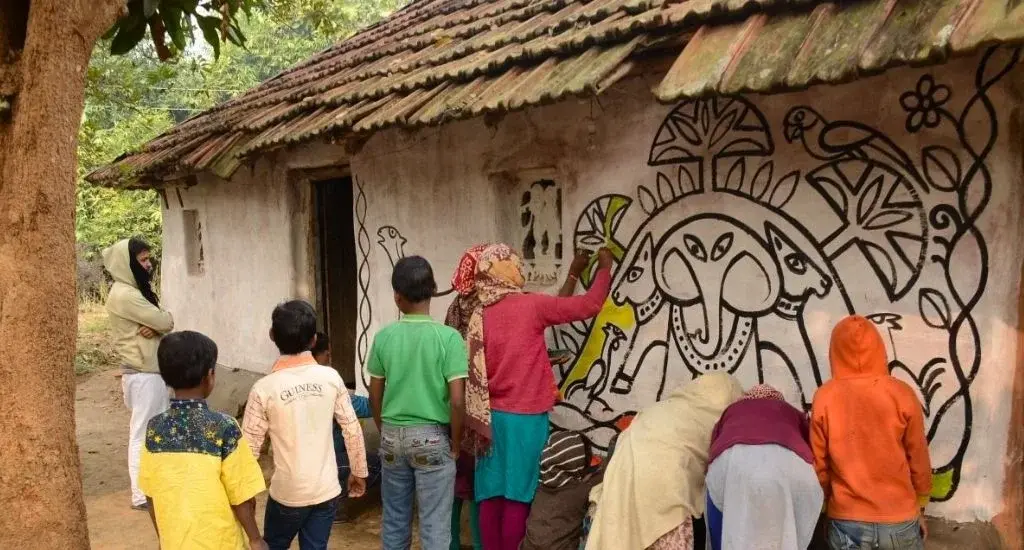
This learning can take place within families, communities and artist groups, as well as through workshops and organised training. Not every tradition follows the same teaching method, but the opportunity to learn directly from experienced practitioners can help preserve specialised skills.
The idea of generational knowledge is therefore important to understanding Indian folk art. A finished painting may be visible to everyone, but the knowledge behind it- the techniques, decisions and cultural context- often takes time and practice to understand.
Formal initiatives can support this process, too. India's Guru-Shishya Parampara approach, for example, reflects the importance of experienced practitioners sharing traditional knowledge with learners. Such efforts complement the knowledge passed on through families and communities.
When people continue to practise, teach and learn an art form, they help keep its skills and traditions in use.
3. Folk Art Carries Stories, Not Just Patterns
Look closely at many Indian folk paintings, and you may find more than decoration. Animals, birds, trees, flowers, people and geometric patterns can communicate ideas connected with nature, devotion, celebrations, relationships and community life.
The meanings of these elements vary by tradition and context. A motif should not automatically be interpreted in the same way across every region. Understanding the artwork often involves learning about the community and artistic practice from which it comes.
This storytelling quality gives folk art another way to travel across generations. A painting can preserve a familiar story, represent a shared belief or introduce younger viewers to aspects of a community's cultural memory.
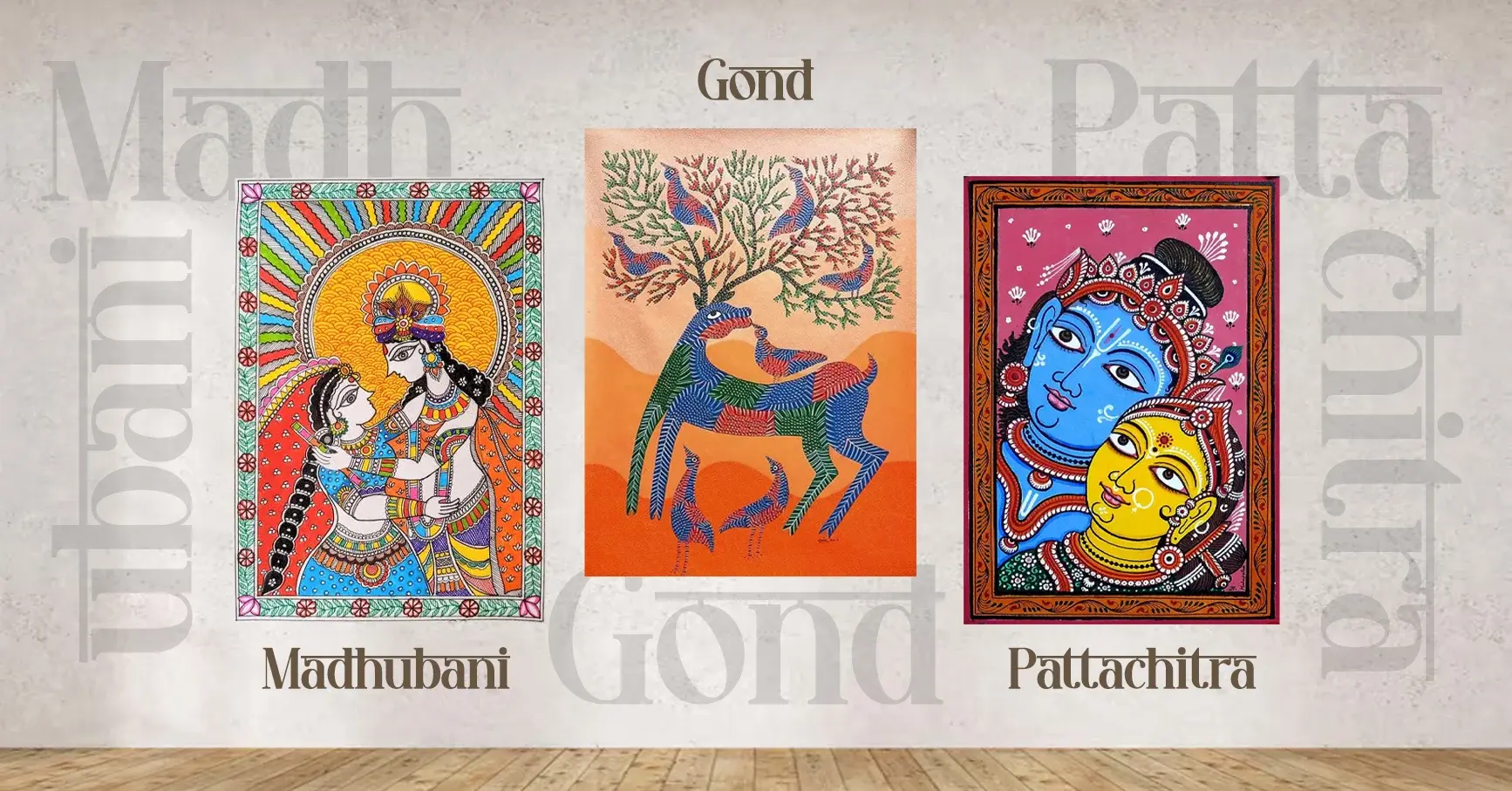
Traditions such as Madhubani, Pattachitra and Gond demonstrate how visual art can connect with regional culture, mythology, nature and storytelling, although each has its own history and artistic language.
That is part of what makes folk art worth exploring: the colours and patterns draw the eye, while the stories and context give the work a deeper significance.
4. Every Region Developed Its Own Visual Language
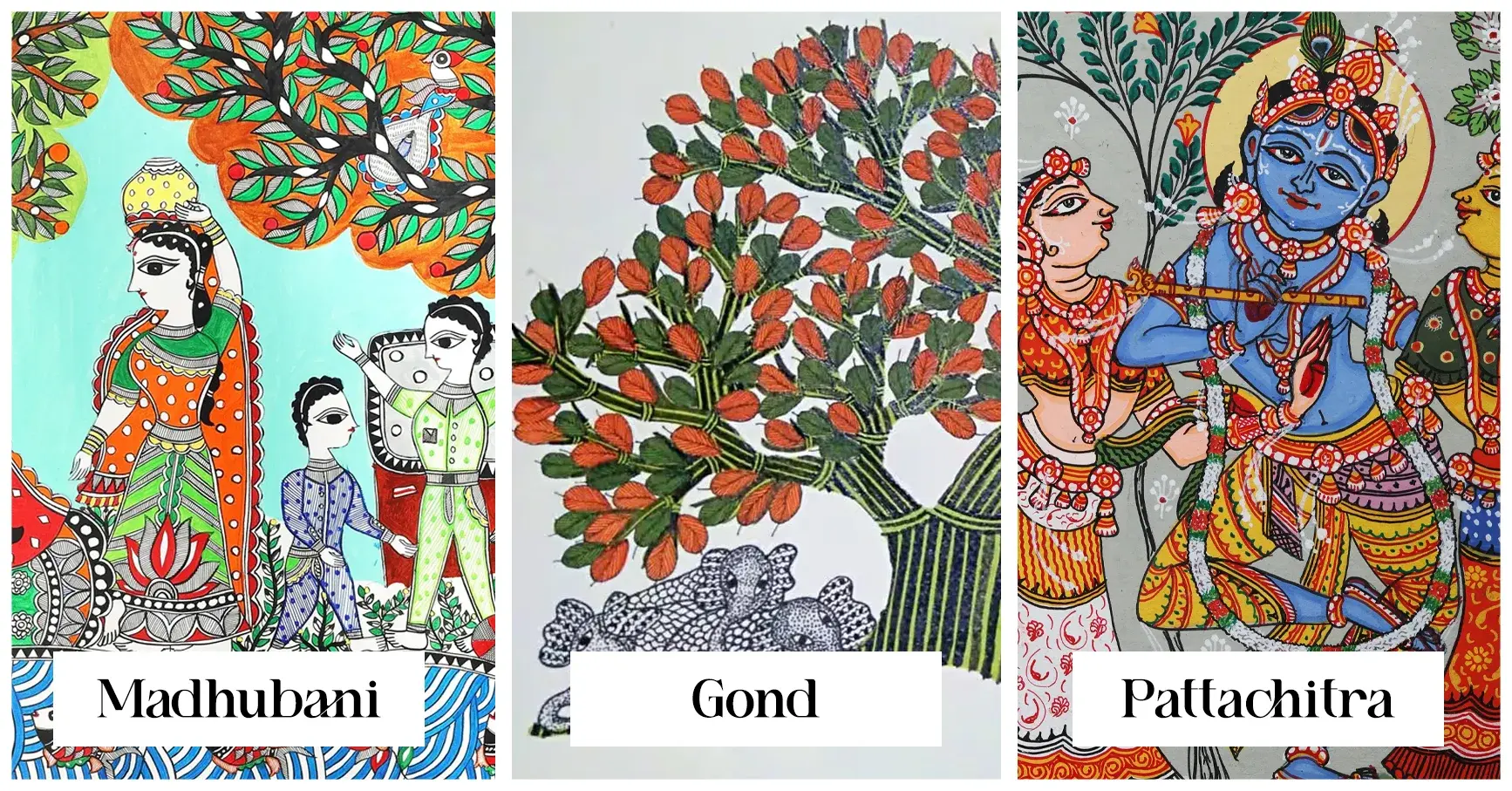
Indian folk art did not survive through one single style. Different communities developed distinctive ways of representing their surroundings, stories and cultural experiences. These differences helped individual traditions retain their identities rather than becoming one uniform form of art.
Madhubani art, associated with the Mithila region, is known for intricate linework, decorative patterns and imagery that can carry cultural or symbolic meaning. KalaKraft's Peacock Beneath the Tree of Life offers an example of this visual tradition in a contemporary wall-art format.
Pattachitra, particularly associated with Odisha, is known for detailed compositions and themes that often draw on religious narratives and mythology. KalaKraft's Divine Durga Darbar is an example of traditional Indian art presented for a contemporary audience.
Gond art, rooted in the artistic traditions of Gond communities, is recognised for its distinctive treatment of animals, birds, trees and other elements of the natural world. Patterns and lines can give these subjects their characteristic visual energy.
These traditions are not interchangeable, and each has its own regional history, practitioners and evolving practices. Their distinctive visual languages help people recognise and appreciate the variety within Indian folk art.
Rather than one style replacing every other, multiple traditions have continued to develop alongside one another, shaped by the communities that practise them.
5. Local Materials Helped Shape Artistic Traditions
The materials used in traditional art have often been connected to the resources and surroundings available to artists.
Depending on the region and tradition, artists have worked with surfaces such as walls, cloth, paper and other materials, using different tools, pigments and techniques.
These choices are not merely practical. The surface and materials can influence the appearance of the artwork and the way a particular technique is carried out. They can also reflect the environment in which the art developed.
However, there is no single set of materials shared by all Indian folk-art traditions. Practices differ, and materials can change as artists gain access to new tools and surfaces.
As some traditions moved into new settings, artists began creating works for paper, canvas, exhibitions and wider art markets. Such changes have allowed certain forms of folk art to reach people beyond their original settings.
The important point is that adapting the material does not automatically mean abandoning the tradition. When artists continue to understand and practise the techniques and cultural context of their art, a new surface can become another way of sharing it.
6. Folk Art Adapted Instead of Staying Frozen in Time
Tradition is sometimes imagined as something that must remain exactly as it was in the past. Living art, however, can change as artists respond to new circumstances, materials and audiences.
Mithila artists, for example, helped bring an art tradition strongly associated with domestic walls into paper-based work and wider art markets. Artists working within Gond traditions have also introduced their distinctive visual language to audiences outside their original communities.
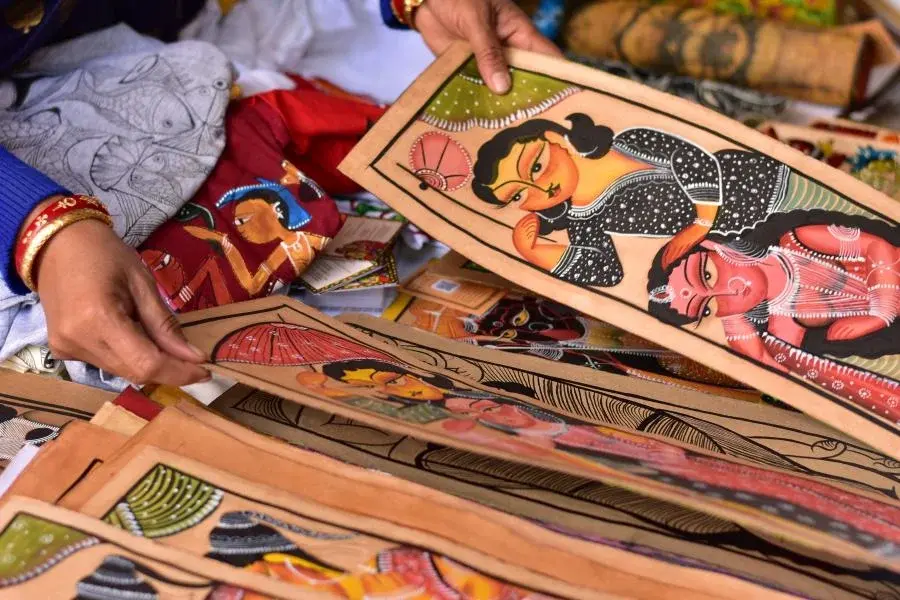
These developments do not mean that every change preserves every aspect of an older practice. Moving an artwork to a new surface or selling it in a different market can change how it is made, displayed and understood.
The important question is how the tradition is carried forward. Are artists able to continue their practice? Is the cultural context respected? Are the people who hold this knowledge recognised? These considerations matter when traditional art reaches new audiences.
Adaptation can create opportunities for a tradition to continue, but preserving its cultural identity requires more than reproducing a familiar pattern.
7. Folk Art Still Has a Place in Modern Homes
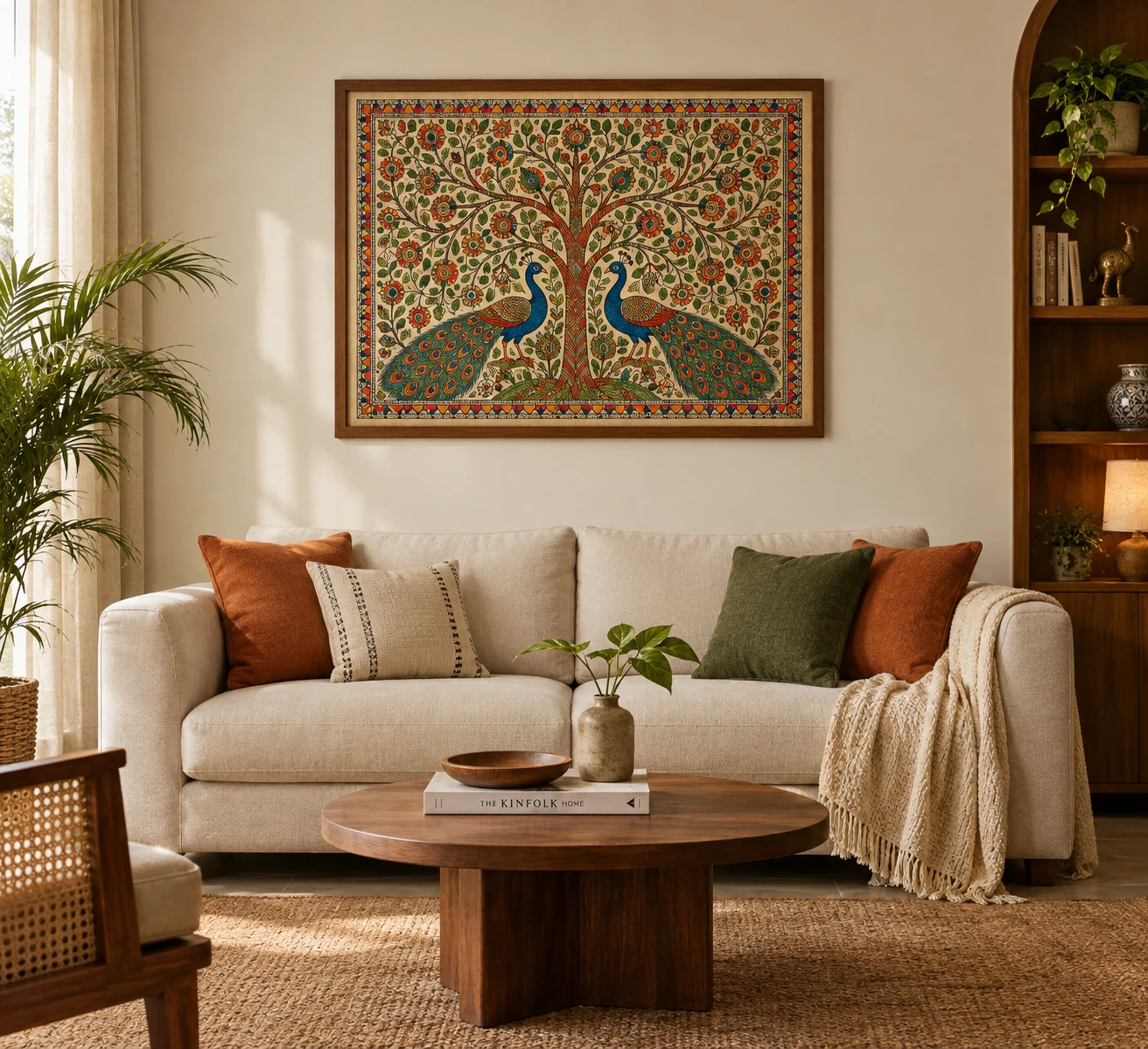
Traditional Indian art is not limited to museums, heritage collections or historical settings. It can also find a place in contemporary homes, where people may appreciate its colours, patterns, storytelling and regional character.
A Madhubani painting, for example, can become a focal point in a modern living room. A Warli artwork can introduce movement and storytelling to a simple interior. KalaKraft's Circle of Life in Warli Village brings the narrative character of Warli art into a contemporary wall-art format.
A Pattachitra-inspired composition can also add intricate detail and mythological themes to a room. The right choice depends on the artwork, its scale, the colours already present in the space and the way the viewer wants to display it.
Displaying folk art in a modern setting does not, by itself, preserve the tradition behind it. But it can encourage people to discover the artwork, learn about its origins and develop a greater appreciation for the artists and communities associated with it.
This is one way traditional art can remain visible in everyday life, even as the spaces in which people encounter it continue to change.
8. But Survival Is Not Guaranteed
It is easy to romanticise the idea that traditional art will always survive because it carries cultural value. In reality, the future of each tradition depends on the circumstances of the people who practise it.
Some folk-art communities face challenges related to changing lifestyles, limited opportunities, commercial pressures and the difficulty of passing specialised knowledge to younger learners. The extent of these challenges varies, and it would be inaccurate to assume that every tradition is struggling in the same way.
There is also a difference between preserving an artwork and sustaining the practice that produced it. A painting can be documented or displayed in a museum, but that alone does not ensure that artists can continue working, teach their skills or pass on their knowledge.
For a tradition to remain active, people need opportunities to learn and practise it. Recognition, fair opportunities for artists, cultural education, and continued audience engagement can all contribute to that process.
In this sense, preserving folk art means more than keeping old paintings safe. It also means supporting the people, knowledge and practices that allow the art to continue.
9. Modern Interest Can Give Traditional Art a Wider Audience
Exhibitions, cultural festivals, workshops, educational initiatives and online platforms can introduce traditional art to people who might otherwise have little opportunity to encounter it.
Digital platforms, in particular, allow images and information about artworks to reach audiences across geographical boundaries. For artists and organisations, these channels can create new opportunities to share work, explain its background and connect with potential buyers or learners.
However, visibility alone is not enough. An artwork can circulate widely online while its origins, cultural meaning or artist's contribution receive little attention. Presenting folk art responsibly means identifying the tradition accurately and avoiding the treatment of culturally significant designs as anonymous decoration.
There is also a balance to maintain between reaching new audiences and respecting the communities from which these art forms originate. Commercial opportunities can support artistic practice, but the cultural context should not be lost in the process.
When audiences learn about the artwork as well as appreciate its appearance, modern interest can become a more meaningful part of keeping traditional art visible.
10. What Makes Indian Folk Art Worth Preserving?
Indian folk art carries forms of cultural knowledge that cannot always be captured by looking at a finished painting alone.
A motif may connect with a story. A technique may reflect years of learning. A composition may reveal how a community represents nature, devotion or everyday life. The significance of these elements depends on the tradition and the people who understand and practise it.
Preserving folk art is therefore not simply about collecting beautiful objects. It is also about recognising the knowledge behind them, supporting the artists who continue to practise their traditions and making room for younger generations to learn.
This does not mean every traditional practice must remain unchanged. Artists and communities may adapt their work in response to new circumstances. What matters is that these changes are understood in context and that the people connected to the tradition remain part of its future.
Approaching folk art this way makes it more than a link to the past. It remains a living part of cultural expression.
Indian Folk Art Is a Living Tradition
Indian folk art has continued across generations through everyday practice, community knowledge, storytelling, regional identity, and adaptation. These traditions have not all followed the same path, but they show how artistic knowledge can be carried forward while responding to changing circumstances.
Their future, however, should not be taken for granted. Artists need opportunities to practise their work, younger generations need ways to learn, and audiences need opportunities to understand the cultural context behind what they see.
For those who bring traditional art into their homes, learning about its origins can be a meaningful first step. A painting may begin as a choice about colour or design, but understanding its artistic tradition can add another layer of appreciation.
Explore KalaKraft's wall art collection to discover artwork inspired by India's diverse artistic traditions, and take time to learn about the stories and practices behind the styles that interest you.