
Ram Sita Paintings: Explore Their Timeless Story Through Indian Art
17 November 2026
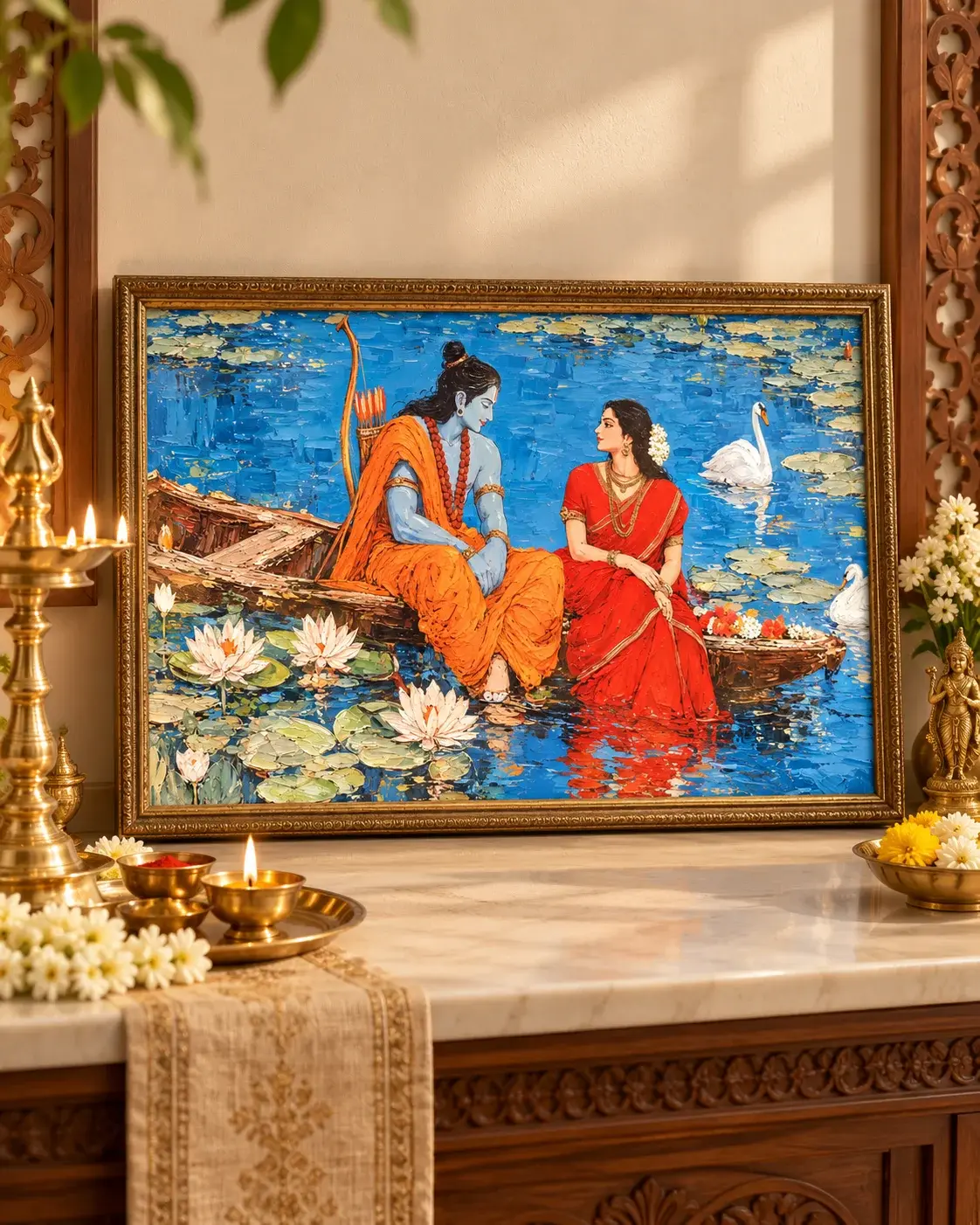
The story of Lord Rama and Goddess Sita is one of the most cherished narratives in Indian mythology. Their journey reflects love, faith, courage, loyalty and righteousness, inspiring generations through the epic Ramayana. Ram Sita paintings bring these timeless stories to life through expressive figures, intricate patterns and traditional Indian artistic styles.
At KalaKraft, the Ramayana Collection features artwork depicting Rama and Sita, their companions and significant moments from the epic. Each composition offers a different perspective on their story and its enduring cultural significance.
The Story of Rama and Sita Through Paintings
The Ramayana offers several memorable moments from the lives of Rama and Sita. Artists interpret these moments through colours, decorative motifs and expressive compositions, preserving the stories through visual storytelling.
Sita Swayamvar: The Beginning of a Timeless Bond
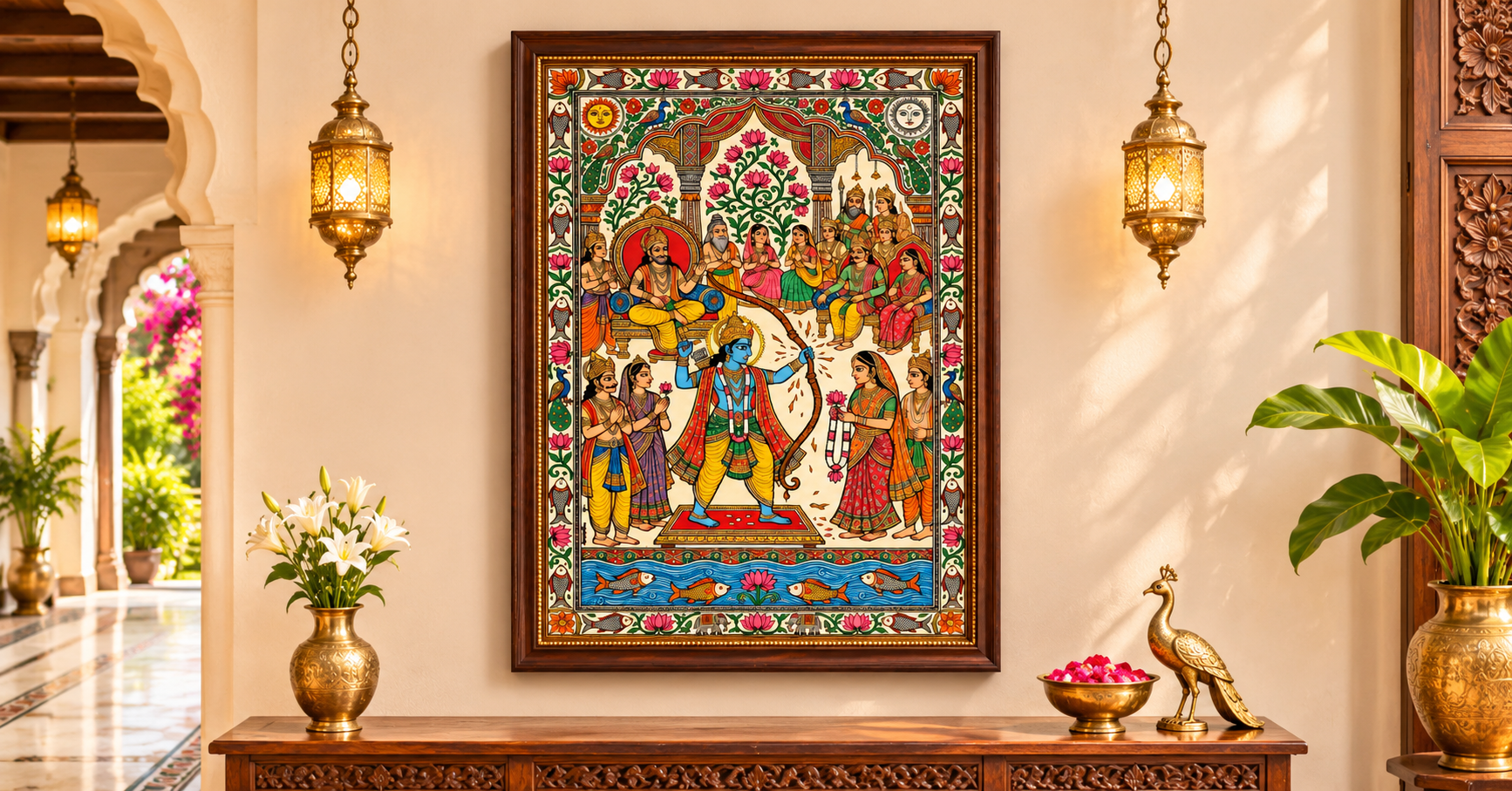
One of the most significant moments in their story is Sita's Swayamvar. During the ceremony, Lord Rama lifts and breaks Lord Shiva's bow, fulfilling the challenge and winning Sita's hand in marriage.
KalaKraft's Sita Swayamvar – Madhubani Artwork captures this occasion through intricate floral motifs, decorative borders, royal figures and vibrant colours. The composition reflects the storytelling richness of traditional Mithila art.
Rama and Sita Together: A Celebration of Divine Love
The bond between Rama and Sita is frequently represented in Indian devotional art through compositions that celebrate companionship, faith and devotion.
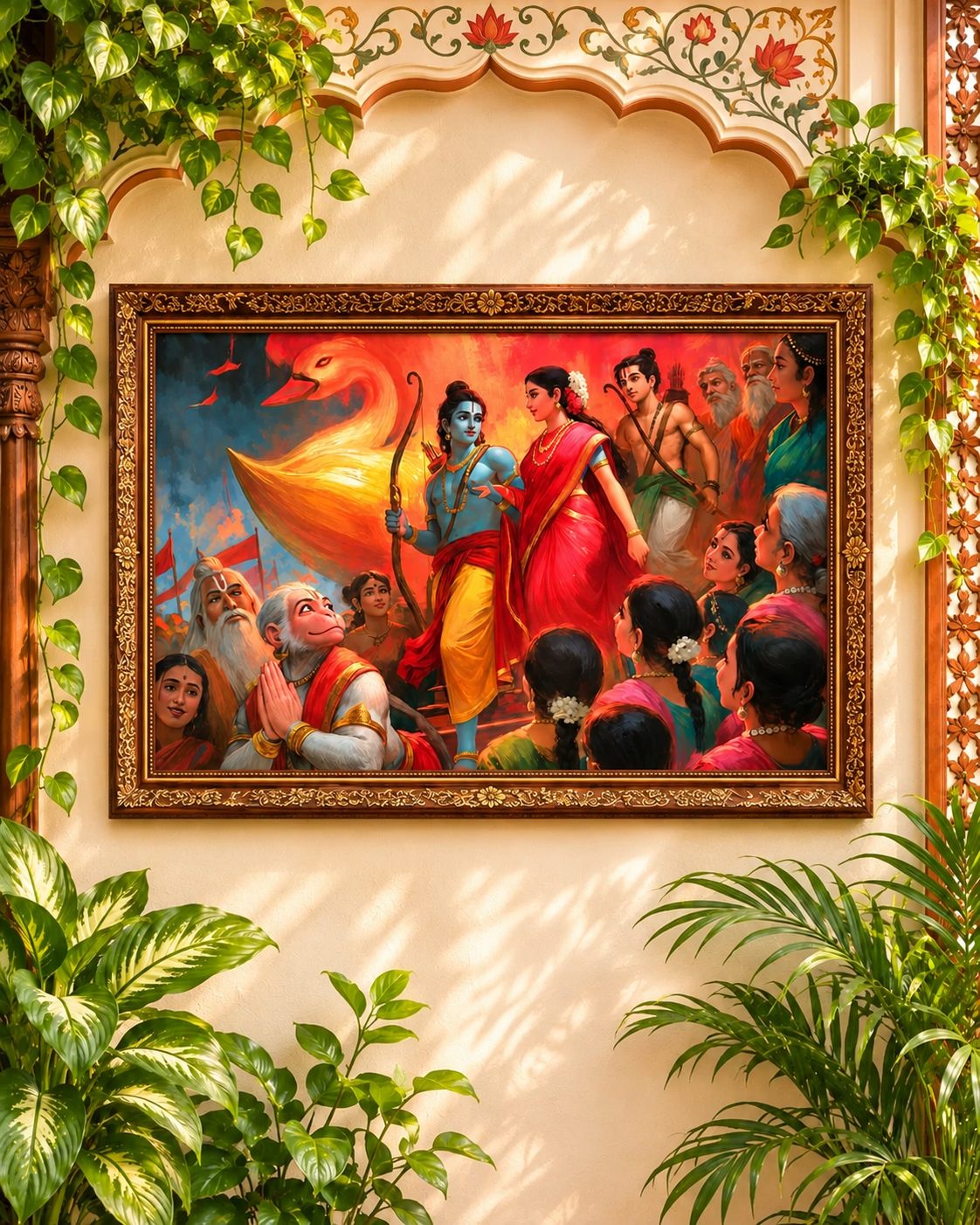
Rama Sita Painting – Divine Devotion features Rama standing beside Sita, with Hanuman bowing before them. Rich reds, golden yellows and deep blues give the composition a vibrant devotional character.
Another beautiful depiction is Lord Rama and Sita on a Lotus Pond – Divine Love. It portrays the divine couple seated together in a wooden boat, surrounded by blooming lotuses and graceful swans. The peaceful setting highlights their connection through a nature-inspired composition.
Ram Darbar: Rama, Sita, Lakshmana and Hanuman
Ram Darbar represents the divine gathering of Rama, Sita, Lakshmana and Hanuman. Each figure holds an important place in the Ramayana and represents values such as righteousness, loyalty, devotion and service.
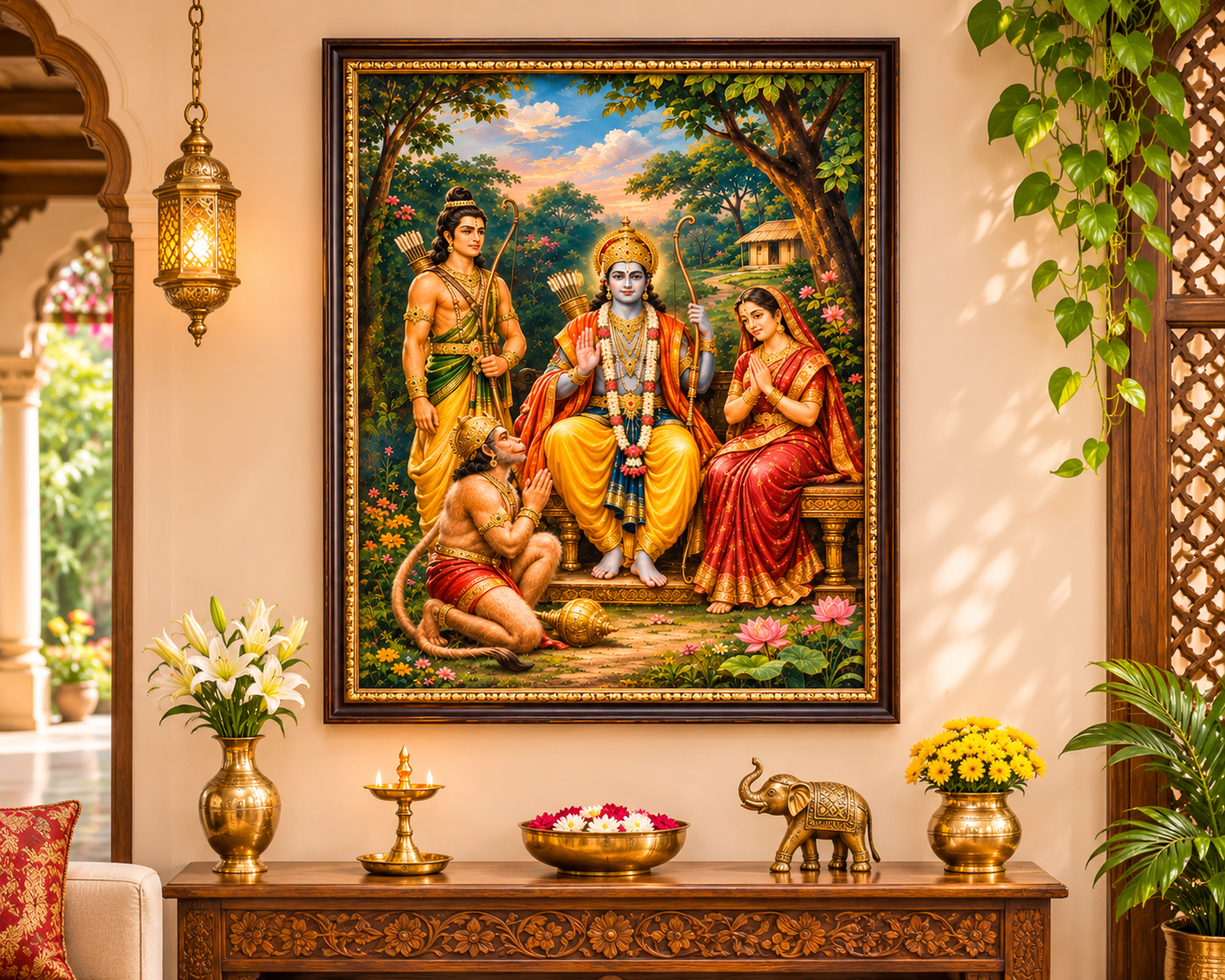
The Ram Darbar Painting – Divine Grace and Devotion depicts Rama seated with Sita, Lakshmana standing beside them and Hanuman kneeling in reverence. Its lush forest setting, traditional ornaments and warm colours create a detailed devotional composition.
Important Ramayana Moments Connected to Rama and Sita
Beyond their individual depictions, several important episodes from the Ramayana highlight the relationships and devotion surrounding Rama and Sita. These stories have inspired artists to create expressive compositions featuring their companions and other important characters.
Forest exile: Forest Blessings – Rama and Lakshmana depicts the brothers surrounded by trees, birds and animals in a detailed Pattachitra composition.
Shabari's devotion: Shabari and Lord Rama: The Power of True Devotion captures the moment Shabari offers berries to Rama during his forest journey.
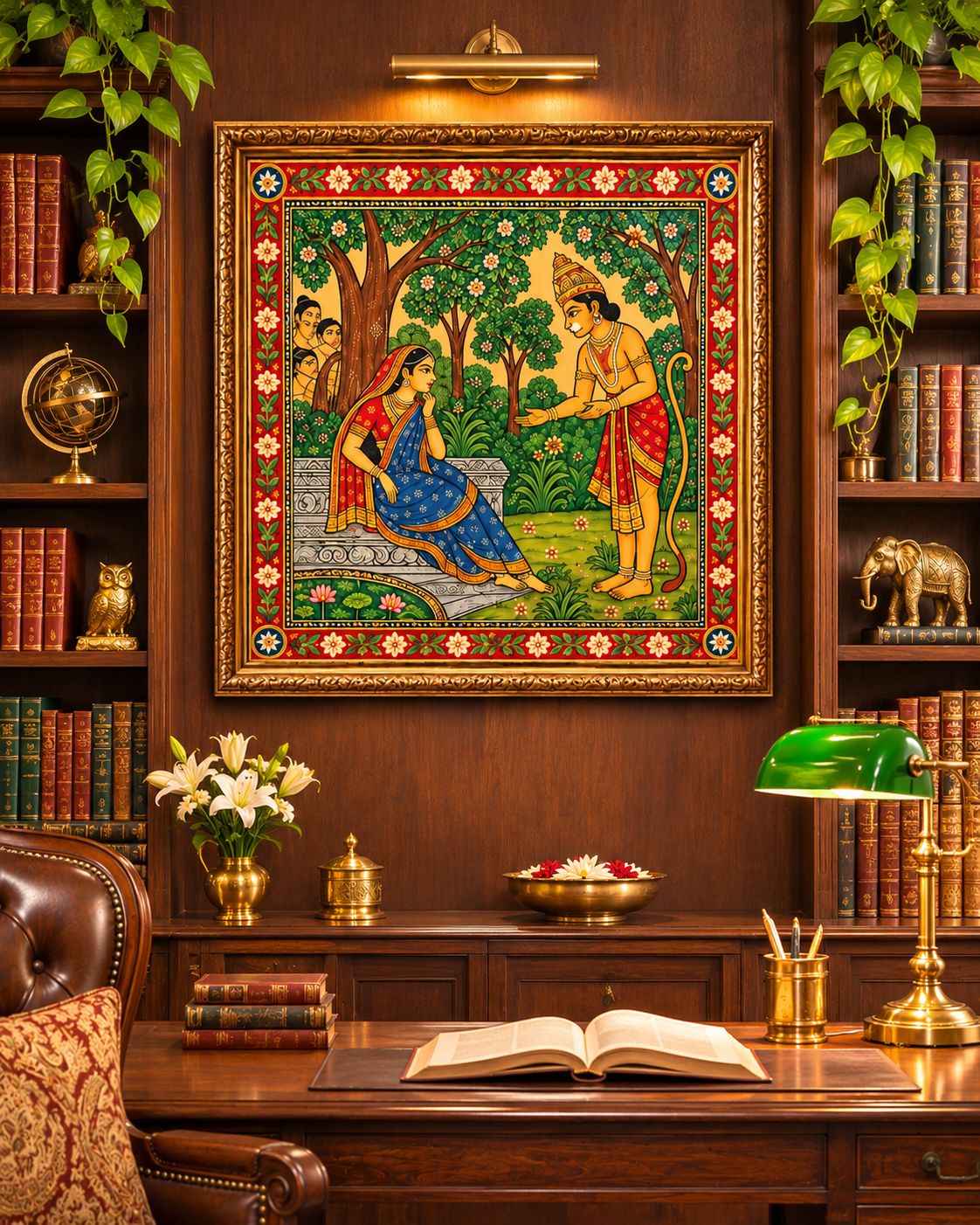
Hanuman meets Sita: Ashok Vatika Samvaad portrays Hanuman meeting Sita in Ashok Vatika and bringing her Rama's message of hope.
Angad's courage: Angad in Ravana's Court depicts Angad standing firmly before Ravana's court, demonstrating his courage and loyalty to Rama.
Hanuman's devotion: Hanuman in Ravana's Court – The Unbound Power of Devotion illustrates Hanuman's fearless presence before Ravana.
The Sanjeevani mission: A Mission of Hope – Hanuman Carrying Sanjeevani Mountain captures Hanuman carrying the mountain to save Lakshmana.
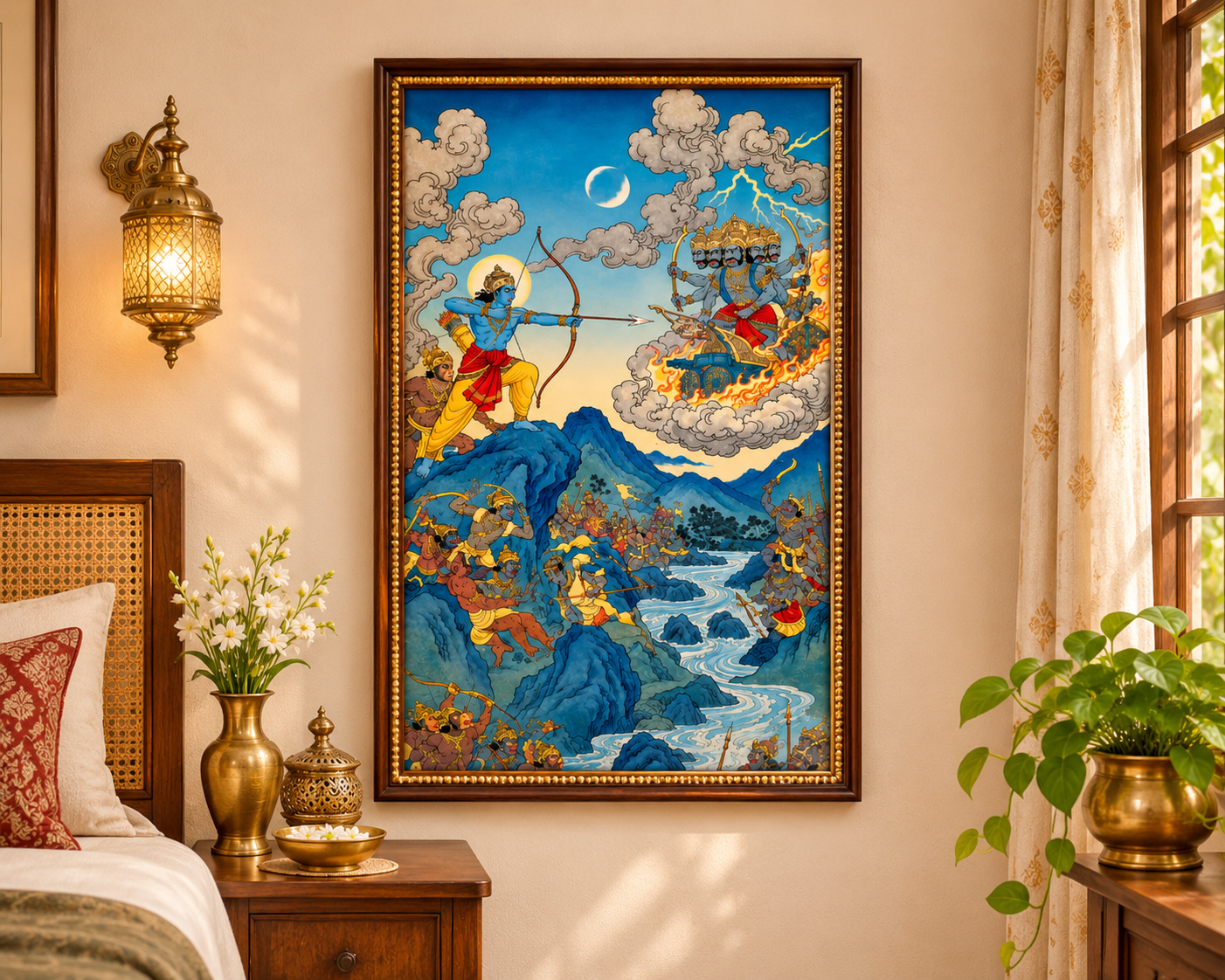
The battle of Lanka: Rama vs Ravana – The Final Battle of Lanka, Rama's Divine Arrow – The Fall of Ravana and The Triumph of Lord Rama: The Final Battle with Ravana portray different moments from Rama's confrontation with Ravana.
The Beauty of Traditional Indian Ramayana Art
Traditional Indian painting styles bring their own visual character to stories from the Ramayana. Their distinctive techniques, patterns and compositions make each artwork unique.
Madhubani art is known for intricate patterns, decorative borders, fine lines and vibrant colours. Its detailed compositions often feature mythological figures, floral motifs and symbolic elements.
Pattachitra art features expressive figures, elaborate detailing, strong outlines and carefully illustrated scenes. Its traditional storytelling approach makes it well suited to depicting mythological narratives.
These artistic traditions preserve stories from the Ramayana while celebrating India's regional cultural heritage. Whether portraying Sita Swayamvar, Rama and Sita together or a meaningful moment of devotion, each composition offers a distinctive visual interpretation of the epic.
Choosing Ram Sita Paintings for Your Home
Devotional artwork can bring cultural character and personal meaning to different spaces. When selecting a painting of Rama and Sita, consider the subject, artistic style and available wall space.
Here are a few things to keep in mind:
Choose a meaningful depiction: You may prefer Rama and Sita together, a Ram Darbar composition or a particular episode from the Ramayana.
Consider the art style: Madhubani and Pattachitra offer distinctive patterns, colours and storytelling details.
Select a suitable display space: Depending on your preferences, devotional artwork can be displayed in a prayer room, living room or another personal space.
Check the dimensions: Choose a size that complements the wall and surrounding furniture.
Consider the print format: Review the available paper and canvas options on the product page before making your selection.
Explore Ram Sita Paintings at KalaKraft
From Sita Swayamvar and the divine companionship of Rama and Sita to Ram Darbar and meaningful moments from the Ramayana, these artworks celebrate a story that continues to hold a special place in Indian culture.
Explore Ram Sita paintings and traditional Indian mythological artwork at KalaKraft. Discover compositions that reflect devotion, courage, love and the enduring significance of the Ramayana.