
Ramayana Paintings: Explore the Epic Through Indian Art
18 November 2026

The Ramayana is one of India's most celebrated epics, filled with stories of courage, devotion, sacrifice and righteousness. Its memorable characters and important events have inspired artists for generations. Ramayana paintings bring these stories to life through expressive figures, traditional motifs and detailed compositions, allowing viewers to connect with different moments from the epic through art.
At KalaKraft, the Ramayana Collection features artwork depicting important episodes, from Rama's forest journey and Shabari's devotion to Hanuman's adventures and the final battle in Lanka. Each painting offers a visual interpretation of the characters and events that have made the Ramayana an enduring part of Indian culture.
Explore Important Episodes of the Ramayana Through Paintings
Each episode of the Ramayana carries its own significance. Traditional Indian artists capture these moments through distinctive colours, patterns, expressive figures and storytelling techniques. Together, these paintings offer a visual journey through the epic.
Rama's Forest Journey
The period of forest exile is an important part of the Ramayana. It follows Rama and Lakshmana as they leave Ayodhya and begin their journey through the forest, accompanied by Sita.

Forest Blessings – Rama and Lakshmana depicts the two brothers surrounded by trees, birds and animals. The natural elements and Pattachitra-inspired detailing create a lively forest setting, bringing this chapter of the epic into focus.
Shabari's Devotion to Lord Rama
The meeting between Shabari and Lord Rama is remembered for its message of sincere devotion, faith and humility. After years of waiting, Shabari welcomes Rama and offers him berries as an expression of her devotion.
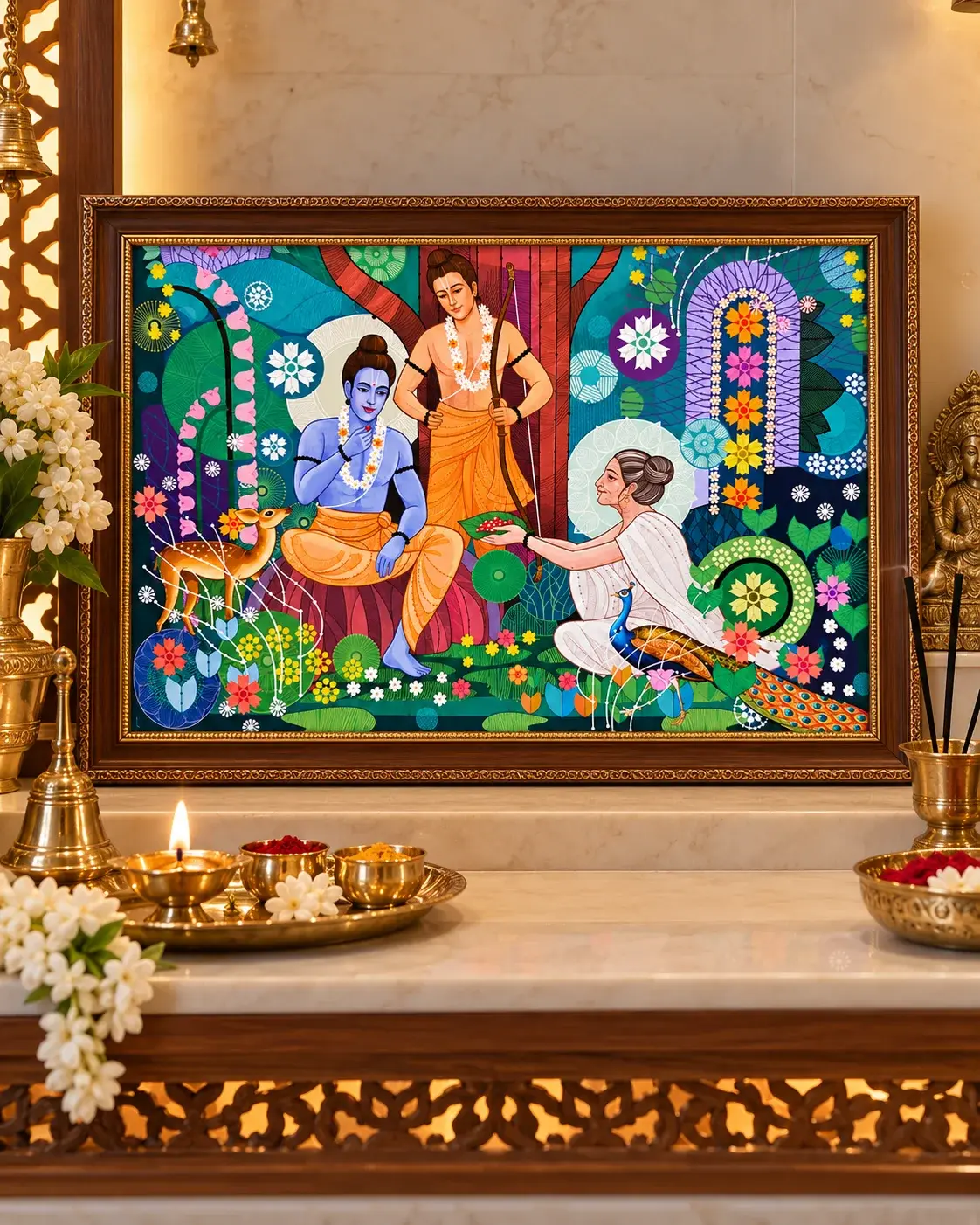
Shabari and Lord Rama: The Power of True Devotion captures this meaningful encounter. The painting brings attention to Shabari's offering and the bond of devotion at the heart of this episode.
Hanuman Meets Sita in Ashok Vatika
One of the most significant episodes takes place in Ashok Vatika, where Hanuman finds Sita and conveys Rama's message of hope. He also presents Rama's ring as a sign that he has come as Rama's messenger.
Ashok Vatika Samvaad portrays this important meeting through a detailed composition featuring Hanuman and Sita. The scene represents hope, loyalty and Hanuman's dedication to Rama's mission.
Angad's Visit to Ravana's Court
Before the battle of Lanka, Angad visits Ravana's court as Rama's messenger, offering Ravana an opportunity to resolve the conflict peacefully. His fearless stance reflects his loyalty to Rama and his determination to complete the mission.
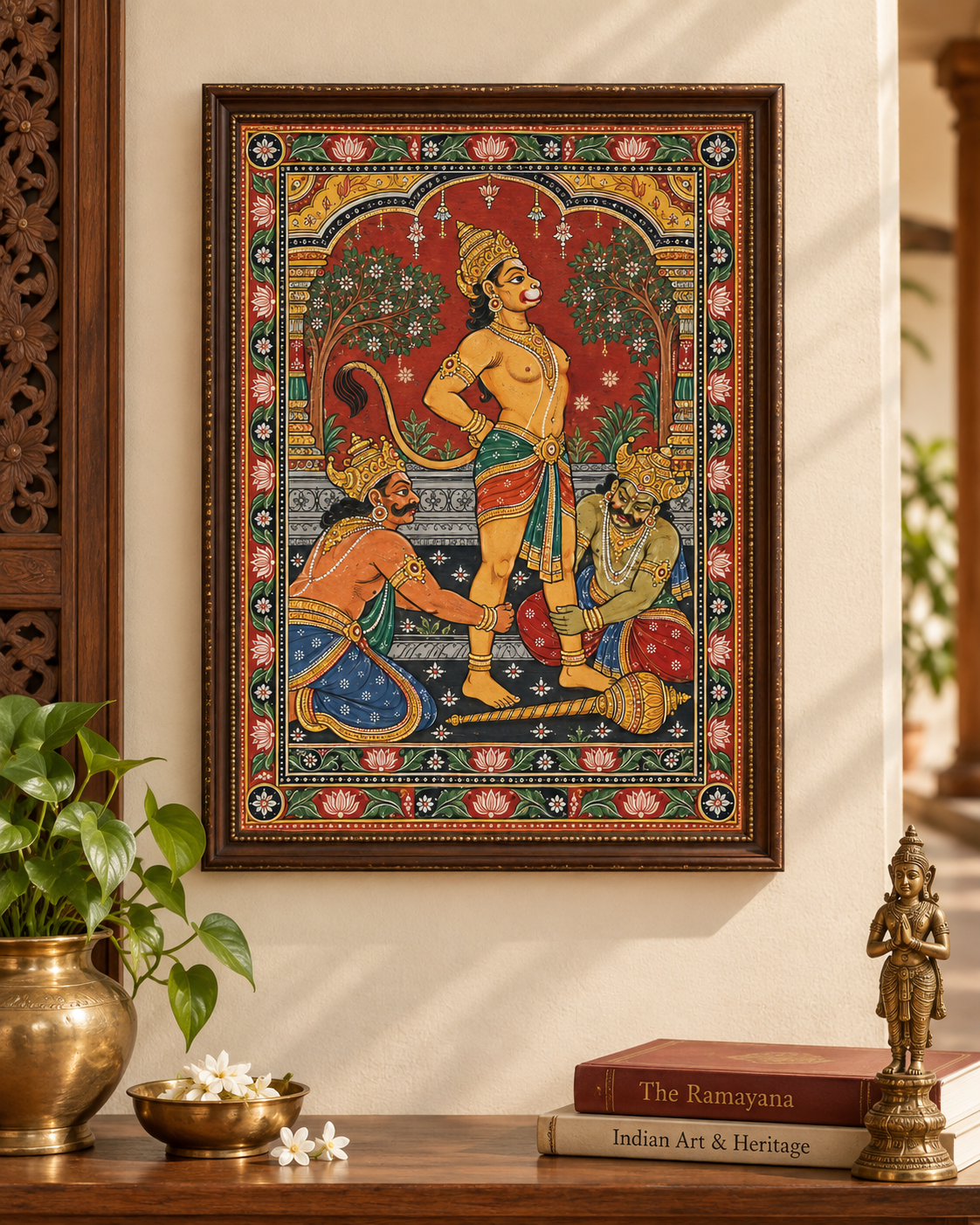
Angad in Ravana's Court illustrates this episode through an expressive traditional composition featuring Angad and the royal court. It brings attention to an important moment of diplomacy and courage before the war begins.
Hanuman's Mission to Save Lakshmana
During the battle of Lanka, Lakshmana is seriously wounded and needs the Sanjeevani herb. Hanuman undertakes the journey to find the life-saving herb and, unable to identify it, carries the entire mountain back.
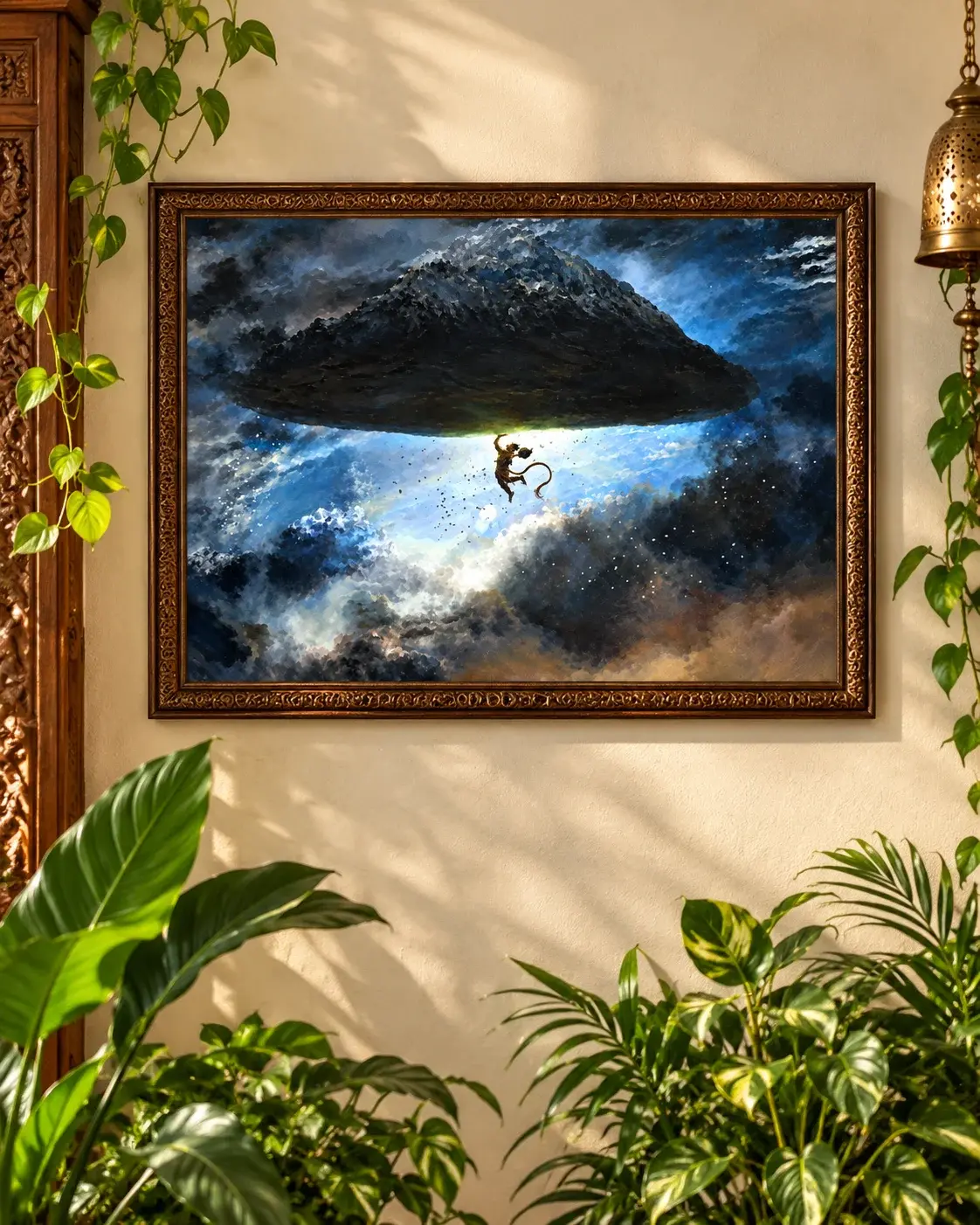
A Mission of Hope – Hanuman Carrying Sanjeevani Mountain captures this memorable moment through a dramatic visual composition. Hanuman carrying the mountain represents strength, courage and unwavering devotion.
The Battle of Lanka and Rama's Victory

The final battle between Rama and Ravana marks the climax of the epic. It represents the triumph of righteousness over evil and brings the long conflict between the two sides to its conclusion.
KalaKraft presents this episode through three different compositions:
Each artwork offers a different visual interpretation of the decisive battle, highlighting the confrontation between Rama and Ravana and the significance of Rama's victory.
Traditional Indian Art and the Ramayana
Indian artistic traditions have long been used to preserve and share mythological stories. Through distinctive styles, artists transform episodes from the Ramayana into detailed visual narratives.
Madhubani art is recognised for its intricate patterns, decorative borders, vibrant colours and closely arranged motifs. Figures are often surrounded by floral patterns, natural elements and geometric details, creating richly decorated compositions.
Pattachitra art is known for expressive figures, strong outlines, ornamental borders and carefully illustrated scenes. Its storytelling approach makes it particularly suited to depicting mythological characters and important episodes.
These traditional styles give Ramayana artwork its distinctive visual appeal. The colours, patterns and compositions help preserve the stories while bringing the characters and their journeys into focus. Each painting becomes a way to appreciate both the epic and the artistic traditions through which it has been represented.
Explore Ramayana Paintings at KalaKraft
From Rama's forest journey and Shabari's devotion to Hanuman's courage and Rama's victory over Ravana, the Ramayan Collection brings together different chapters of this timeless epic.
Explore Ramayana paintings at KalaKraft and discover Indian mythological artwork that celebrates courage, faith, devotion and the enduring cultural significance of the Ramayana.
Browse the KalaKraft Ramayan Collection to explore the available artwork and find paintings that connect you with these memorable stories.