
Ramayana Paintings for Living Room: Traditional Art for Beautiful Interiors
23 November 2026
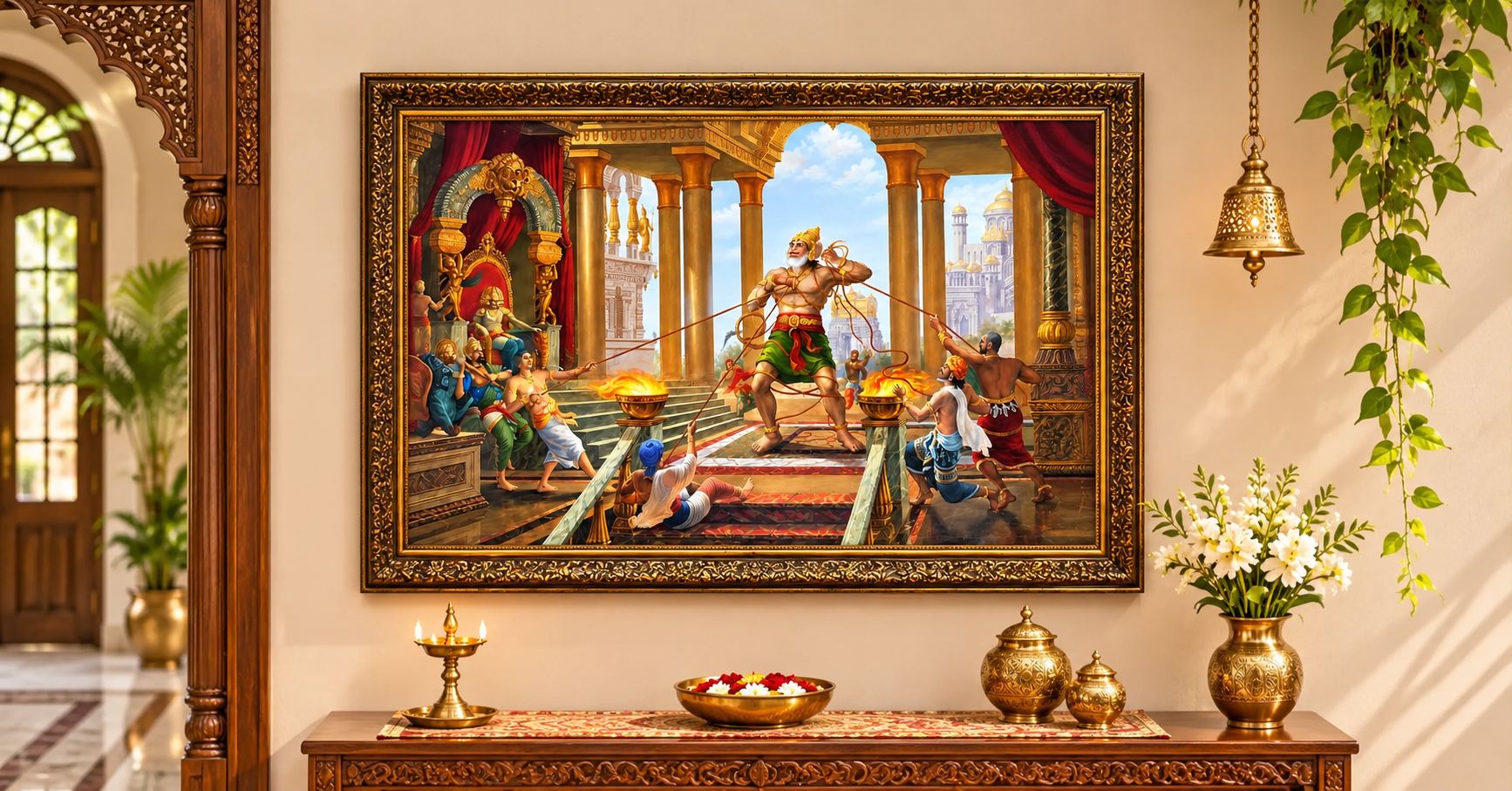
A living room is often the heart of a home—a place where family gathers, guests are welcomed and personal style comes together. Adding traditional Indian artwork can bring warmth, cultural character and a meaningful story to the space. Ramayana paintings for living room décor offer a way to combine the beauty of Indian art with the timeless stories of Lord Rama, Sita, Lakshmana and Hanuman.
From detailed Pattachitra compositions to colourful Madhubani artwork, Ramayana-inspired paintings can complement both traditional interiors and contemporary homes. The key is choosing a painting that suits your wall, furniture, colour palette and the atmosphere you want to create.
1. Choose a Ramayana Painting That Becomes a Focal Point
A painting displayed above the sofa, on a feature wall or near a console can naturally draw attention. For a living room, consider artwork with a clear composition, expressive characters and details that remain visually engaging from a distance.
Forest Blessings – Rama and Lakshmana
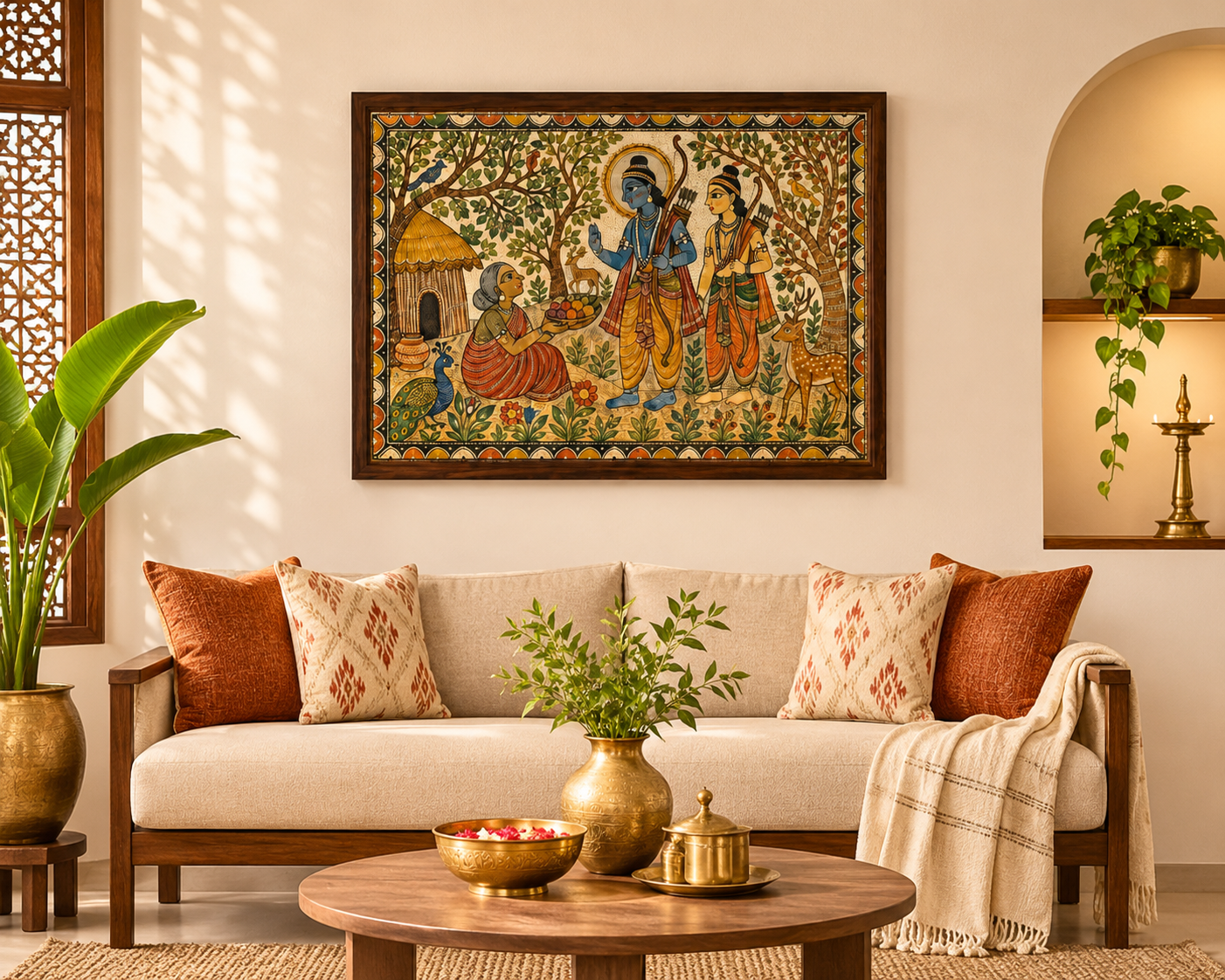
Featuring Rama and Lakshmana surrounded by trees, birds, deer and other natural elements, this Pattachitra-inspired composition brings the forest setting of the Ramayana into the room.
Its detailed foliage, traditional borders and rich colours can make it a striking choice for a living room wall, especially when paired with understated furniture and neutral surroundings.
Explore Forest Blessings – Rama and Lakshmana
Ram Darbar – Divine Grace and Devotion
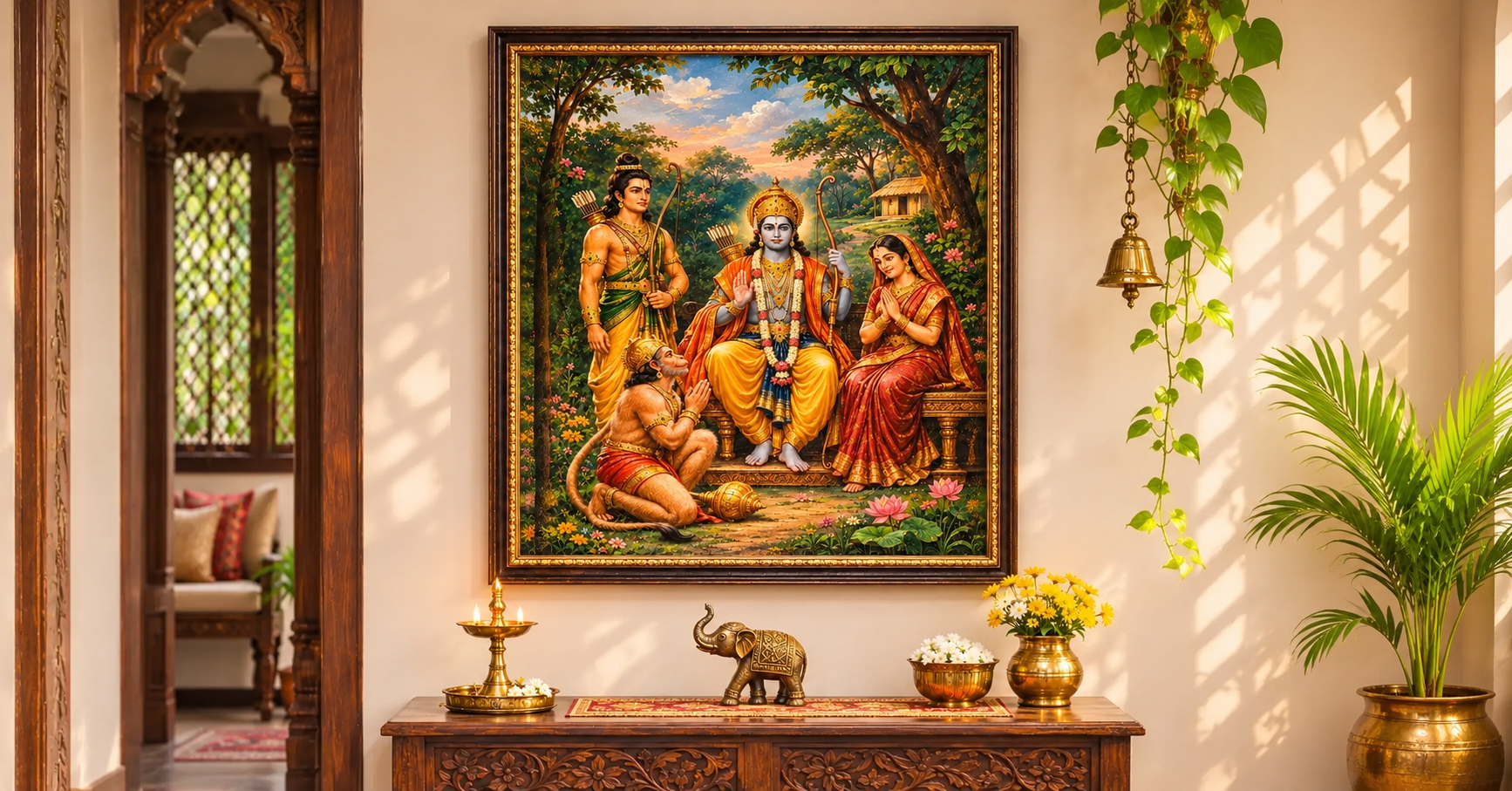
Ram Darbar paintings feature Lord Rama, Goddess Sita, Lakshmana and Hanuman together in a devotional composition. The balanced arrangement of figures and traditional details makes this theme a meaningful choice for a prominent wall.
A Ram Darbar painting can complement interiors that incorporate traditional furniture, wooden accents, warm colours or other Indian decorative elements.
Explore Ram Darbar Painting – Divine Grace and Devotion
2. Match Traditional Ramayana Artwork with Your Interior Style
Traditional artwork can complement a variety of living-room interiors. Instead of matching every colour exactly, consider creating a visual balance between the painting, furniture and wall.
For Modern and Minimalist Living Rooms
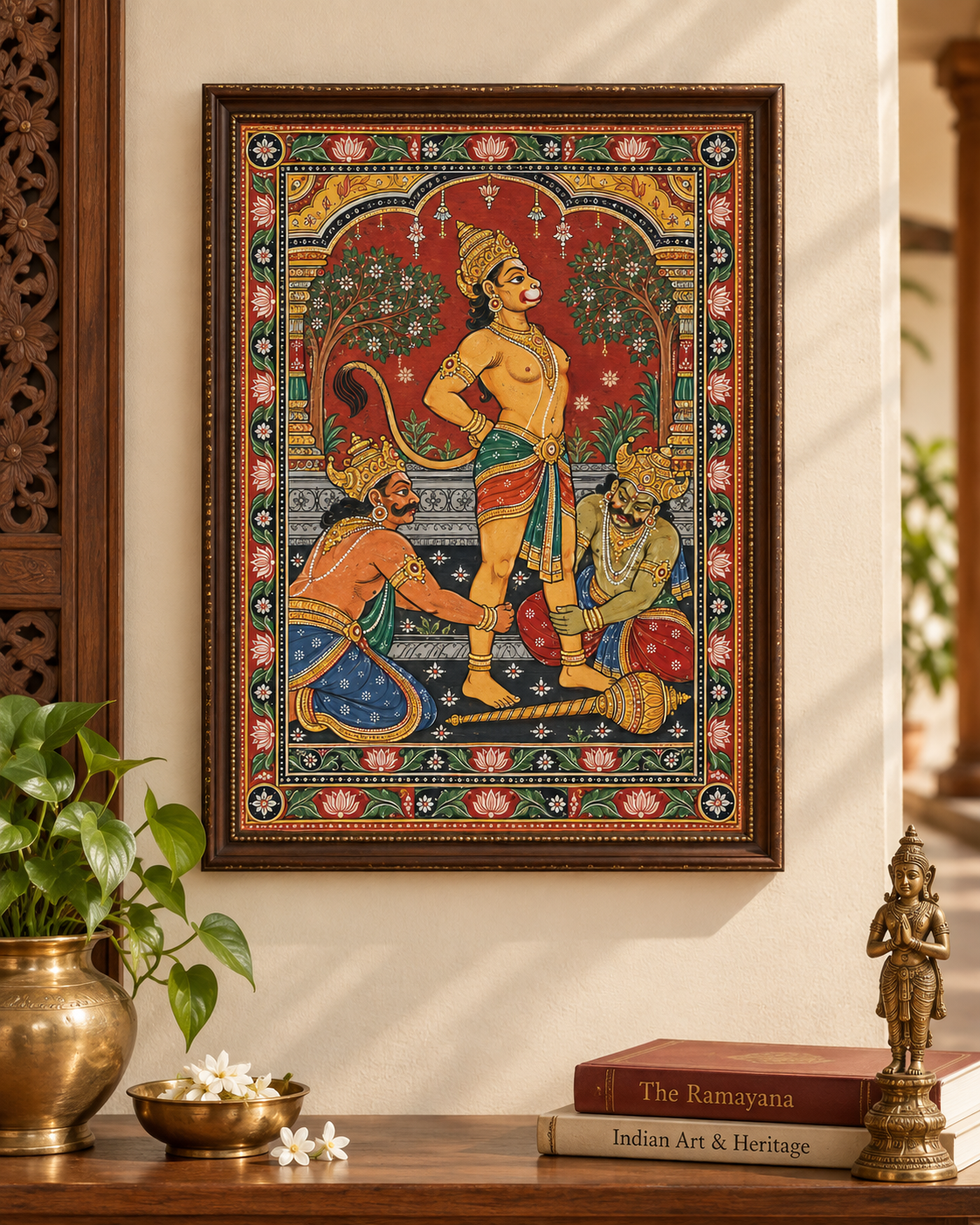
In a modern living room with neutral walls, clean furniture and limited decorative elements, a detailed Ramayana painting can create an interesting contrast.
Consider artwork with a strong composition and rich colours. Keeping the surrounding wall relatively uncluttered allows the intricate patterns and figures to stand out.
For Traditional Indian Interiors
If your living room features wooden furniture, carved details, warm-toned fabrics, brass accents or traditional décor, a folk-art Ramayana painting can complement the overall setting.
Madhubani and Pattachitra compositions bring decorative patterns, expressive figures and cultural storytelling into such interiors.
For Eclectic Living Rooms
An eclectic interior combines different styles, textures and decorative elements. A Ramayana painting can become part of this mix when paired with contemporary furniture, patterned textiles, plants or other artwork.
The aim is to create a cohesive arrangement through complementary colours, proportions and spacing.
3. Consider the Colours of the Painting and Your Living Room
Colour plays an important role in how artwork interacts with its surroundings. Traditional Ramayana paintings often feature reds, yellows, greens, blues and earthy tones, along with decorative patterns and borders.
When selecting artwork, consider:
Neutral walls: Richly coloured paintings can create contrast and attract attention.
Warm interiors: Earthy shades, wooden furniture and warm lighting can complement traditional artwork.
Colourful interiors: Choose a painting whose dominant colours relate naturally to the existing furnishings.
Simple furniture: Detailed folk-art compositions can add visual interest without requiring additional wall decorations.
Rather than matching every shade, look for a few colours that connect the artwork with the room.
4. Choose the Right Size for Your Living Room Wall
The size of your Ramayana painting should be proportionate to the wall and the furniture around it.
Above the Sofa
A painting above the sofa is one of the most common living-room arrangements. Choose a size that occupies an appropriate portion of the wall above the seating without appearing too small or overwhelming.
Measure the sofa and the available wall area before selecting your artwork.
On a Feature Wall
A larger painting can become the central focal point of a feature wall. This works particularly well when the surrounding wall is relatively simple and the artwork has an expressive composition.
Above a Console or Sideboard
A medium-sized painting can work well above a console table or sideboard. The arrangement can be complemented by a few carefully selected decorative objects while maintaining enough space around the artwork.
For more detailed guidance, read How to Choose the Right Wall Art Size for Your Space.
5. Display Ramayana Paintings as a Gallery Wall
If you appreciate different episodes of the Ramayana, consider displaying multiple artworks together rather than selecting only one painting.
A gallery wall can include different moments from the epic, such as Rama's forest journey, Shabari's devotion, Hanuman meeting Sita and the battle of Lanka.
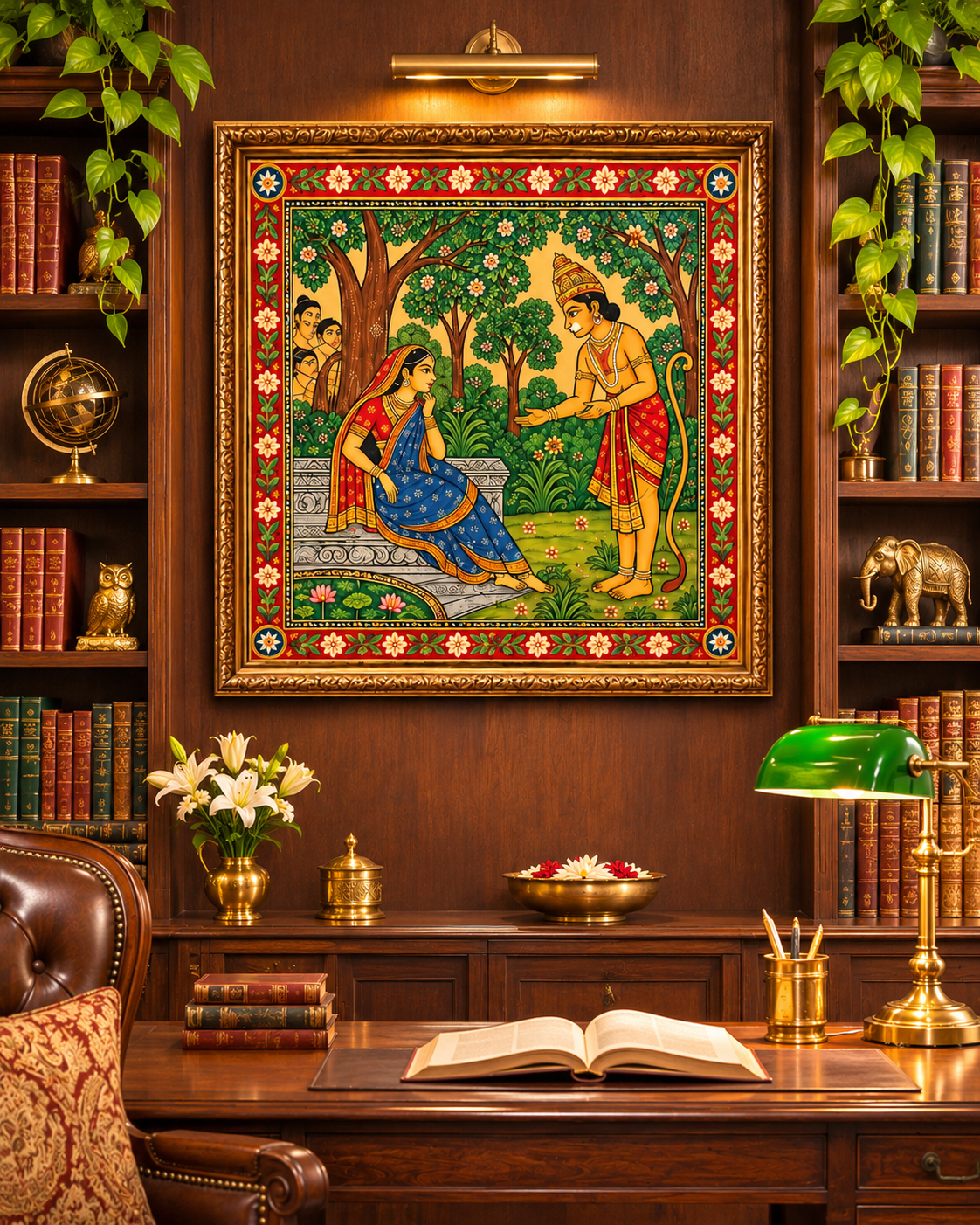
You can arrange the paintings in chronological order to create a visual storytelling display or use a balanced arrangement based on artwork sizes and compositions.
For a cohesive look:
Use consistent spacing between paintings.
Consider matching or complementary frames.
Maintain a balanced arrangement across the wall.
Avoid overcrowding the display with too many artworks.
Leave enough surrounding space for each painting to be appreciated.
A connected collection can make the living room feel more personal while showcasing different aspects of traditional Indian storytelling.
6. Explore Different Ramayana Art Styles
The artistic style of a painting influences how it feels within your interior.
Madhubani Art
Madhubani paintings feature intricate patterns, vibrant colours, decorative borders and detailed figures. Their rich compositions can bring a colourful folk-art character to a living room.
Pattachitra Art
Pattachitra is known for expressive figures, strong outlines, ornamental borders and detailed storytelling. Its compositions often feature mythological characters surrounded by decorative and natural elements.
Traditional Folk-Art Compositions
Different folk-art traditions bring their own patterns, colours and visual techniques to Ramayana stories. Choosing a style you appreciate can help create a living-room display that reflects your interest in Indian cultural heritage.
7. Paper or Canvas: Which Format Should You Choose?
KalaKraft offers selected Ramayana artworks in digital print formats on paper and canvas.
Paper prints can be framed to suit your living-room décor. A frame can help connect the artwork with furniture finishes and other decorative elements.
Canvas prints offer a different surface appearance and can work well when you want the painting to have a more artwork-like presentation.
Check the individual product page for available formats, dimensions and pricing before ordering.
Explore Ramayana Paintings for Your Living Room at KalaKraft
From forest scenes featuring Rama and Lakshmana to devotional compositions of Ram Darbar and expressive traditional folk-art paintings, Ramayana artwork offers several ways to bring Indian mythology into your living room.
Explore the KalaKraft Ramayan Collection to discover traditional paintings inspired by the epic. Consider the artwork, colour palette, print format and available size to find a composition that complements your living space and reflects the stories you value.